Jewish Multiculturalism
Distinctions & Extinctions

Who speaks for identity politics? Always the other guy. Identity, for most people, isn’t political, it’s existential – a name for who and what they are. Politicisation only entrenches that fact. The more political my identity appears to you, the more existential it becomes for me.
In Strange Hate, Keith Kahn-Harris claims it’s in the character of groups to inherit political beliefs so fundamental to their identities that they don’t even consider them political. This can be confusing for those who do. By way of example, he references the definitional controversy over antisemitism that’s divided mainstream British Jews from many anti-racists. What if the seeming intractability of that conflict is down to an even deeper definitional problem over politics itself?
What seeded catastrophe for modern Jews, Hannah Arendt suggested, was their failure to comprehend how their very existence might be construed as a political provocation – a lesson that those currently locking horns over identity would do well to learn. Unless or until participants in a political culture agree what politics is, their agency will be merely an illusion, and their disagreements can only get worse. Although what shouldn’t, in a multicultural society, be subject to disagreement is the fact that, for whoever has been forced to feel conscious of their own, identity really matters.
I interviewed Kahn-Harris about his book. Afterwards, a woman approached, stabbed a finger at my chest, and demanded to know ‘why you people never shut up about yourselves?’ The Jewish question, Sartre explained, does not seek to understand, but rather to extinguish: while the danger to the Jew from the fascist is that he sees only the Jew and not the man, the danger to the Jew from the democrat is that he sees only the man and not the Jew. A statement that’s relevant to many more people than just Jews, although it retains a particular resonance for those groups which have been targeted for nullification.
Still, hard not to feel for Sartre’s democrat. Unwitting accomplice of genocidal fascism he may be, but in his own mind he’s a utopian who would speak in the name of a universal humanity – an understandable wish, especially when global catastrophe threatens.
In a 2019 interview with Die Zeit, Roger Hallam, co-founder of Extinction Rebellion, urged his German comrades not to get paralysed by their history. The Holocaust, he claimed, was ‘almost a normal event … just another fuckery in human history’, whereas genocide is happening now ‘on a far greater scale’. Oh dear. The Germans didn’t like it, and nor did I (coming from a family decimated by the Holocaust, I’m highly sensitive to rhetoric belittling its significance). XR at once distanced themselves, and Hallam apologised. He’d been understandably frustrated. To the climate activist looking towards the future, history can appear like a diversion, or worse, an indulgence.
And yet, to really see the man, or indeed the woman, one must see that what distinguishes her is precisely what can give her meaning, motivation, and a reason to live. If, that is, she’s to feel possessed of political agency, she also needs to feel a stake in the future, which requires, in the first place, granting her the dignity of her past. A universal humanity without distinction will care little for its extinction.
© Devorah Baum
Jewish Multiculturalism

Fragments of my Father
Simon Liebesny

The Death of Beelzebub
Will Self

(In)Security
Stephen Frosh

The Missing Mizrahi
Shelley Silas

Yiddish as a Living Language
Ross Bradshaw

Beatty Orwell: The Battle of Cable Street
Rachel Lichtenstein

Jewish Multiculturalism
Michael Rosen

On Assimilation
Jonathan Wolff

Jews and Poles in Interwar Poland
Eva Hoffman

Photo Essay
John Offenbach
The intention
John Offenbach
WritersMosaic monthly
Get new episodes by email
One email monthly, unsubscribe anytime

Illuminating, in-depth conversations between writers.
Listen to all episodes
SpotifyApple Podcasts
Amazon Music
YouTube
Other apps

The series that tells the true-life stories of migration to the UK.
Listen to all episodes
SpotifyApple Podcasts
Amazon Music
YouTube
Other apps
WritersMosaic interrogates the notion of ‘staying in your lane’ by asking writers how they attempt to think beyond the parameters of their cultural identity.
Listen to all episodes
SpotifyApple Podcasts
YouTube



It’s being published I get paid for; the writing I would do for free
‘Any advance [...] for your novel is to compensate you for the horrors of being published'
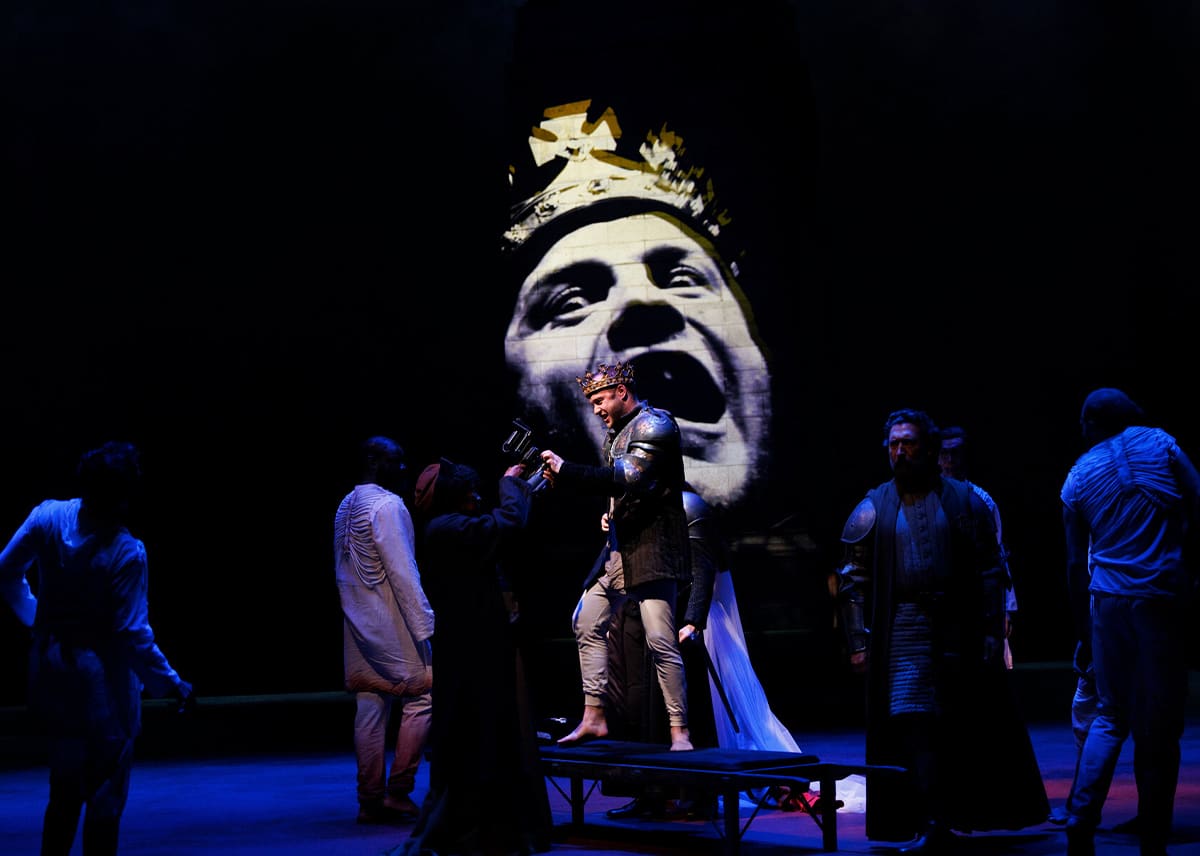
Complex antihero: an interview with Arthur Hughes
Unravelling Authur Hughes' Richard III

Marlon James: a Jamaican reckoning
'A return to a home I barely knew'



Haunting the Black Air
Poetic freedom across space and time
The Disappearers
A sprawling visceral experience that drops you in head first