
Nowhere
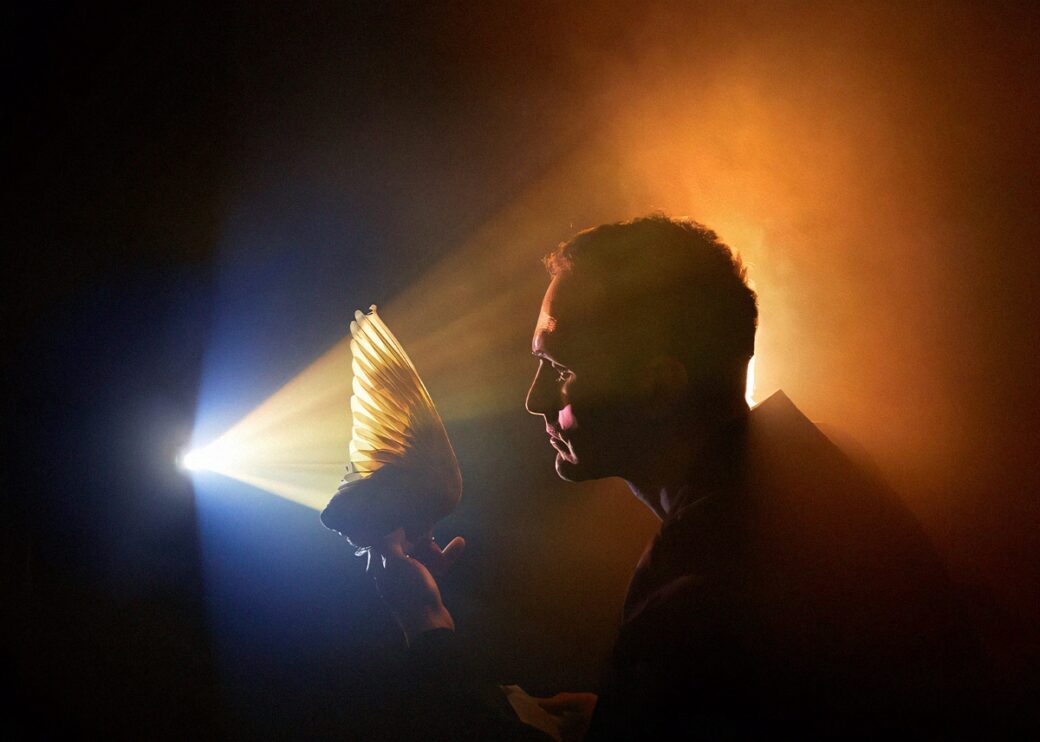
Nowhere: an anti-biography
Written and performed by Khalid Abdalla, directed by Omar Elerian
Traverse Theatre, Edinburgh, 12-24 August 2025
The house is packed for the Scottish premiere of Khalid Abdalla’s one-man show. For ninety minutes he holds the audience in his hands. The setting of the show is ‘nowhere’. I speculate that the audience might expect a familiar No Man’s Land of refugee camps, border fences and death strips.
Instead, we get intergenerational stories, sketches, framed photographs, portraits, maps, video messages, film clips, text from border treaties, songs, and dancing. A beloved artist friend of Khalid Abdalla’s is dying of pancreatic cancer. The same friend teaches us how to really live when we see a video clip of him performing a slow twirl with his plastic and metal IV stand. There’s a bit of crowd work towards the end, when we’re asked about our own forms of transnational belonging.
At first hearing, the title of Khalid Abdalla’s one-man show Nowhere had rung a faint bell in my mind. On October 5 2016, our former Prime Minister Theresa May had informed her admiring listeners at the Conservative Party Conference in Birmingham: ‘If you believe you are a citizen of the world, you are a citizen of nowhere. You don’t understand what ‘citizenship’ means.’
The phrase ‘citizen of nowhere’ rebukes the supposed disloyalty of the transnational identity. Keir Starmer’s recent warning that Britain risks becoming an ‘island of strangers’ lines up neatly with Theresa May’s. Cosmopolitanism, multilingualism, and intercultural conviviality are out. Being concerned with the wellbeing of others outside one’s immediate family or country is naïve or suspect. You have to pick a side. However, this panders to an extreme position in current politics, where difference is a poison in the body of the nation state. It’s a bleak vision. Anyone with family, friends or business interests knows that well-regulated borders can connect as well as exclude.
If biography unfolds history as an individual hero’s journey, then Nowhere: an anti-biography gives us another, more collective way to look at narrative. We are introduced to three generations of Abdalla’s family and their friends, who remain erudite and loving as they resist political vindictiveness. The family takes the audience with it as they move between Cairo, Glasgow and New York.
Of course, to say that everyone is from somewhere is to repeat a truism. Most people understand the comfort of knowing one’s neighbours, of supporting a local team, of speaking a specific dialect, or of recognising a favourite turn of phrase. We see why the figures in the piece are forced to leave Egypt, why they choose to return and how their diasporic community is formed. Britain’s imperial history looms large over the stage.
Khalid Abdalla offers an alternative explanation for the moment in which we find ourselves; for the violent repressions inside authoritarian states, for the highly charged but not yet violent conflicts inside democratic nation states, and for Israel-Gaza.
In Cosmopolitanism (2006), Kwame Anthony Appiah argues that ‘no local loyalty can ever justify forgetting that each human being has responsibilities to every other.’
Writers such as Jhumpa Lahiri, Chimamanda Adichie, and Franz Kafka all capture the richness and complexities of transnational identity, which is more expansive than May’s rebuke allows for.
The challenge of our times is to be diverse and rooted in place, attached to the international and local, loyal to a specific region and free of violent nationalism. The old forms of violent nationalism in Europe used blood and soil as criteria for determining who belonged and who should be excluded. Democracies rejected those ideas for more pluralist forms of association that have slowly been eroded.
Nowhere shows how we can belong across borders. This tale demonstrates that people sometimes choose to act in solidarity with each other, with diasporic communities, with the stateless, and with internationalist values. It raises a series of questions: Who do we feel responsible for? What happens to a culture when non-citizens are the primary targets of state violence? How can we learn to coexist? Who do we grieve for? What’s a life worth? What happens to people who don’t have a state to protect them?
Like the best art, Nowhere leaves the audience to grapple with the implications of those questions in their own lives.
https://fueltheatre.com/projects/nowhere/
Clementine Ewokolo Burnley
Clementine Ewokolo Burnley is a multilingual author, writer of poems, short stories and non-fiction works.
WritersMosaic monthly
Get new reviews in your inbox
One email monthly, unsubscribe anytime
Haunting the Black Air
Poetic freedom across space and time
The Disappearers
A sprawling visceral experience that drops you in head first
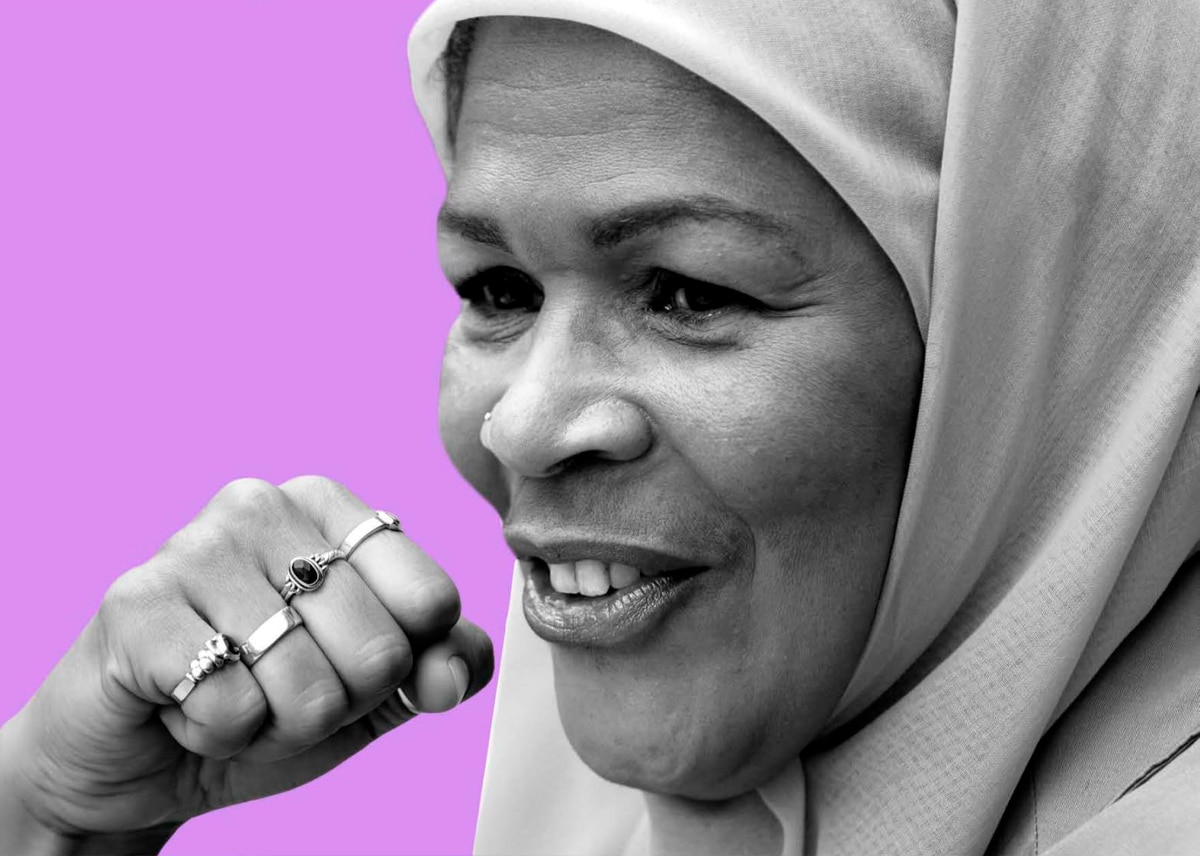
The Lady Imam
Is the world ready to catch up with amina wadud?
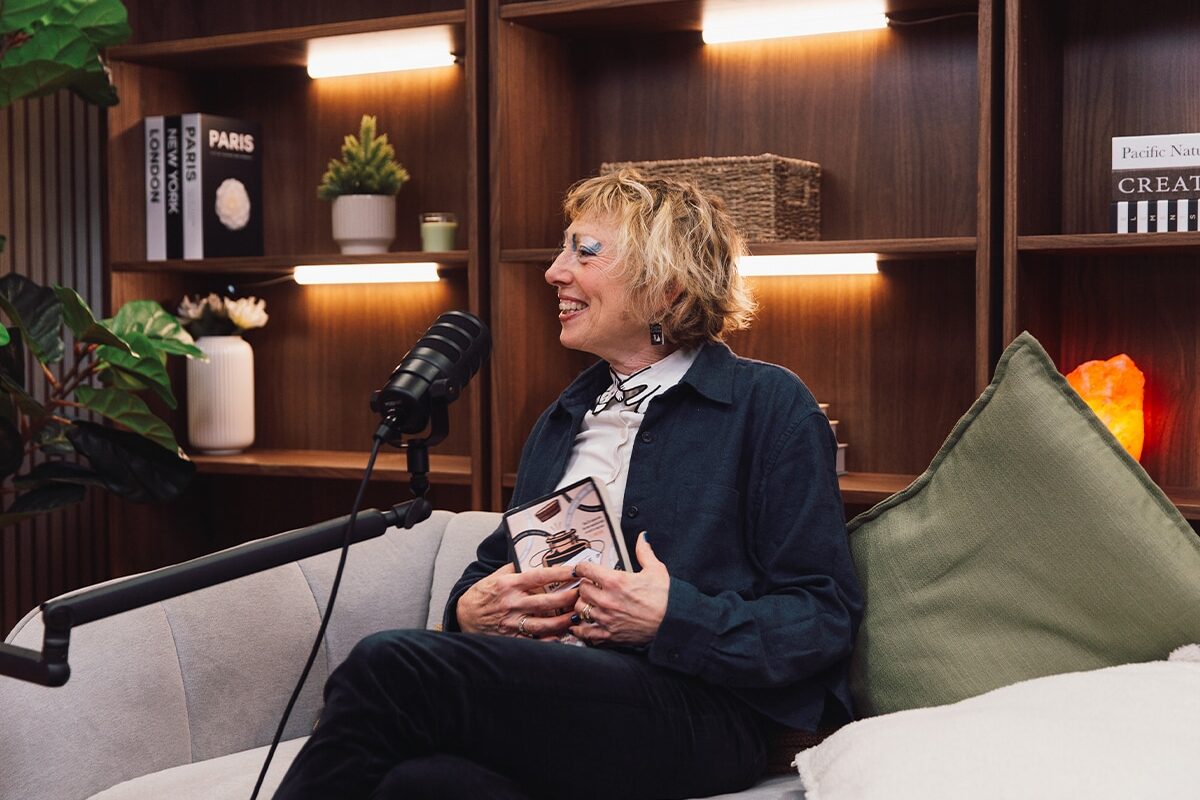
It’s being published I get paid for; the writing I would do for free
‘Any advance [...] for your novel is to compensate you for the horrors of being published'
Complex antihero: an interview with Arthur Hughes
Unravelling Authur Hughes' Richard III
Marlon James: a Jamaican reckoning
'A return to a home I barely knew'


Illuminating, in-depth conversations between writers.
Listen to all episodes
SpotifyApple Podcasts
Amazon Music
YouTube
Other apps

The series that tells the true-life stories of migration to the UK.
Listen to all episodes
SpotifyApple Podcasts
Amazon Music
YouTube
Other apps
WritersMosaic interrogates the notion of ‘staying in your lane’ by asking writers how they attempt to think beyond the parameters of their cultural identity.
Listen to all episodes
SpotifyApple Podcasts
YouTube