
Devotion

Shintarō, I write this because family is forever.
And there are things I’d like you to know.
I think it began in kindergarten. When Rabbi Kugelman entered the classroom to wish us a happy birthday. We were practising our fine motor skills with that rancid, pale putty. While I dug my fingers into the tender folds of clay, you rolled the putty into twisted tendrils and lifted them to your ears.
‘The kid’s giving himself payis,’ Kugelman said.
And our teacher nodded, ‘He’s very spiritual.’
For the rest of the day, Kugelman observed you from the doorway. Like you were a hybrid zoo creature – his liger, his zorse. Did you know cross breeding is against the Torah? It’s written in Kil’ayim.
That night, while you lined your nightstand with your birthday gifts – toy cars and glass animals perfectly placed – I heard Mom and Kugelman on the phone. In the living room, his words were muffled but assured as ever. Something about Elijah the prophet. Something about noses and being under them.’Is that right?’Mom asked. ’Do you really think so?’And she cried because you were special.
For first grade, they sent you upstate to start rabbinical training. I never asked you this, Shin – but did you want to leave? Are you still training? I know Hashem gives us free will. But after that night, I’m not so sure.
Four years later, we drove up to visit you for our tenth birthday. At the restaurant, we arrived smelling of rain. The whole room turned, necks twisting towards the Asian family cosplaying as Jews. At the table, you curled your thin, straight payot in your index finger and inspected the menu. You studied the main courses like Talmud. The desserts and appetisers the commentaries. Mom wore her best sheitel; Obaachan her bulbous rings and pins. She took a glance at the menu and Mom snatched it from her. ‘You look silly, Mama,’ she said. ‘Pretending to read English.’
When the food arrived, wet lamb chops on the table, I reached out for a limb. The sleeve of my school shirt dangled into the oil. You shooed my hand away because we must wait to bless the bread. It was when you began your chanting that Obaachan asked you to subtract ten from five.
‘It’s basic math.’
‘He’s gifted in other ways,’ our mother said.
You just prayed, ‘King of the universe, who brings forth bread from the earth.’
‘What’s five minus ten, Shin-chan?’ Obaachan asked you again.
‘That’s a trick question,’ Mom said. ‘Not fair.’
‘I know the answer,’ I tried to say.
‘Tell me, Shintarō.’ But your eyes were shut, such profound concentration.
‘It’s not fair.’
‘What are they teaching him here?’
‘It’s negative,’ I said, but no one looked at me. ‘It’s negative five,’ I repeated and then took a bite from your blessed bread.
Three years later, I was one year bat mitzvah’d and you would soon become a man. I never understood why boys become men three hundred sixty-five days after girls become women. Do daughters mature faster than sons? At thirteen, I really thought so. I thought, this is why women sit one level above men at shul, one level closer to Hashem. And when you came home for your bar mitzvah, I was sure of this divide.
In the foyer, Mom gave you a pair of tefillin and tallit – a gift from Kugelman. Your father would be so proud, she said, quivering at the sight of you wrapped in leather and wool.
‘Why?’ I asked. We both know our father was not a religious man.
‘Because he’s going to be something,’ Mom said, patting your back.
I could see your payot suffocate under the tefillin straps.
Obaachan then emerged from her room. In her hands were two kokeshi dolls. Don’t you remember them, Shintarō? The limbless girls made from Japanese maple. The artist signed their name, Hibino, on each of their bottoms in black ink. I traced my fingers on their waxy skin.
‘That’s avoda zara,’ you said to Obaachan.
‘Shintarō–’ I warned.
‘Shimon,’ you said. ‘It’s Shimon now.’
‘What’s avoda zara?’ Mom asked.
You left for the bathroom without saying a word.
‘Is it bad?’ she asked again.
And you returned with a garbage bin in your hands.
‘It’s–’ I began but couldn’t get myself to say the word.
‘Idolatry,’ you said.
I’d never seen such fear when she asked, ‘What do we do?’
Obaachan held your doll in disbelief. ’I can just take them back,’ she said. ’To Japan.’ Mom shook her head, imitating your verbal economy. Then our grandmother handed over your doll; my hands gripped to the wood. I let go when she hugged me, her pins against my eyes. All angles and amethyst. Our bodies jolted when we heard two thuds in the bin. The sound of devotion.
In school, at the time, we were halfway through Shemot. I drew circles around the words ayin tachat ayin in my tanakh,an eye for an eye. I knew nothing of Gandhi. I’d learn about him in the eighth grade. So as you slept in the bedroom you left at six years old, the glass animals and model cars on your nightstand as you left them, I entered. I held a pair of French shears from Obaachan’s sewing kit and floated towards the bed. I listened to the sound of you breathing, my ear against your cheek. I knew you were sleeping because you snore in groups of four. I looked at those long things, your putty tendrils real hair, however straight. The scissors fluttered towards your ear and, suddenly, you were a boy again.
In the morning, I waited. I wanted to hear a shriek from the bathroom or the invisible sound of you twirling your finger in the air. I waited for half an hour by the corridor. I was no longer a thirteen-year-old girl, but a woman who had seen things and known them. When you opened the door with swollen eyes, you raised your hand. I thought you would strike me. But you lowered your hand to my forehead and, without irony or bitterness, swept my bangs aside and walked away.
I followed you to the living room, where everything started, and watched you wrap your tefillin around your arm and your body in the tallit shawl. Through wool fringes, I could hear you whisper: ‘God, the soul you have given me is pure. You created it, you formed it, you breathed it into me. For as long as my soul is within me, thankful am I in your presence, my God, the God of my fathers,’ you choked on that word, ‘the God of my mothers.’
Then, you began rocking with a violent devotion. ‘Ruler of all creation, master of all souls. Blessed are You, God, who restores the soul to the dead.’ You lifted your index finger to your ear out of habit, then put it down, and began whispering again.
Can we subtract thirteen from one hundred and twenty? They say the righteous have that long. And I have a feeling that you are.
Do forgive me, brother. Happy birthday.
WritersMosaic monthly
Get new writing in your inbox
One email monthly, unsubscribe anytime

Coats
The unexpected cost of acquiring two Italian leather coats in Rome
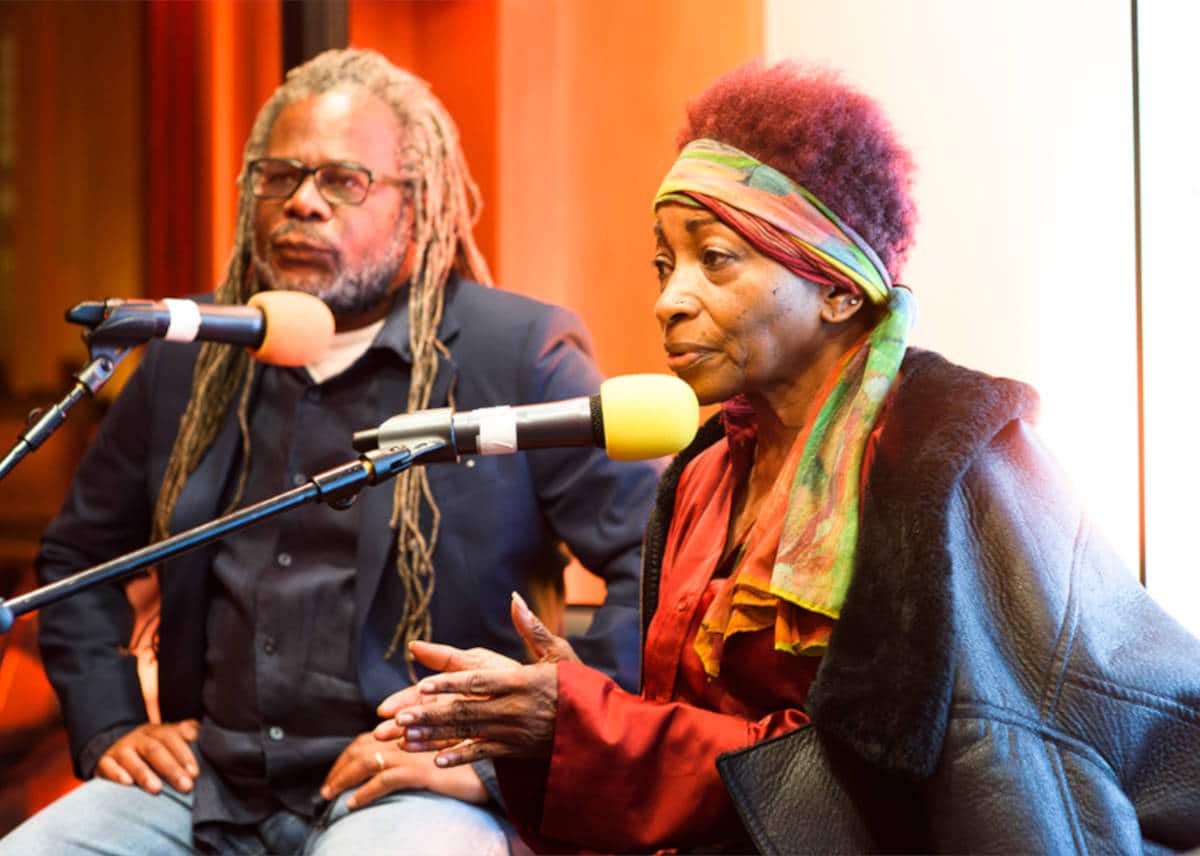
A tribute to Bonnie Greer
Founding editor of WritersMosaic Gabriel Gbadamosi pays tribute to Bonnie Greer, the extraordinary writer, public intellectual and much admired contributor to WritersMosaic who died on 15 September, 2026.
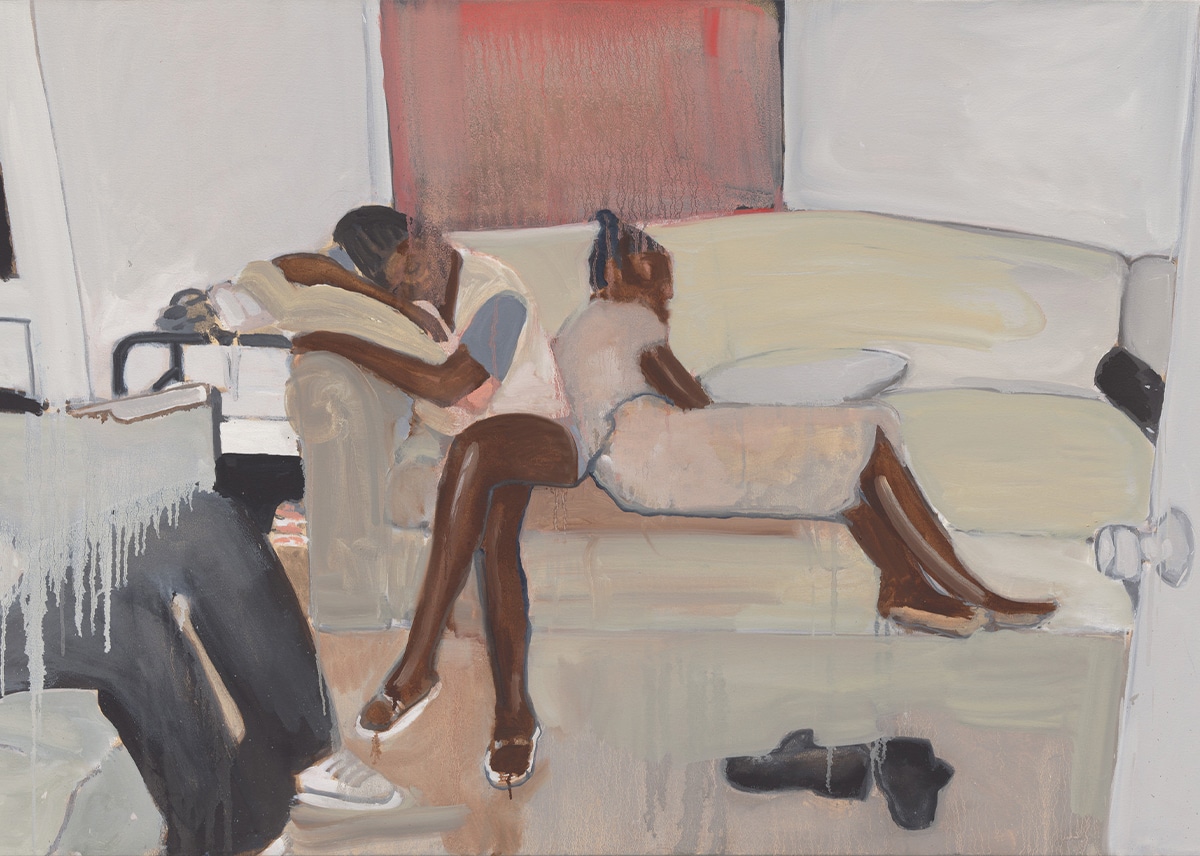
Triage
A response to the endless spiral of worldwide conflict and tragedy

The Complex
The unraveling of a dynasty

Disappearing Images
A festival of ephemeral art and the impermanence of our current world
Ever Land
A layered and haunting view of daily life in occupied Palestine

Free Will
Will Harris reads his poem, 'Free Will'. Directed by Matthew Thompson and commissioned by the Adrian Brinkerhoff Poetry Foundation.

Half Written Love Letter
Selina Nwulu reads her poem, 'Half Written Love Letter'. Directed by Matthew Thompson and commissioned by the Adrian Brinkerhoff Poetry Foundation.

Illuminating, in-depth conversations between writers.
Listen to all episodes
SpotifyApple Podcasts
Amazon Music
YouTube
Other apps

The series that tells the true-life stories of migration to the UK.
Listen to all episodes
SpotifyApple Podcasts
Amazon Music
YouTube
Other apps
WritersMosaic interrogates the notion of ‘staying in your lane’ by asking writers how they attempt to think beyond the parameters of their cultural identity.
Listen to all episodes
SpotifyApple Podcasts
YouTube
In the first series of poems commissioned by Hannah Lowe, six poets explore how ritual gives meaning to our lives.
Listen to all episodes
SpotifyApple Podcasts
YouTube