
The Secret Agent
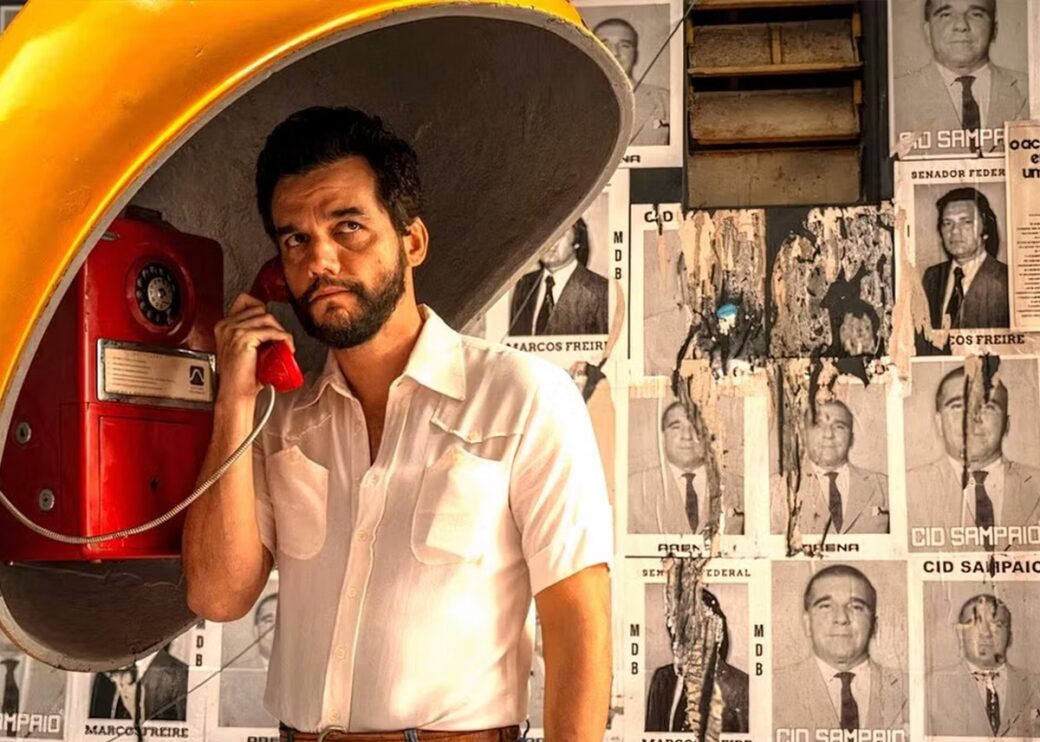
Directed by Kleber Mendonça Filho, 2025
The Secret Agent has almost everything a spy thriller ought to have. There are the covert recordings of conversations, the assassins carrying a photo of their target, a human leg found in a shark, and government files that are scanned at top speed. And yet Brazilian director Kleber Mendonça Filho’s follow up to his surrealist anti-colonial fable Bacurau is as playful with the genre as he was in that film. (Between the two, he made Pictures of Ghosts, a documentary that explores Recife – also the setting of The Secret Agent – through its cinemas.) All the trappings of the spy thriller are here, but they fizzle out with slight confusion: the recordings find their way into an academic archive, the assassins are frequently useless, the leg becomes a satirical cartoon in a newspaper, and the government files predictably go nowhere. Life, Filho seems to tell us, is not a spy thriller, however much it might resemble one.
This is the central premise of The Secret Agent, a film that renders the setting of Brazil’s military dictatorship in the 1970s briefly glamorous, only to reveal it as shockingly mundane. Resisting a dictatorship might seem like an exciting endeavour but, as protagonist Armando (Wagner Moura) – a man who is not a spy but an academic who has angered the wrong people – finds out, living under the constant threat of death is mostly just frightening and inconvenient. This is a far cry from last year’s film by Walter Salles, I’m Still Here, which tackled this period in Brazilian history with gut-wrenching empathy. Filho’s eye is compassionate towards his characters and angry at the state, but his wry subversion of genre points to much broader concerns about how we encounter history, and the stories we tell that both capture and erase the past.
The Secret Agent begins with a radio broadcast nostalgic for the 1960s, followed by a series of archival photographs showing everyday people living during the two decades of military dictatorship that began in 1964, and a title card that explains the time and place: Brazil, 1977, ‘a time of great mischief’. Is this mischief meant in the sense of play, or trouble? Filho uses the former to explore the latter: one scene delves into magical realism, as the leg comes to life and attacks gay couples cruising, only to reveal it is a cover-up story for police corruption and brutality during Carnival.
These moments of weird and wacky state violence contrast with the quiet reality of Armando’s life beyond the reach – to the extent that this is possible – of the dictatorship: the small commune of refugees and dissidents living in a hostel run by octogenarian anarcho-communist Dona Sebastiana; and the crayon scribbles of sharks that his small son draws for him. Filho fills in the gaps in the archive, the moments that get lost in the process of historical production. As with the best political art, The Secret Agent is as much about the contemporary moment as it is about its period setting. What does our remembrance of the past say about who we are in the present day? How do we understand ourselves, if not as a product of the past that – paradoxically – we have created?
This interplay between legacy and identity – both personal and national – is capped off in The Secret Agent’s frame narrative, which begins as curious interstitial scenes of a young woman listening to recordings of Armando at a time that (judged by technological clues) is close to the present day, and culminates in a key that unlocks the film’s entire thesis. Laura Lufési plays Flavia, a research assistant at a university working on the resistance network that Armando participated in. It is through her that we find out what ultimately happens to him: our close narrative perspective on his movements suddenly wrenched into the newspaper cuttings and slides of the archive. And it is through her that we meet Armando’s now grown-up son, Fernando (also played by Moura, in another visual nudge to the film’s preoccupation with cycles of history), as she goes to the blood bank in which he works to ask him about his father.
Flavia has spent weeks immersed in Armando’s life; sitting opposite his son, she realises that she knows Armando both more intimately than his son ever will, and not at all. There are many different kinds of historical memory – some that the archive will never be able to capture. Fernando jokes that he will only meet Flavia on condition that she donates blood. Sitting in the chair, Flavia asks if she can see the blood she has just given. The nurse hands it over, and Flavia remains there, holding the weighty bag of her blood in her hand. It is much harder, The Secret Agent tells us, for the rest of us to understand exactly what we have inherited, and what we have lost.
WritersMosaic monthly
Get new reviews in your inbox
One email monthly, unsubscribe anytime
Ever Land
A layered and haunting view of daily life in occupied Palestine
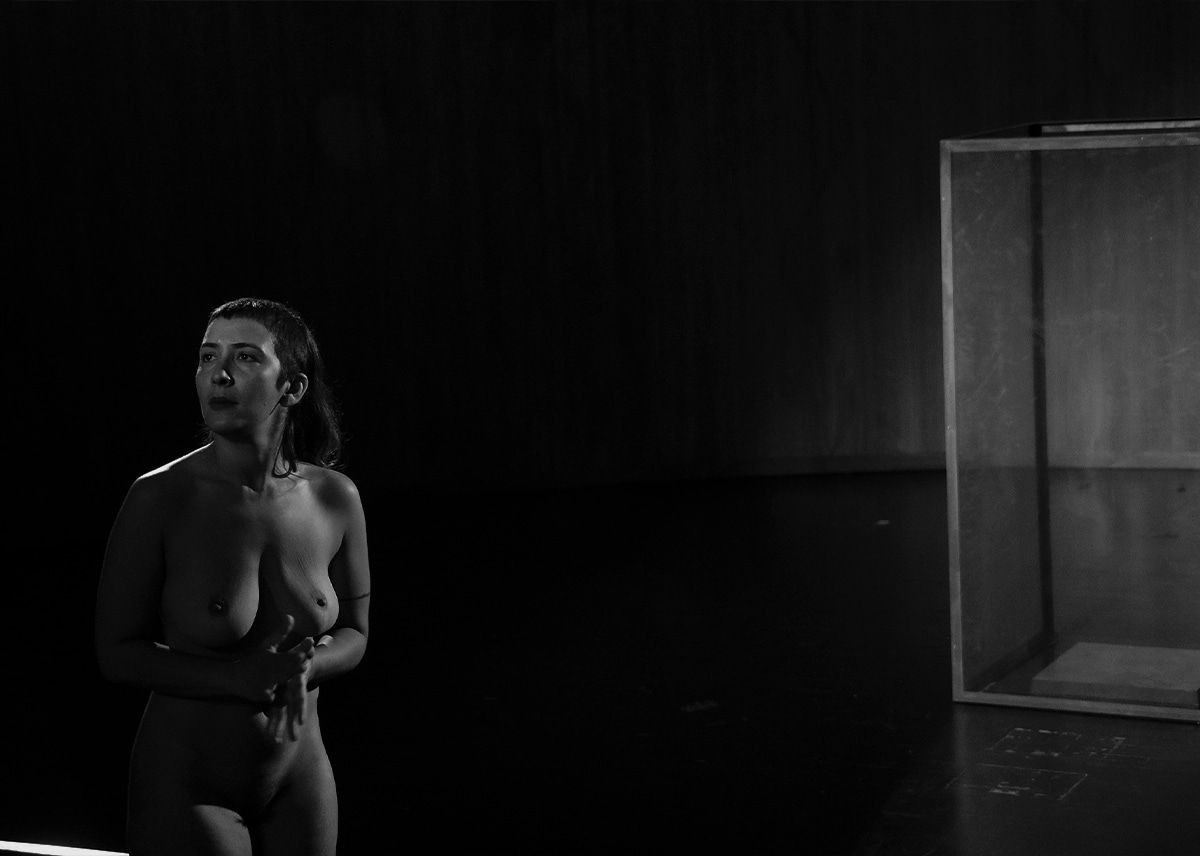
Mahsa Salali’s Naqqāli
'Salali positions the female body... as an active agent'

At Sea
Bearing witness in the face of dismissal

Triage
A response to the endless spiral of worldwide conflict and tragedy
My tomorrow is today
'I clasped my hands together, not in prayer but to stop them from shaking'
Ballet Black at 25
Cassa Pancho: 'It’s a miracle that we are still here in some way'


Free Will
Will Harris reads his poem, 'Free Will'. Directed by Matthew Thompson and commissioned by the Adrian Brinkerhoff Poetry Foundation.

Half Written Love Letter
Selina Nwulu reads her poem, 'Half Written Love Letter'. Directed by Matthew Thompson and commissioned by the Adrian Brinkerhoff Poetry Foundation.

Illuminating, in-depth conversations between writers.
Listen to all episodes
SpotifyApple Podcasts
Amazon Music
YouTube
Other apps

The series that tells the true-life stories of migration to the UK.
Listen to all episodes
SpotifyApple Podcasts
Amazon Music
YouTube
Other apps
WritersMosaic interrogates the notion of ‘staying in your lane’ by asking writers how they attempt to think beyond the parameters of their cultural identity.
Listen to all episodes
SpotifyApple Podcasts
YouTube
In the first series of poems commissioned by Hannah Lowe, six poets explore how ritual gives meaning to our lives.
Listen to all episodes
SpotifyApple Podcasts
YouTube