
Soundsystem as pedagogy
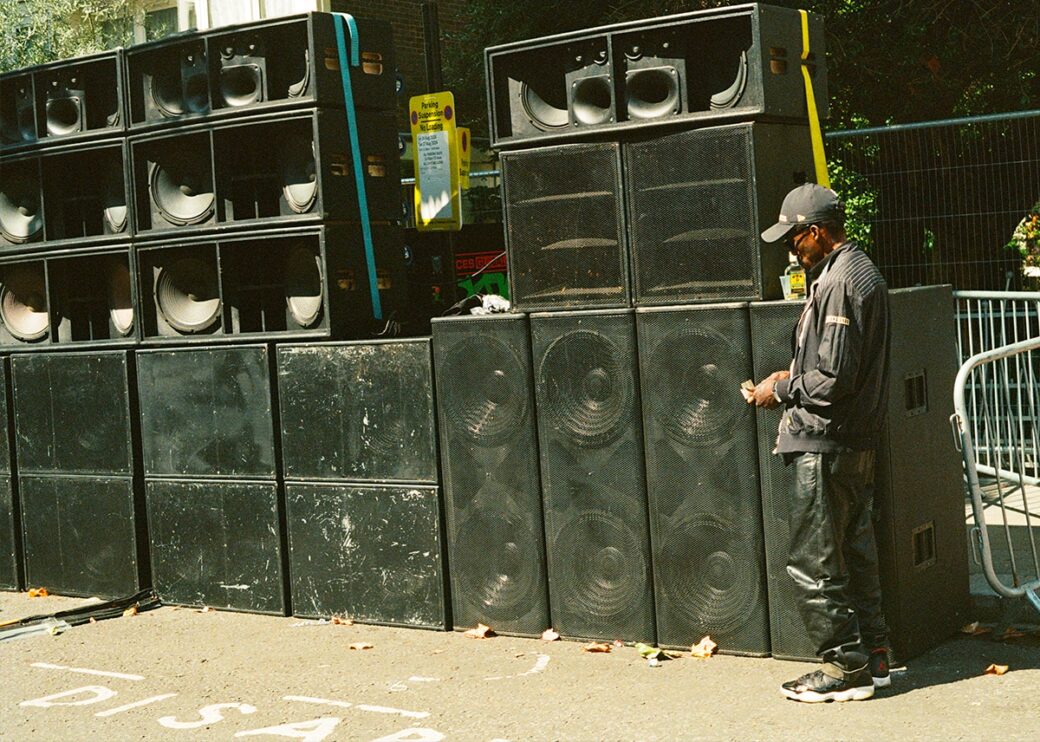
It is difficult to describe what sixteen-inch bass bins stacked higher than your body do to you, but I will try.
At a certain depth, your ears stop being the primary instrument for listening. The bass lowers and vibration takes over. It moves first through cartilage, then bone. Your ribcage begins to hum. Your skull fills with pressure. You realise, slowly, that you have become another speaker the stack is playing through.
If you arrive with anxiety, you cannot quite locate it anymore. The bass occupies the space where it lived. Sadness shifts. Even trauma loosens its grip. The frequencies press against it, redistributing it through the nervous system until it becomes, if only for a few hours, easier to live beside.
I did not have language for any of this when I first encountered soundsystem. I only had a body.
Before I understood any of this historically, I understood it in the body.
Later, I would learn that soundsystem culture crossed the Atlantic because it could be carried. It travelled as nostalgia but also as infrastructure. It’s impossible to pack land into a suitcase. It’s also impossible to transport the weather, the slope of a hillside, the exact smoke and salt smell of evening in Kingston. But you can carry basslines pressed into vinyl. You can build wooden speaker boxes large enough to hold the sound of your feelings. You can carry the knowledge of how to wire sound so that it travels not just through air, but through bodies.
When Caribbean migrants arrived in Britain in the mid-twentieth century, they came with contacts – addresses scribbled on paper – and a limited welcome. They also arrived with rhythm as infrastructure. A soundsystem required no institutional approval. It could be assembled in a rented hall, a church basement, a youth club in Deptford or New Cross. It could turn a cold British night into something warmer. A temporary reconstruction of belonging. A reminder that home was not always a place but sometimes a frequency.
Sound became luggage and language at once. Portable. Through the speakers travelled music and all the memory, slang, scripture, humour and politics the music held. The speakers were monuments that could be dismantled at dawn and rebuilt the following week somewhere else. Nothing permanent except the knowledge carried in the body.
I did not know any of this when, in the early nineties, I first stood inside a session by Jah Shaka, a Jamaican reggae and dub soundsystem operator. I only knew that the room felt different from any room I had entered before.
The air shifted before I noticed it. The bass arrived as pressure, vibration settling inside the lungs. My stance softened without permission. Breath recalibrated. My ribcage became a drum I did not know I had been carrying all my life.
The speakers stood like architecture. Wooden scoops rising in columns. Midrange horns angled with intent. Tweeters perched above like watchful birds. Birch ply cut and folded into curves that suggested patience. They were built by people who understood sound as a living thing requiring careful housing.
What made Shaka’s system singular was that his sound was deep in a way that felt ancestral. The bass favoured the underside of things, frequencies low enough to rest in the abdomen and hum along the spine. Above that depth, the midrange carried the message cleanly. The voice sat firm in the mix, intimate as someone singing into only your ears. Even at volumes that bent the air, the sound held warmth.
He stood at the controls with restraint. Small adjustments. A lift in the mids so a chant travelled further. A gentle easing of the highs to keep the room tender. Bass riding steady, never frantic. The mixing desk was an instrument. His hands were patient upon it.
A session unfolded rather than sprinted. Early tunes warmed the walls. Later, deeper dubs stretched time; delays opened corridors behind you. By the small hours, something like clarity arrived. You left recalibrated. Heartbeat altered. Shoulders lowered. It was as if the room had placed a hand at the centre of your back and reminded you how to stand like you belonged to something.
Long before I encountered Shaka in England, I was learning the grammar of sound elsewhere.
In Trinidad, five houses down from me, the local soundsystem was called Joy Production Sound. By the early ‘80s, they carried a national reputation. The men who moved with that sound seemed self-assured, aware of themselves as a unit. They travelled as a clique. If conflict arose, it wasn’t an argument with one person but with twenty people backing up from Joy Production. I wasn’t a particularly confident teenager – sporty and studious, social and quiet, and overall my self esteem was low. By the time I was old enough to attend parties without asking permission, I lived close enough to Joy Production Sounds to be recruited. Recruitment looked like being chosen to lift speakers.
The speakers were heavy and awkward, edges pressing into my forearms, wood biting into fingers. At the powder blue of dusk, we loaded them onto the truck. At sunrise, after the last tune had been spun and the crowd dissolved into bleached morning light, we loaded them back again. There was no wage. The payment was proximity.
To belong to the sound was to inherit its swagger. It meant close, slow dancing in dark halls with women smelling of talcum powder and sweat, who had not noticed you before. It meant that if someone raised their voice to you, 20 men would close the space behind your shoulders. It meant a kind of confidence that arrived slowly, earned through labour and repetition. Through being trusted with the weight of these dusty black speakers.
This was my first school, though no one called it that.
There was hierarchy. The owner, Dana, rarely addressed me directly in those early years, and I did not speak to him. As abrasive as that sounds, there was no air that he didn’t like me (because if he hadn’t, I wouldn’t have been there): when he brought food and drink, it was clear he brought food and drink specifically for me. Also, it’s not that he didn’t acknowledge me, he did with a nod every time and everywhere he saw me, even when I wasn’t working with the sound. Instructions travelled downward through wiring men and selectors until they reached the speaker boys at the bottom, me among them. But hierarchy meant order. With 20 young men and fragile pride, structure prevented chaos.
Over time, respect altered your position. From carrying boxes to carrying vinyl. From coiling cables to wiring them yourself. Eventually, Dana spoke to me directly. Invited me to meetings. Stood beside me at events rather than nodding and moving on. I began to understand that a soundsystem was not merely machinery through which music passes. It was a system of people, of roles, of discipline. A place where you learned how to be seen without demanding to be seen.
In England, many of the sounds I encountered cared little for mainstream visibility. Reputation inside the Black British community was the only currency that mattered. Nowhere was this clearer than in the soundclash.
From the outside, a clash might appear collaborative, two respected sounds meeting so a crowd can enjoy their combined knowledge. In truth though, it was strategic warfare conducted through bass. Once announced, preparation became obsessive. Dubplates were commissioned: familiar reggae tunes re-recorded with your sound’s name threaded through the lyrics like praise poetry. Selectors flew to Jamaica or flew artists to London. Some remortgaged houses to secure the right voice on wax.
In the dance, the crowd served as judge, jury and executioner. One perfectly timed dubplate could dismantle an opponent’s reputation. A poor showing could have even your own supporters booing. Reputation lived or died in real time. You could feel it shifting in the room before anyone spoke.
What I understand now, looking back across decades of stacked speakers and vibrating floors, is that beneath all this, beneath the labour, the clashes, the architecture of wood and wire, the soundsystem functions as a school without enrolment forms and certificates at the end of the night. Yet generation after generation has been formed inside these rooms.
The lessons begin in the body. Bass first. Before language, before history is named through a microphone, the frequencies reorganise the nervous system. They steady the breath. Lower the shoulders. In that softened state, a person becomes receptive. The soundsystem understands something formal education often forgets: the body must be steadied before the mind can receive.
Then the curriculum widens. Lyrics carry fragments of African history, Rastafari philosophy, anti-colonial thought. Migration stories teach geography. The cost of dubplates teaches economics. Wiring speakers teaches engineering. Hierarchy teaches discipline. Belonging teaches confidence.
The soundsystem did what school often failed to do for Black working-class boys in Britain and the Caribbean. It made us feel necessary. It gave us somewhere to stand while we were still learning how to stand.
You learned how to move inside a community. You learned that vibration is larger than music. You learned that institutions could be built when you were excluded from official ones. That knowledge could live in frequencies as securely as in books. That history could be felt in the chest before it is understood in the mind.
For those of us who passed through these spaces as teenagers, lifting boxes, waiting for a nod, the education was invisible at first. Only later does its depth become clear. Only later do you recognise how much of yourself was shaped in rooms where the bass was loud enough to rearrange your breathing.
Night after night, decade after decade, the soundsystem was assembled. Tuned. Switched on. People gathered. The bass moved through them, reminding each person they were not alone in the room, not alone in history, not alone in the ongoing work of becoming.
What began as vibration became instruction. How to stand. How to listen. How to belong without asking permission. A soundsystem plays music, but it also teaches the body how to hold itself upright in the world.
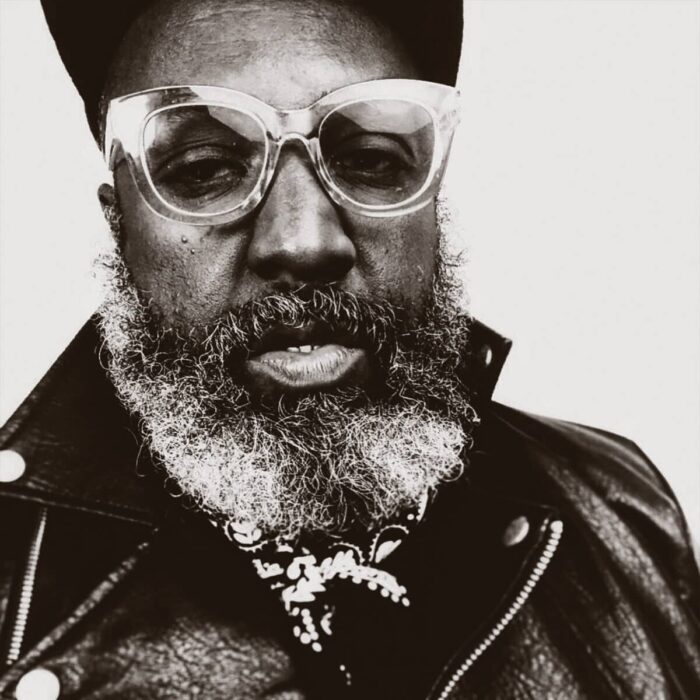
Roger Robinson
Roger Robinson is an award-winning writer and performer from Trinidad now living in Britain.
WritersMosaic monthly
Get new writing in your inbox
One email monthly, unsubscribe anytime

Coats
The unexpected cost of acquiring two Italian leather coats in Rome
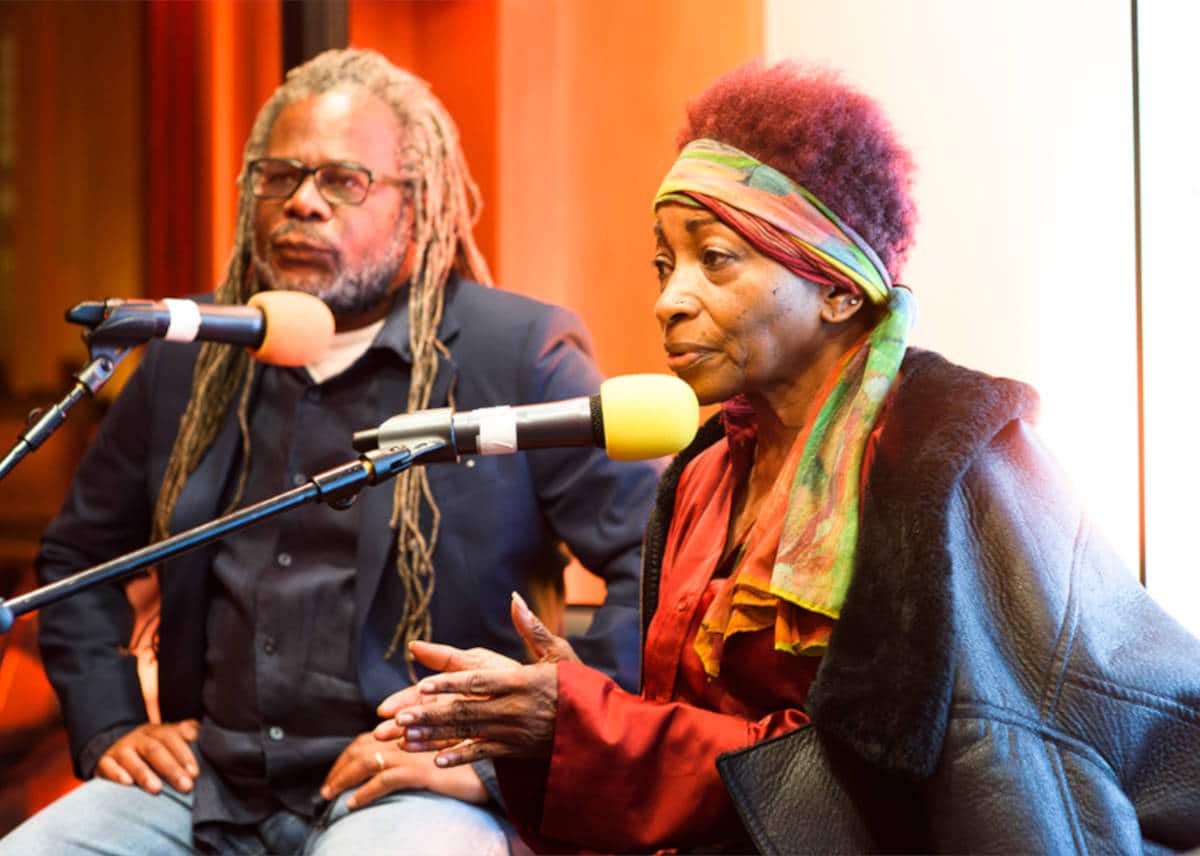
A tribute to Bonnie Greer
Founding editor of WritersMosaic Gabriel Gbadamosi pays tribute to Bonnie Greer, the extraordinary writer, public intellectual and much admired contributor to WritersMosaic who died on 15 September, 2026.
Triage
A response to the endless spiral of worldwide conflict and tragedy





The Complex
The unraveling of a dynasty

Disappearing Images
A festival of ephemeral art and the impermanence of our current world
Ever Land
A layered and haunting view of daily life in occupied Palestine

Free Will
Will Harris reads his poem, 'Free Will'. Directed by Matthew Thompson and commissioned by the Adrian Brinkerhoff Poetry Foundation.

Half Written Love Letter
Selina Nwulu reads her poem, 'Half Written Love Letter'. Directed by Matthew Thompson and commissioned by the Adrian Brinkerhoff Poetry Foundation.

Illuminating, in-depth conversations between writers.
Listen to all episodes
SpotifyApple Podcasts
Amazon Music
YouTube
Other apps

The series that tells the true-life stories of migration to the UK.
Listen to all episodes
SpotifyApple Podcasts
Amazon Music
YouTube
Other apps
WritersMosaic interrogates the notion of ‘staying in your lane’ by asking writers how they attempt to think beyond the parameters of their cultural identity.
Listen to all episodes
SpotifyApple Podcasts
YouTube
In the first series of poems commissioned by Hannah Lowe, six poets explore how ritual gives meaning to our lives.
Listen to all episodes
SpotifyApple Podcasts
YouTube