
Kin
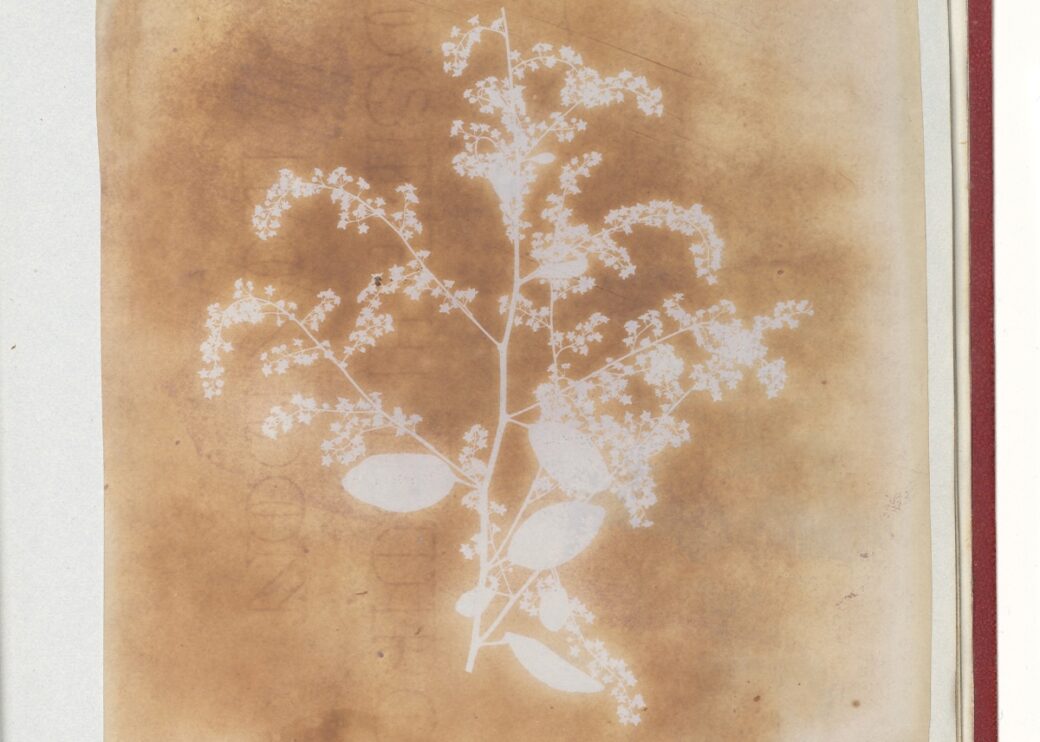
Tayari Jones
Oneworld, 2026
Anyone who has had the pleasure of spending any time with Tayari Jones’ previous novels, including the Women’s Prize-winning An American Marriage (2018), will not be surprised by the skill with which she paints her protagonists Annie and Vernice in her new offering. However, readers may be surprised that, despite all the excellence that came before it, Kin may well be the author’s most triumphant work of literature to date.
Annie and Vernice have been as close as friends can be since their 1941 births in a tiny town called Honeysuckle, Louisiana. It’s a place where everyone knows everyone and there’s nowhere to hide. Both girls are raised without their parents by family members who care for them in a way that is loving and full of sacrifice, but without tenderness. They are bonded by a mother wound that won’t heal, and that directly impacts every choice they make.
Despite being from almost identical circumstances, days before their high school graduation, their lives drastically diverge. As each experiences life without their ‘cradle friend’ for the first time, they navigate the challenges of life outside Honeysuckle; segregation, relationships, family, grief and coming of age. Each choice they make, from jobs to lovers to surrogate mothers, forms the person they will be for the rest of their lives. Separated by choices and geography, they stay in touch through letters. Kin is told from both characters’ perspectives, and both Annie and Vernice’s stories are equally compelling. Read side by side, you can see one girl learning and becoming, whilst the other’s progress is hamstrung by a mother she never knew.
Jones’ commitment to historical accuracy shines through, and the details – particularly those pertaining to Spelman College and the girls’ experience at this fraught time in American history, when race relations were changing at different paces on either side of the Mason-Dixon line – feel richly researched. Issues of colourism, classism, racism, homophobia are realistically yet sensitively handled. Kin is culturally specific, filled with hoodoo and haints. Jones’ obvious care and respect when dealing with these matters means Kin is sure to enter the literary canon as a love letter to the Black Americans of the ‘40s and ‘50s.
With all its rich detail, Kin is both stunning in its specificity and intentional in its universality. These young women, only a few generations away from families born in chains, want all the things that young women want today. I don’t know what it is to be born into segregation in the American South, but I know deeply what it is to have a desperate need to find yourself, your people and your way in the world. How the most trivial of upsets can knock you for six even when you know, against the backdrop of everything else you’re going through, it means very little. How you can experience trauma and joy sometimes in the same breath. How grief, loss and loneliness bite, no matter who you are or where you’re from.
Despite the deeply serious, and sometimes tragic, subject matter, I often found myself laughing out loud. This is thanks to Jones’ uniquely-penned cast of lively female characters, the banter that they have and the relationships they form with each other. I particularly loved that some of the women have catchphrases to excuse their bad behaviour – whether it’s Vernice’s Aunt Irene claiming she’s ‘no good with children’ when she upsets Vernice, or her mother-in-law insisting that her ‘husband says I’m obnoxious, but he loves it’ when she says something inappropriate. From the rough round the edges ‘country’ folk, scraping together a whole town’s pennies to get a girl to college, to the well-to-do Atlanta women dressed all in white, throwing barbs at their bourgeois peers, everyone has a keen wit and a sharp tongue, and they use it to great effect.
There are no wasted words in Kin. Jones’ evocative use of similes is arresting and, at times, inspirational. When she writes, ‘Before I opened the door, I said, “I love you,” tossing the words over my shoulder like a handful of wildflower seeds’, you know everything the character feels about the potential of this relationship: the way she is sure a hardy love will bloom.
When asked to describe her new novel at the 2026 Hay Festival, Tayari Jones referred to Kin as a ‘friendship novel’. Of course, the book is much, much more than that, but it’s an important label, because there are few books that centre female friendship so definitively, intentionally and accurately as this one.
There is something inherently precious about a true friendship, one that transcends distance and time. You are expected to love your family. But to have a close friend is to choose a person, and continue to choose them every day when your circumstances often mean that it’s easier not to. Those of us who have met our soulmate in a friend know how lucky we are. Jones has bottled the essence of this, and this novel is a fitting tribute to these girlhood attachments that linger and become lifelong sisterhoods, family, kin.
Jade E. Bradford
Jade E. Bradford is an author and communications and engagement professional based in South Wales.
WritersMosaic monthly
Get new reviews in your inbox
One email monthly, unsubscribe anytime

Ever Land
A layered and haunting view of daily life in occupied Palestine
Mahsa Salali’s Naqqāli
'Salali positions the female body... as an active agent'

At Sea
Bearing witness in the face of dismissal


Triage
A response to the endless spiral of worldwide conflict and tragedy
My tomorrow is today
'I clasped my hands together, not in prayer but to stop them from shaking'
Ballet Black at 25
Cassa Pancho: 'It’s a miracle that we are still here in some way'

Free Will
Will Harris reads his poem, 'Free Will'. Directed by Matthew Thompson and commissioned by the Adrian Brinkerhoff Poetry Foundation.

Half Written Love Letter
Selina Nwulu reads her poem, 'Half Written Love Letter'. Directed by Matthew Thompson and commissioned by the Adrian Brinkerhoff Poetry Foundation.

Illuminating, in-depth conversations between writers.
Listen to all episodes
SpotifyApple Podcasts
Amazon Music
YouTube
Other apps

The series that tells the true-life stories of migration to the UK.
Listen to all episodes
SpotifyApple Podcasts
Amazon Music
YouTube
Other apps
WritersMosaic interrogates the notion of ‘staying in your lane’ by asking writers how they attempt to think beyond the parameters of their cultural identity.
Listen to all episodes
SpotifyApple Podcasts
YouTube
In the first series of poems commissioned by Hannah Lowe, six poets explore how ritual gives meaning to our lives.
Listen to all episodes
SpotifyApple Podcasts
YouTube