
Hurvin Anderson
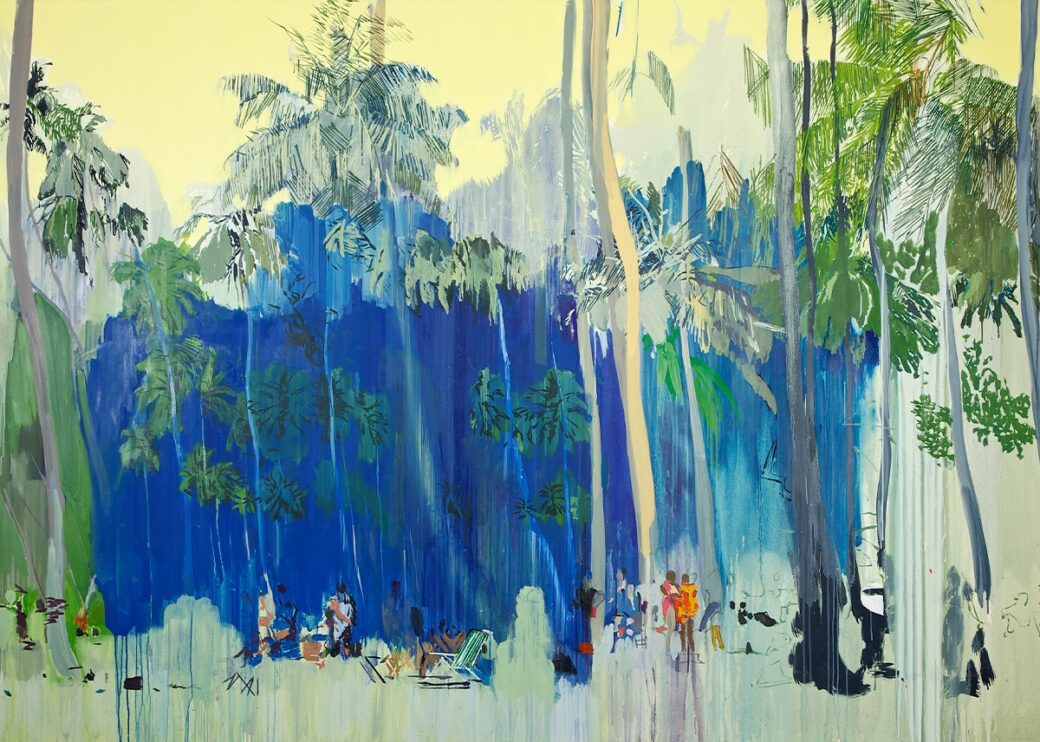
Hurvin Anderson
Tate Britain, until 23 August 2026
‘There were Africans in Britain before the English came here.’ The opening sentence of Peter Fryer’s Staying Power (1984), an irritant to white ethnonationalists, challenges their nostalgia, post colonial melancholia and the myth of Britain’s homogeneity. If we are defined by the stories that we tell ourselves about ourselves, then the story of Britain’s identity has long been mythologised. Recently, the writer Zakia Sewell in Finding Albion (2026) and playwright Winsome Pinnock in The Authenticator (2026) have exploded those myths, and explosions like these are increasingly evident in all art forms, especially among works by visual artists like Hurvin Anderson.
In Anderson’s major retrospective at Tate Britain, the British-born son of Jamaican migrants holds up a mirror to his birthplace in depicting the deepening reality of the country’s heterogeneity; a process that the cultural theorist Stuart Hall writes has resulted in ‘creolisation and multiple belongings’. Anderson’s work ranges from portraiture and still life to landscapes, especially focused on outdoor life in the UK and the Caribbean. Both beguiling and unsettling, the paintings discharge competing moods; at times an atmosphere of quietude gives way to a creeping sense of menace.
The retrospective begins with ‘Ball Watching’ (1997), a landscape painting with swathes of blue, green and turquoise, and figures of boys and young men beside a lake. From the catalogue we learn that the scene is set in a vast 63 acre public park in Handsworth, providing not just a ‘lung’ for locals and a space for recreation, but also a refuge from the confrontations with police that sparked street unrest and riots in 1985. Indeed, just outside the exhibition’s entrance, a darkroom screening the Black Audio Film Collective’s searing Handsworth Songs (1986) serves as a reminder of the tumultuous era with its everyday bigotry exemplified by Margaret Thatcher opining about the dangers British culture faced being ‘swamped’ by an army of immigrants.
In ‘Ball Watching’, the contemplative youths have their backs turned towards us; their stillness is accentuated as the light fades in the transition to dusk. They line the banks of the lake, waiting expectantly for something, for anything, to happen. This atmosphere of suspense, a feature of Anderson’s work, is echoed in many of his depictions of the fecundity of the Caribbean; branches, lush with myriad shades of green leaves, snake through the gaps in breeze block houses in ‘Limestone Wall’ (2020), threatening to reclaim cleared land and turning the remnants of Britain’s fraudulent civilising mission in the colonies back to the bush. In ‘Last House’ (2013), the job of reclamation is complete; the jungle has swallowed the building whole leaving little trace of its history. But vestiges of the blood legacy of slavery remain in the red splurges of fruit and flowering blossoms in the abundant foliage of ‘Ashanti Blood’ (2021).
The intersection of two cultures – of Britain and the Caribbean – runs through the paintings as a central theme of Anderson’s work, hinting at the ghostly presence of each in the other. In another, mostly grey, precursor to the Handsworth Park painting, ‘Ball Watching I’ (1997), the youths look over the lake, seemingly gazing at Kingston, Jamaica’s Blue Mountains and hurricane-battered palm trees.
In Anderson’s more readily recognisable Jamaican exteriors, trees ascend without end in settings that seem brooding and pregnant with feeling, evoking the heavy atmosphere before a storm. Paintings like ‘Ascension’ (2017) give the impression of the artist working at speed with thick and fine brush strokes. The adding and subtracting of paint gives the pieces an unfinished, otherworldly quality.
Their locale, somewhere between heaven and earth, is aligned with the visionary sermons of the Jamaican messianic preacher Alexander Bedward who, bizarrely, on 31 December 1921, invited his followers on a celestial voyage, telling them they’d ascend heavenward if, after climbing trees at a certain appointed hour, they’d jump on his command.
Bedward, standing tall and erect both in his madness and in the signature preacher’s gown that he wore at mass baptismal ceremonies of his followers at Hope River, ranks amongst the roll call of historical figures given prominence in Anderson’s work, notably in ‘Passenger Opportunity’ (2024), a title derived from the original 1948 advert inviting West Indians to book a passage on the HMT Empire Windrush. This is a huge work of linked panels, painted as if they were stills from a film, which offers a condensed version of Jamaican history – from blurred images of the enslaved on auction blocks to pioneering migrants disembarking the Windrush.
Found artefacts like the Windrush advert, along with photos taken by Anderson and other archival material such as newspaper cuttings and postcards, are regular starting points for his paintings. The photo of Mrs S. Keita is one the artist has returned to repeatedly. A tall, elegant young woman, kitted out in a short 1960s dress and knee-length boots, poses beside a wooden-framed television in the kind of pristine living room reproduced by Michael McMillan in his seminal installation The West Indian Front Room. Humble and affecting, the photo is reminiscent of the glamorous sitters that the graceful Malian photographer Seydou Keïta recorded in his studio, beginning in the 1940s, with backdrops of traditional cloth. Numerous iterations of Mrs S. Keita’s portrait show her covered in leaves, morphing into a version of the English folktale character Jack Green and on the verge of disappearing; an abstract version of her former self.
Indeed, Anderson often paints his subjects with their faces blanked out or scraped away so that they become impressionistic, resembling portraits by Gerhard Richter. But whereas with Richter individual features are still discernible, the faces of the subjects in an Anderson work are more often opaque and unreadable. An exception to this approach is ‘Grace Jones’ (2020), though the painting is barely a portrait and the details of her face are scant. Anderson’s Grace Jones is dwarfed by a derelict hotel with scarily high exterior concrete steps. She is an everywoman, and yet, a woman who assuredly descends the stairs prodding each step with a dainty, closed blue umbrella as if they were, in fact, a catwalk. This woman, it seems, is both at home with and not quite in sync with the ruined Caribbean architecture.
Like Anderson, I’m a 1970s child who felt untethered growing up here, neither at home nor belonging to the Caribbean or to Britain. In my youth, we, as the second generation children of migrants, had ‘no nation but the imagination’, like Shabine, the protagonist of Derek Walcott’s epic poem ‘The Schooner Flight’. Anderson’s paintings are reminders of how my peers and I struggled to picture the region’s islands from the memories relayed to us by our parents. As depicted in Anderson’s renditions of Handsworth, we too in Luton would imagine banana and coconut trees transplanted and grafted onto the landscape of the bluebell wood abutting our recreational park.
In literature, Hurvin Anderson’s landscapes find equivalents in the innovations of the novelist Wilson Harris. The Guyanese-born author, who moved to England in 1959, imagined parallel cultures in his adopted home, conjuring, for instance, Guyana’s Essequibo River on the streets of London’s Notting Hill, so that characters who walked down Portobello Road were transported to the interior of Guyana.
Towards the end of the retrospective, the conversation Anderson seems to be having with himself and with the visitors to the gallery comes full circle with ‘Drifters’, a work completed earlier this year and a magisterial throwback to the mood of ‘Ball Watching’. Here, in a scene suffused with a Stygian gloom, an ethereal man and woman emerge upright and alert on a raft. They could be an enslaved couple attempting to escape by river who are trapped en route to a destination that may yet turn out to be an underworld; it’s painfully poignant and alluring, and speaks to the tension in much of the artist’s work.
‘My struggle with Jamaica,’ Anderson has said, is that ‘I don’t know it and I know it. I have this romantic vision of it and a lot of my painting is fighting that romance.’ Hurvin Anderson wins the fight, executing his craft with great aplomb at Tate Britain. To enter the exhibition is to be immersed in a fictional world that transmutes Anderson’s experience of the everyday, both spiritual and banal, working here and at residencies in the Caribbean. It is a meditation on the illusory nature of the reality of Britain’s entangled history as well as the curation of that history. ‘When I go to Jamaica or the Caribbean,’ Anderson has said, ‘there’s a bit of me that wants to bring it back.’ By the end of the retrospective, through the extraordinary alchemy of his art practice, Anderson transforms Tate Britain and shows us a new vision of Albion.
First published in the TLS, 12 June
Hurvin Anderson at Tate Britain, until 23 August 2026
The Rise of the Roman Empire
An atypical history
Kin
The journey of two childhood friends in the segregated South as their lives drastically diverge
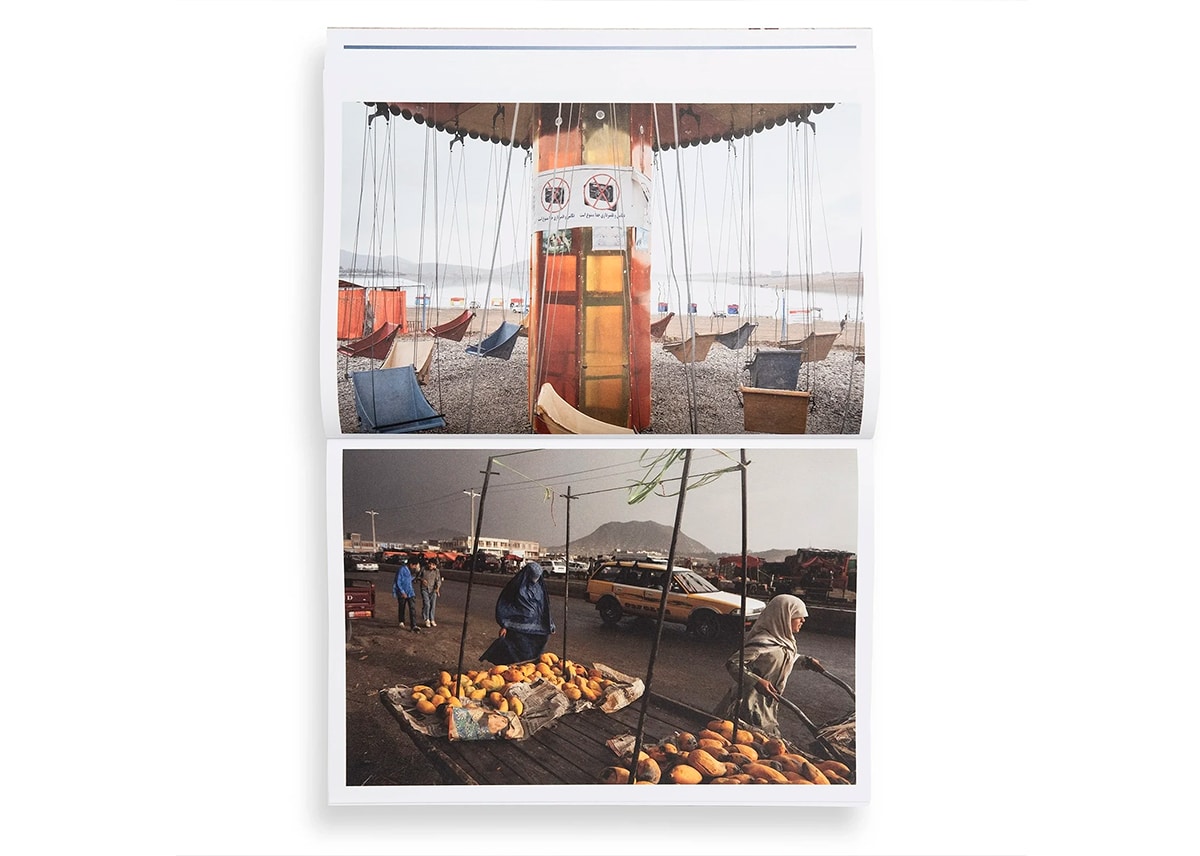
Afghanistanism
'Red is the colour of joy and beauty and also of the killing that comes in waves.'
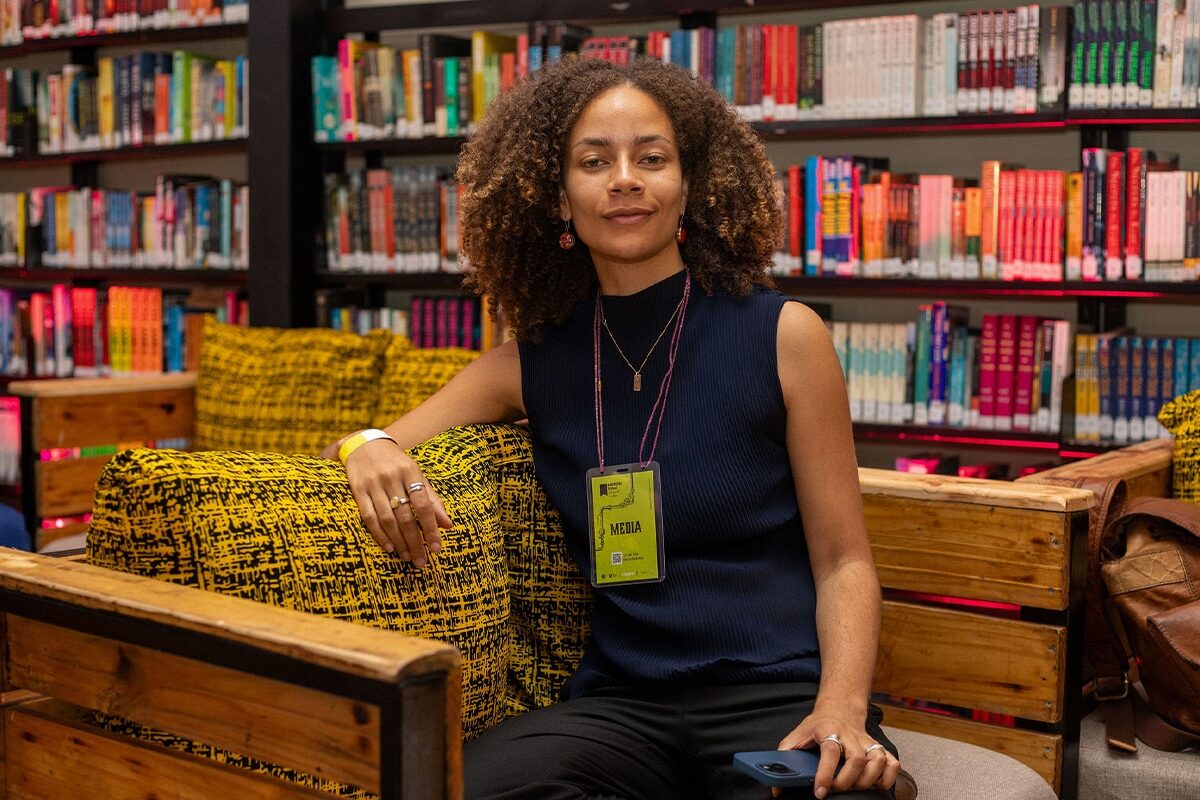
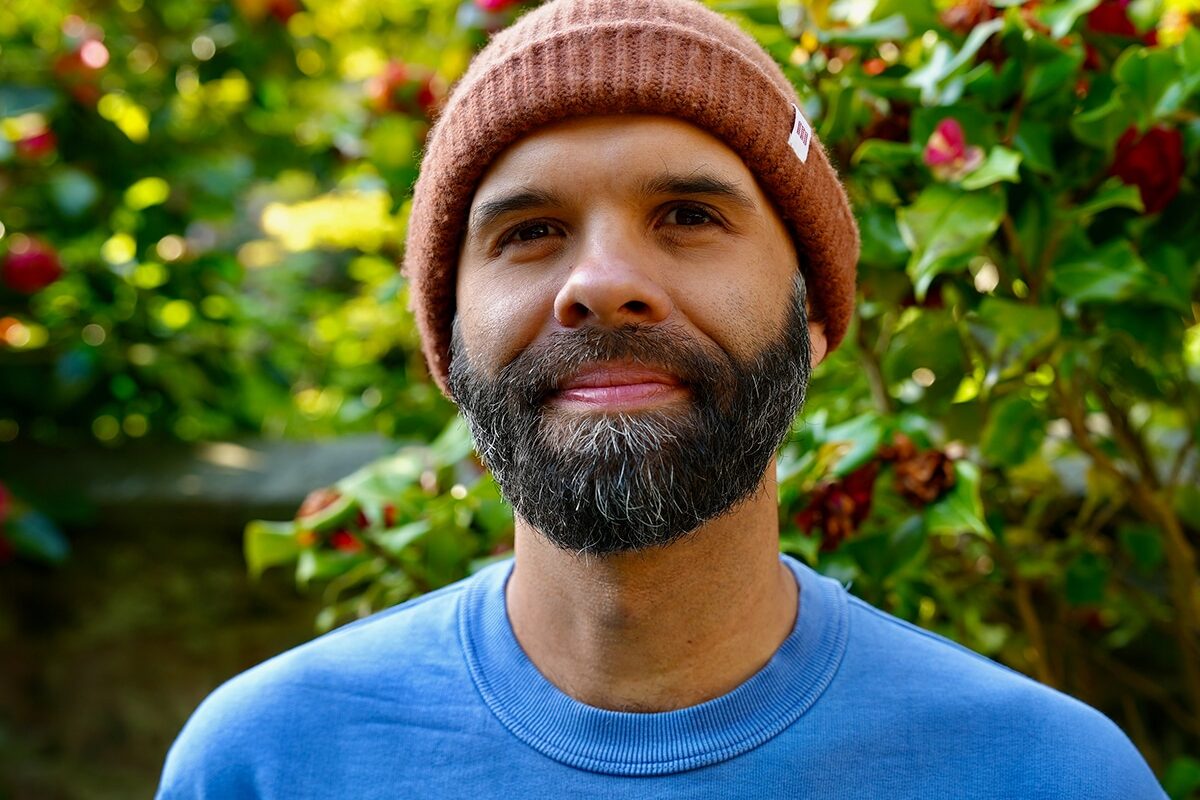
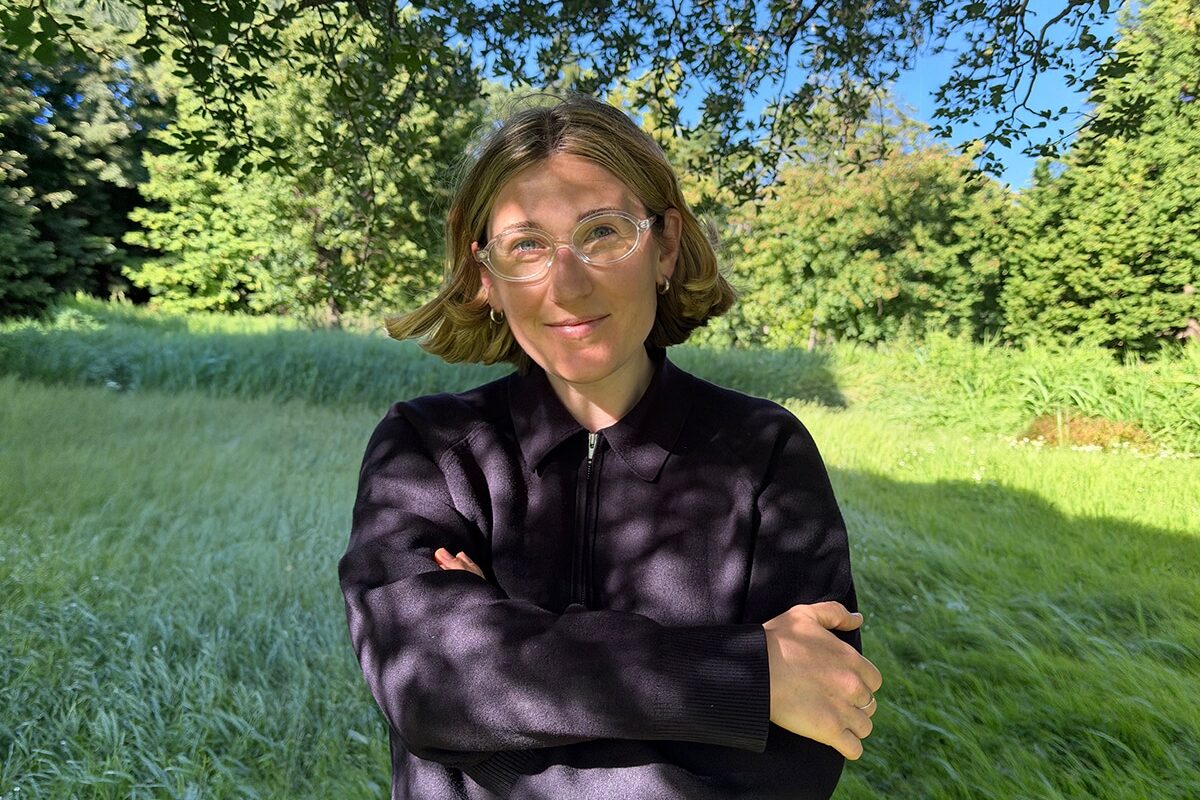
Didi
'My Grandfather did not let the world harden him. His eyes, which have greyed with his hair, shine like buttons when he laughs.'
Gentle Euphoria
A rare chance to rejoice in the collective craft of writing
Ideas are like rabbits
‘Ideas are like rabbits, you get a couple and learn how to handle them, and pretty soon you will have a dozen’

Free Will
Will Harris reads his poem, 'Free Will'. Directed by Matthew Thompson and commissioned by the Adrian Brinkerhoff Poetry Foundation.

Half Written Love Letter
Selina Nwulu reads her poem, 'Half Written Love Letter'. Directed by Matthew Thompson and commissioned by the Adrian Brinkerhoff Poetry Foundation.

Illuminating, in-depth conversations between writers.
Listen to all episodes
SpotifyApple Podcasts
Amazon Music
YouTube
Other apps

The series that tells the true-life stories of migration to the UK.
Listen to all episodes
SpotifyApple Podcasts
Amazon Music
YouTube
Other apps
Nine writers explore the elusive emotional truth behind narratives and storytelling.
Listen to all episodes
SpotifyApple Podcasts
YouTube