
Finding Poetic Inspiration in Uncertainty

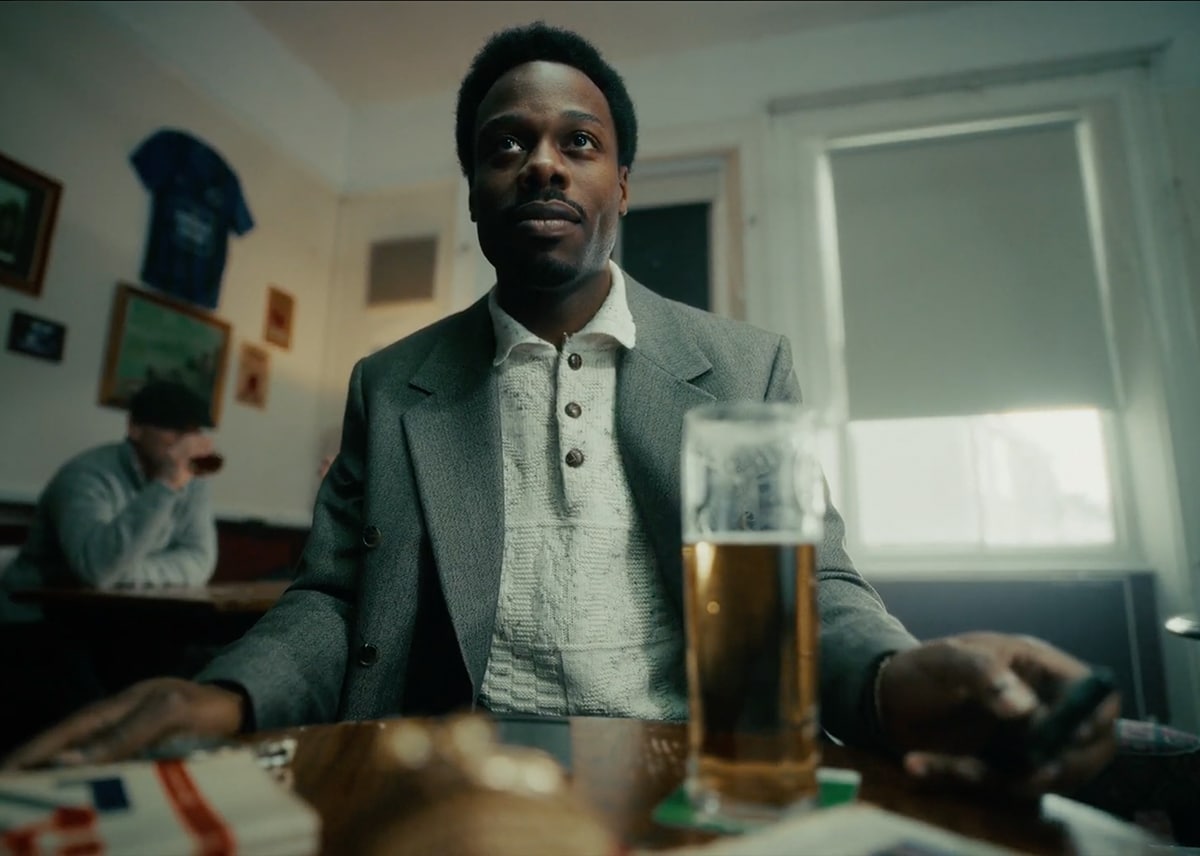
Still from Rob Akin’s film of ‘After the Blue Note Closes‘ by Larry Levis
Anthony Anaxagorou
I’m inspired by the things I don’t really understand. There’s a common misconception that poetry is born out of some grand epiphanic moment. As if the poet sits down for twenty minutes, opens their Moleskine and begins to dispense some of the most profound and tantalising verse known to humankind. Personally, I’ve never experienced such a thing. I tend to take months, years, to see where my impulses want to take me, and from there try to develop the ideas into something new and cohesive. I hate the thought of repeating myself in books, or overidentifying with a subject that readers or the market expect me to write about.
The moment I start to work on anything I begin with a series of questions. Sometimes I know the answer, one which happens to be so infuriating or troubling that I want the reader to somehow find their way into that question’s malaise. I don’t want to give the answer away but instead build a container that can house the question, so another is free to inhabit it.
I have a fascination with the mundane, which is where most of us will spend the majority of our lives. I find that the interplay between ordinary moments set against the complexities of social structures and theory make for rich poetic ground.
The poems I chose for the Adrian Brinkerhoff Poetry Foundation and WritersMosaic collaborative poetry short film series, UK Global Majority Poets on Film 2025, deal with ordinary, everyday themes. For the series, I read and turned into films my own poem, ‘Things Already Lost’, and Larry Levis’s poem ‘After the Blue Note Closes’ – a poem which has had a profound influence on my work. Both poems deal with similar ideas, exploring masculinity, fatherhood, and connection. Within that specific tripartite lives an important insight into understanding the ways many men are socialised.
Over the years I’ve received some mild criticism aimed at how my poems tend to reinstate what’s regarded as the toxic side of masculinity – in that there’s a physicality and violence to them which some see as a performance of machismo. I agree, although I don’t necessarily see it as a negative, more as a real-life dilemma being problematised through art, or at least that’s my intention. I have little interest in sanitising my poems, I want them to appear in places as ugly, uncomfortable and fractured expressions.
In Levis’s poem, the speaker is depicted as a bit of a degenerate; a philanderer, drinking alone in music bars until casually hooking up with a woman, perhaps looking for the same thing as he is. I admire the poem for its honesty and that subtle yearning. Levis creates a real sense of emptiness within an interior full of things, which in poetry we come to know as life and activity. It feels open in a way that accepts the moral dilemma the speaker is caught in, but also the selfishness of the individual. Again, this is very ‘masculine’, but I think Levis manages to strike a balance between the aloof Lothario and the tender father which manifests as a kind of guilt and maybe even shame at the end of the poem.
With my poem, ‘Things Already Lost’, I wanted to pull in ideas around touch and being touched through a series of frames – themes of disgust, nurture, accidents, safety and compromise all weave in and out of the scenes. Parenting is very much about accommodating another life, almost to the point your own life becomes completely eclipsed by that of your child, and I think we learn the different variations of touch and danger (which is also associated with care) through these kinds of events.
Poetry as a medium offers opportunity for wider political and social commentary, something which is made even more potent when combined with the visual culture of film. But poems don’t necessarily need to set out to solve or resolve anything. Poems can hold many different ideas at once; sometimes contrasting and competing theories can be juxtaposed.
I’m not really interested in poems as vehicles for ‘truth’. There’s something limiting, didactic and manipulative about poems which set out to prove a point or settle a score or convince the reader of a point of view. I appreciate those poems have a function and an audience but for me I find it better to try and create a multidimensional interior that resists slogans and imperatives and punchlines, where complex and nuanced ideas can exist and be explored with a more lateral push – one that can harness ambiguity, the senses and the mind too.
Poetry can encourage readers to allow themselves to feel confused and vulnerable. To get in touch with their own curiosity and embrace uncertainty. Any poem which is easily explained or pinned down is probably only working half as hard as it could be, and maybe doesn’t need to be a poem. Lots of lyric poems are just wanting to tell you something that happened to them, but in chopped up verse. I struggle to get excited about what I feel I already know to be true, or if the ideas lean so much into realism the language loses pressure and invention altogether. However, there’s also a fine balance in the kind of difficulty that wears a reader down or locks them out of the poem. That is also an issue with lots of writing. Personally, I’m always angling for that sweet spot which says I know what it means, I just can’t really explain it. It’s here amidst the uncomfortable and the uncertain where inspiration emerges and poetry can be itself.
UK Global Majority Poets on Film 2025 is a new short film series from WritersMosaic and the Adrian Brinkerhoff Poetry Foundation expanding the reach of award-winning, global majority poets through the visual culture of film. You can watch the films here on the WritersMosaic website and on The Adrian Brinkerhoff Poetry Foundation website
A version of this essay can be found on Apples and Snakes
Anthony Anaxagorou
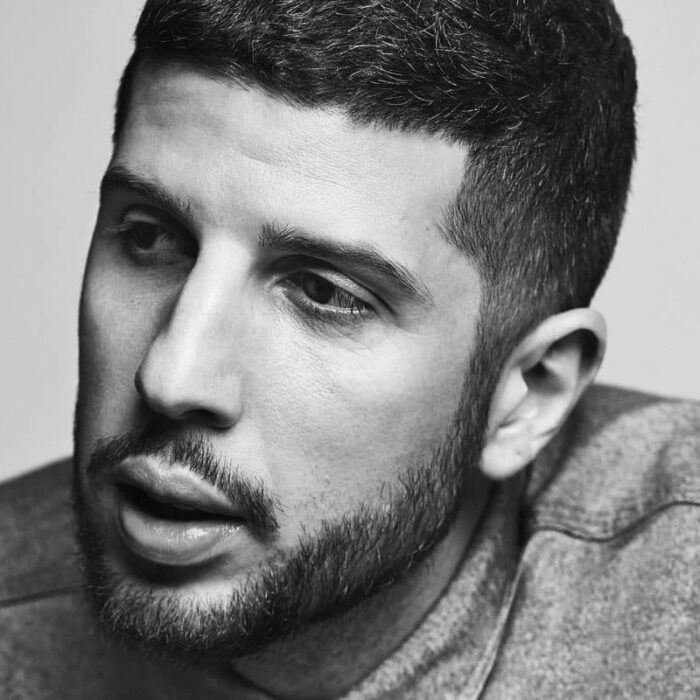
Anthony Anaxagorou is a British-born Cypriot poet, fiction writer, essayist, publisher and poetry educator.
WritersMosaic monthly
Get new writing in your inbox
One email monthly, unsubscribe anytime
It’s being published I get paid for; the writing I would do for free
‘Any advance [...] for your novel is to compensate you for the horrors of being published'
Complex antihero: an interview with Arthur Hughes
Unravelling Authur Hughes' Richard III
Marlon James: a Jamaican reckoning
'A return to a home I barely knew'
Haunting the Black Air
Poetic freedom across space and time
The Disappearers
A sprawling visceral experience that drops you in head first
The Lady Imam
Is the world ready to catch up with amina wadud?


Illuminating, in-depth conversations between writers.
Listen to all episodes
SpotifyApple Podcasts
Amazon Music
YouTube
Other apps

The series that tells the true-life stories of migration to the UK.
Listen to all episodes
SpotifyApple Podcasts
Amazon Music
YouTube
Other apps
WritersMosaic interrogates the notion of ‘staying in your lane’ by asking writers how they attempt to think beyond the parameters of their cultural identity.
Listen to all episodes
SpotifyApple Podcasts
YouTube