
Frank Bowling

Franklin Nelson interviews Sir Frank Bowling
Recognised today as one of the foremost artists of his generation, Sir Frank Bowling was born in 1934 in Guyana, then a British colony. He moved to the UK in 1953, graduating from the Royal College of Art with the silver medal for painting nine years later. In 1966, having gained prominence in the art world, he left London for New York, where he met other creatives, such as Jasper Johns, and produced his iconic ‘Map Paintings’. He returned to London almost a decade later, with an indelible reputation for work that powerfully explores the possibilities and properties of paint. Appointed a member of the Royal Academy of Arts in 2005 and knighted in 2020, Bowling works daily at his studio south of the River Thames.
Franklin Nelson (FN): The São Paulo Biennial, where you had 25 works on display – the most of any artist – ended on the 11th of January. How was it? What are your reflections on taking part?
Frank Bowling (FB): My stepdaughter did a video walk-through and showed my wife [the artist Rachel Scott] and I the actual building where my paintings were, and my paintings on the red wall when you first go in. I was thrilled to be invited to take part. It is an honour for me; I’m very taken with having been part of it.
It’s also been hard for me because I have wanted to go to Brazil for ages, São Paulo especially, and this was an opportunity, but I wasn’t able to go because of my physical condition. So of course, I was very put out by that.

FN: The Biennial marked the first showing of your work in Brazil, which shares a border with your birth country. With your work having ‘gone home’, do you feel closer to Guyana in any way?
FB: I feel closer to Guyana in every way, and I think about Guyana every day. I am a lot more ‘there’ in the last few years than I have ever been and feel much more involved in being there than I’ve ever been before.
When I returned to Guyana in 1989 for an exhibition with [the Guyana-born artist] Dennis de Caires at The Umana Yana, I went with my son, Sacha. I was very unsettled at how much it had changed but Sacha being with me was very stabilising. That was very important to me at the time, and the end result of that trip was that I named a painting after him, ‘SachaJasonGuyanaDreams’ (1989), and it’s hanging in the Tate Britain now.
FN: The Biennial featured some of your earliest works, including a portrait of your father from 1960. Has your relationship to the early work shifted as you have grown older and developed as an artist?
FB: Yes, I’d say it has shifted. I think it’s always been shifting because of my interest in Guyana and people. The portrait of my father is a funny painting because, at the time when I made it, we were at loggerheads; I didn’t get along with him. I played with making a painting under that cloud of feeling. I left Guyana because of my father’s position in the police force; he had risen in that system, in the British system, and there were other things, like leaving out my mother’s maiden name from my passport, as though I was a mirror to the life that he wanted to live but couldn’t. I had all that on my mind when painting that portrait.

FN: You have said before that your art ‘is about paint, not politics’. How has your art – or your way of making it – changed over time? If your art has always been ‘about paint’, has it always been about paint in the same way?
FB: I think it has always been about paint because, for me, painting is an occupation that takes the whole of oneself. It’s not something part-time, although I’ve come across people who’ve been able to make that split, and I find that difficult to understand. Making art about paint has been important to me all my working life, and my art has become more preoccupied with painting than anything else. That seems obvious to me.
FN: You have talked in the past about the influence of painters such as Vincent Van Gogh and Francisco Goya, and you have said that ‘there’s always been [JMW] Turner’. Are there particular paintings you back to for inspiration? What do we gain, in your view, by spending time with the work of artists who were alive centuries ago?
FB: Yes, sometimes I get the urge to go back to certain painters when what I’m working at my work, the actual stuff, is either becoming disengaged from whatever I want it to be.
I would say that I don’t think about specific paintings but more about certain painters. By spending time with the work of painters from centuries ago, I gained a grounding of what I am aiming to do with my own art, with my own self, if you like. The fact is that the people with whom I’m preoccupied stylistically are these great painters, like Titian and Turner. To me, it’s the work that these painters produced over many years that challenges me; it’s not about the people the painters were. I don’t know what Turner was like, although I hear stories every now and then!
FN: For a long time you had a studio in New York, in addition your studio in London. What did time in the United States, and getting to know people such as the essayist Clement Greenberg, do for your art?
FB: I think American artists took up art in a way that no one else was doing it. For instance, an artist like Jackson Pollock is a good example of someone who saw art in a way that people before then didn’t think about. In the same way, Greenberg backed the American artists as a new kind of artist; that anyone can do art. Art had been something that you did because it was what you were destined to do. America proposed itself in a new way, as a different place, so I think all of that influenced a young mind that was searching for something to do, which wasn’t what had been done before.
I was already drawing from American Pop artists like Ken Noland when I was doing the Swans in ’64 with the chevrons, and my paintings were changing. I was trying to make my art grow, if you like, and that contributed to my wanting to go back to New York. I was being left out of shows in London, and all this prompted me to feel that I’d be better off in New York.
When I arrived in New York in ’66, I brought over canvases with silkscreens of Bowling’s Variety Store, my mother’s house, on them. I’d started going further from the Expressionist works, more Pop art, and then it was in New York, being at the Hotel Chelsea, when I started using colour, pure and simple, allowing it to float and bleed below the house image. I really started to get away from figuration, using the light from the sun and shadows to make work. And of course there were things happening in New York: Greenberg’s show ‘Post-Painterly Abstraction’ and discussions.
FN: Your archive features a number of written texts, both about your own work and the work of others. As you see it, is there a relationship between writing and painting? Have you become a better artist by reflecting on art through writing?
FB: It’s the first time that I’ve been faced with a question that sounds like that, but I must have thought about it, because my answer is clearly in favour of this interpretation. I don’t know how to explain it though. I think that the job of explaining something as tentative as that is a tricky one; it’s one for others to try to do.
I keep changing what I think about the relationship between writing and painting. It’s all a way of expressing oneself. When I came to London, I was writing poetry. I had this yearning to be a poet; I wanted to write. I was trying to write a novel, so some of the experiences that I then was trying to paint came from my not being able to write about them. And in America, I soon found myself being asked to write and being an art critic and opinion-maker, and I spoke up about things, and then my luck began to change as an artist and it was there in New York that I began to be accepted – being a foreigner, a stranger, to being accepted by the art world as someone with a bit of talent.
FN: What do you hope people gain by spending time with your paintings? You have said that you were desperate to avoid the label of ‘exotic’. Is there a way in which you would like your art to be read?
FB: I think that I’m very lucky that I’m allowed to paint the way I do: in a modern way, in a way that you couldn’t conceive of before, say, Jackson Pollock in America. I’d like my art to be read as modern. The artistic canon in which I find myself, and allowed me to participate, is modern. I’d describe the paintings I’m working on now as taking risks.
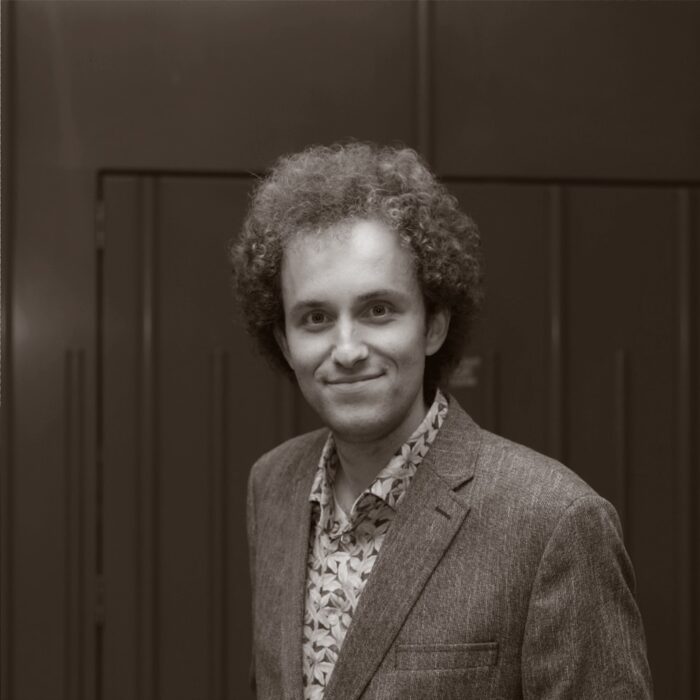
Franklin Nelson
Franklin Nelson works for the Financial Times, commissioning and writing on UK politics, the economy and society as well as books and the arts.
WritersMosaic monthly
Get new writing in your inbox
One email monthly, unsubscribe anytime
It’s being published I get paid for; the writing I would do for free
‘Any advance [...] for your novel is to compensate you for the horrors of being published'
Complex antihero: an interview with Arthur Hughes
Unravelling Authur Hughes' Richard III
Marlon James: a Jamaican reckoning
'A return to a home I barely knew'

Haunting the Black Air
Poetic freedom across space and time
The Disappearers
A sprawling visceral experience that drops you in head first
The Lady Imam
Is the world ready to catch up with amina wadud?


Illuminating, in-depth conversations between writers.
Listen to all episodes
SpotifyApple Podcasts
Amazon Music
YouTube
Other apps

The series that tells the true-life stories of migration to the UK.
Listen to all episodes
SpotifyApple Podcasts
Amazon Music
YouTube
Other apps
WritersMosaic interrogates the notion of ‘staying in your lane’ by asking writers how they attempt to think beyond the parameters of their cultural identity.
Listen to all episodes
SpotifyApple Podcasts
YouTube