
Listening to cherry trees
Rowan Hisayo Buchanan
On certain London streets, in early spring, your ankles will be brushed by eddies of cherry blossom. The pale pink petals are lifted by the breeze. They catch in the folds of your jeans and tuck themselves into your hair. In Japan, since the 1880s, the tumbling blossoms have been compared to the death of a warrior. They die quickly and beautifully. They scatter completely or rapidly disappear into the soil. In Kyoto or Tokyo, you and your friends might gather up a picnic blanket, some drinks, some snacks and go to a hanami, or cherry blossom viewing.
Hanami happen in the spring when most cherries bloom. But near my mother’s house, there is a winter blooming cherry. Each flower is only the size of a twenty-pence coin. It is probably a Prunus x subhirtella, which gives flush after flush. Alone on a winter’s day, I stop for a moment. I am grateful for its cheer as the sun slips away. I wonder is it hanami, if it is just me pausing, alone with my admiration?
In Japan, there are records of cherry blossom viewings since Kyoto became the capital in 794 AD. Aristocrats planted cherry trees in their gardens and cultivated particularly refined cherries, including those we call double-blossom. These are the cherry flowers that look like pink pom-poms, petals layered thickly upon each other. Twelve centuries later this tradition is ongoing. One of Tokyo National Museum’s National Treasures is a pair of six-fold screens by Kanō Naganobu. In English, the screens are titled, ‘Merrymaking Under the Cherry Blossoms’. On the right screen, noble women party under a double-blossomed cherry. They sport intricate kimonos, music is being played, one figure’s hands open in a clap. And above them, the blossoms hover in luxurious puffs of white.
But the ancient cherry blossom festival concentrated on the wild hill cherry which has simple white flowers with five petals, like a child’s drawing of a star. Poets, scholars and court records described these floriferous days. And so, scientists have been able to track the dates during which cherries bloomed. Starting around 1830, the cherries have opened their buds earlier and earlier. The trees respond to heat. It has been getting warmer and warmer. According to biologists Richard Primack and Hiroyoshi Higuchi, ‘The dates of cherry tree festivals in Japan have emerged as one of the most important sources of information on the impacts of climate change on plants.’
The tree that grows near my mother’s house is no mountain cherry. It has been bred for our pleasure, but surely it too feels the change of days, and the shifting climate? I try to remember if its flowering dates have moved since I was a little girl. But I wasn’t paying enough attention, not watching carefully enough. It grows above a tube line and I wonder if it can feel the trembling of travellers underneath its feet. In The Hidden Life of Trees (2015), the forester Peter Wohlleben pities trees on streets or in parks as strange and isolated beings, removed from their forests. Is it cruel, then, to treasure this tree? Does it dream of cherry forests?
Last year, I planted a cherry tree. Our garden is small, and I chose the most compact variety I could find, Kojo-no-mai. The blossoms are pale and open. The branches zig-zag like lightning. In the spring, fat bumble bees nestle deep in the petals. It, too, is forest-less. It is far from Mt. Fuji where its ancestor was supposedly found. So am I.
Sometimes, I am embarrassed to love the cherry’s obvious charm. Or to admit that it is my half-Japanese, half-Chinese mother who introduced me to the cherry. She pointed at the balls of pink and white and told me what they were. And so, they make me think of her. Cherry blossoms and Japan are almost a cliché. I’ve seen them on bento boxes, chopsticks, worn by Hello Kitty, in anime. In the famous eleventh-century Tale of Genji, by the noblewoman Murasaki Shikibu, the Emperor, the court, Genji and the Emperor’s favourite all attend a cherry blossom drinking party. The Emperor’s favourite, trying to resist the temptation of entering a forbidden relationship with Genji, recites silently a poem alluding to the blossoms.
Under the weight of all this, I can’t think of cherry blossom without thinking of the others who have loved it before me. The others with whom I’ve been sharing hanami. And while I’d love to say it was all about taking joy in nature, and in friendship, that would be a lie. As with most human loves, its history is messier. The blossoms were also painted onto the planes which many young men flew in World War Two. These men were told that when they died, they’d be reborn as cherry blossom. Scholars have argued that during this time, the cherry blossom which once symbolized new life, came to be associated with a beautiful death. The British-based Japanese writer Naoko Abe describes this shift in the use of cherry blossom by nationalist forces painfully and convincingly in her book, ‘Cherry’ Ingram (2016). It is a symbol used and misused.
My mother herself would remind me that despite its domination, the cherry is not the only plant of importance to Japan. She prefers the story of the plum. It flowers even earlier in the year with sharp thorns and is supposed to symbolize the scholar’s persistence against adversity.
I wish I could ask my Japanese grandfather what he thought of those blossoms. I know he took his Chinese wife and American daughter to see them in a New York park. Did the flowers make him think of poetry? Did he remember his boyhood days of war? But he is dead now. He did make me paper cranes – that other over-used image. Small and sharp beaked. His hands began to shake with sickness before my hands gained the skill to learn from him.
One day, I will show my daughter the tree I planted. I will tell her about her grandfather, about clapping noblewomen, about the changing heat. Maybe she will not be interested. I will lift her face closer to the pale pink blossom. I’ll let her hold some in her hand. I’ll tell her that the tree flowers before it even puts out leaves. That it makes this display with the very last of the previous year’s energy. It’s a grand effort. I’ll tell her that she can choose what the cherry means to her – is the flowering or the falling more important? I don’t have the answers. And I doubt I will then. The world gets hotter. The cherry blossoms fall faster. But, at the least, I can give her this tree.
WritersMosaic monthly
Get new writing in your inbox
One email monthly, unsubscribe anytime
It’s being published I get paid for; the writing I would do for free
‘Any advance [...] for your novel is to compensate you for the horrors of being published'
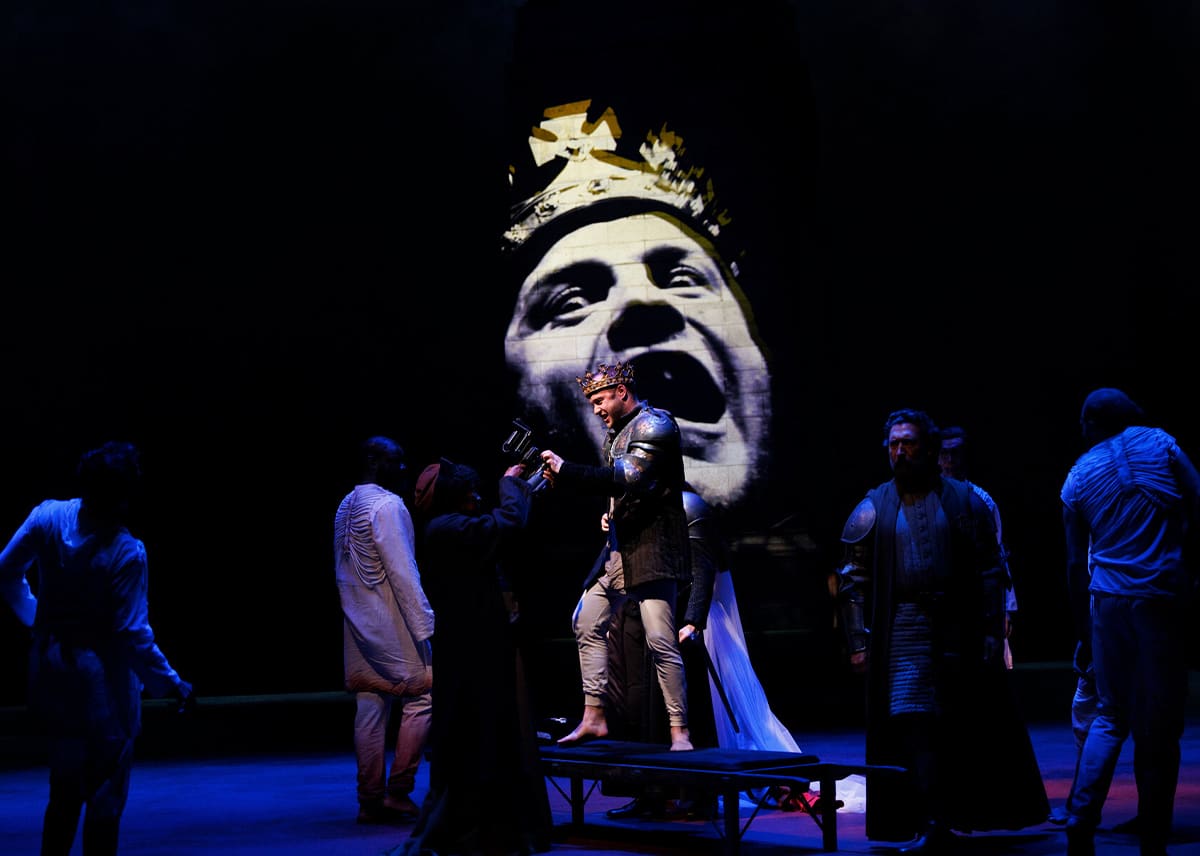
Complex antihero: an interview with Arthur Hughes
Unravelling Authur Hughes' Richard III

Marlon James: a Jamaican reckoning
'A return to a home I barely knew'





Haunting the Black Air
Poetic freedom across space and time
The Disappearers
A sprawling visceral experience that drops you in head first

The Lady Imam
Is the world ready to catch up with amina wadud?



Illuminating, in-depth conversations between writers.
Listen to all episodes
SpotifyApple Podcasts
Amazon Music
YouTube
Other apps

The series that tells the true-life stories of migration to the UK.
Listen to all episodes
SpotifyApple Podcasts
Amazon Music
YouTube
Other apps
WritersMosaic interrogates the notion of ‘staying in your lane’ by asking writers how they attempt to think beyond the parameters of their cultural identity.
Listen to all episodes
SpotifyApple Podcasts
YouTube