
Waste not, want not

In the summer of 2020, I taught a two-week summer school at ITESO, Universidad Jesuita de Guadalajara, a private university in Mexico started by Jesuit missionaries in 1957. Because of the COVID lockdown, I wasn’t able to travel there, so instead presented the programme via Zoom. Working with predominantly female undergraduate students studying film, photography, performance, journalism and fine arts degrees, I devised a project entitled Wonder Women that drew on the comic book and Hollywood superhero, Wonder Woman. Created in 1941 by William Moulton Marston, Wonder Woman helped to redress the absence of female comic book characters. This became the jumping off point for students to use stories and objects to develop interdisciplinary art pieces about inspirational women in their families and lives. Over two weeks, the online workshop process was similar to what I would have established in an in-person setting: creating an ethical safe space with agreed ground rules towards empowering creative potential through games, creative exercises, group collaboration, oral histories, writing, performance and self-reflexivity.
When I was invited to teach on the summer school again this year, I jumped at the opportunity to visit Guadalajara in person. On this occasion, the theme was ‘Waste not, Want not’, an axiom familiar to my grey-haired generation. My parents lived through poverty, and we were told to ‘nyam all deh food on yuh plate, ‘cause there’s people starving in deh world’, which meant that if we never waste resources, then we will have them when we need them. Like many immigrant families, we also imbued an aspirational culture based on education, the Protestant work ethic, thriftiness and respectability. Nineteenth-century adverts for Pears soap showed a confused Black child’s skin being cleaned to reveal a happy white child. The civilising logic of this racist colonial trope was that dirt equalled dark wickedness, and cleanliness virtuous whiteness; it was echoed by white children asking me if my Black skin rubbed off in my primary school playground in 1970s London. They also touched my hair without my permission as if I was a thing to be played with. The playground is a cruel place, and my playground peers probably picked up these racist myths eating their Weetabix. Generationally, they also probably grew up with the same missionary doctrine that ‘cleanliness is next to godliness’; after all, the Victorians treated the white working class as a different race. To echo Stuart Hall, ‘Race is the modality in which class is lived.’ But they won’t be haunted as Black folks are by those soap adverts, whose psychic struggle with the trope of cleanliness is not simply obsessively combating the evil of dirt in the home, but making our bodies respectable for the white gaze with our hair, dress, voices and even sometimes using Vim and Brillo pads to rub off the stain of Blackness. Moreover, race is sexuality’s bedfellow, and while the Victorians wrapped their sexual prudishness in the pages of the Bible – which meant sex, being ‘sticky’, like bodily grooming rituals, was seen as dirty – the men screwed whoever they colonised.
The anthropologist Mary Douglas referred to dirt as ‘matter out of place’, a notion explored in the Wellcome Collection’s seminal exhibition, Dirt: The Filthy Reality of Everyday Life (2011). Memorable displays included explanations of how Singapore’s attempt to modernise as a post-colonial project resulted in an oppressive system based on cleanliness which, while lowering infant mortality more effectively than the USA and the UK, increased eczema, asthma and mental illness amongst children and teenagers.
Consequently, our approach in Waste not, Want not was less about the environmental impact of waste management than about how ideas of cleanliness, dirt and germs are historically, socially, culturally and politically constructed. Industrialisation, consumer capitalism, urbanisation and the so-called progress of modernity have made waste invisible in Western societies of the global north (unless you currently live in Birmingham, England, where a bin strike has been running through 2025). ‘Unrecyclable’ waste in the UK is either incinerated to generate electricity or sent to landfills, formerly the publicly owned ‘commons’. How and where other forms of waste are disposed of remains a dirty secret of waste colonialism. This means 15 million items of discarded clothing arriving each week from the global north at the Kantomano Market, Accra, Ghana, one of world’s largest markets for used clothes, where local people call it, ‘Obroni Wawu’, dead white man’s clothes, because someone must have died to give up so much stuff. Meanwhile, as the United States blocks and deports immigrants from Mexico, it annually dumps millions of tons of plastic waste that many want to believe is recycled. It ends up in landfill, where poor families collect, for a couple of pesos a day, plastic Coca-Cola bottles, the emblem of Americana. Out of sight, out of mind, landfills make waste conveniently invisible. In New York, Fresh Kills, one of the largest landfills in the world, was reopened to bury debris from the 9/11 catastrophe and, as a tomb of human remains, was renamed The Hill.
Like many immigrant women, my mum had multiple jobs to make ends meet, jobs which no one else wanted. This included cleaning offices, which I sometimes assisted her with after school. We hoovered carpets, dusted desks, cleaned toilets and emptied waste bins with the dregs of cheap machine coffee in brown plastic cups mixed with cigarette ash. Cleaners like my mum, domestic maids, rubbish collectors, those making, serving and delivering food (now euphemistically termed ‘the service industry’) are conveniently invisible, like the waste they work with.
This was evident in Guadalajara, the capital of Jalisco state, the second-largest metropolitan area in Mexico after Mexico City, with a population of over five million, where workers from Amerindian ‘Indio’ communities (Aztec, Maya, Nahuas amongst others) did most of the menial jobs. Like the British, French and Dutch in the Caribbean, the Spanish imposed a colonial caste system based on pigmentocracy, where mestizaje (racial mixing) became central to Mexican identity. And today, whilst darker-skinned Indio and Afro-Mexicans experience racism, those of mestizo (mixed-race heritage) and Spanish heritage play down any Amerindian or African ethnicity to pass in their desired proximity to whiteness. In Guadalajara, the upper and middle classes live in gated communities of municipalities like Zapopan. Meanwhile, the poor live in the eastern, more arid part of the city, such as in informal settlements in areas like Tonalá, which are widely portrayed as slums – unclean sites of poverty, criminality, gangs, drug use and addiction, prostitution and social deviance.
As with the previous summer school, students spoke better English than my (non-existent) Spanish. It reminded me of my privilege coming from Britain, where speaking English, the language of empire that was imposed, adopted and desired, is often taken for granted. Moreover, the academy is a middle-class, if not predominantly white, space that protects its Eurocentrism. When I ask the students I teach in London about their class backgrounds, working-class students are usually very aware of their class position, whereas middle-class students tend to either feel ashamed about their privilege or have no conception of their class-mediated cultural capital. Being fluent in English, many of the 17 summer school students probably came from middle-class backgrounds, and I was curious whether they would be conscious of this. As we began to unpack the cultural politics of waste in the workshop process, it was evident that most of them were. This was refreshing and reaffirmed my sense that education, as the most common means of social mobility, is highly valued in Mexico as it is across the Caribbean, the global south and the immigrant community I grew up in.
Consciousness of their positionality enabled students to eventually express a level of empathy in three mixed-media installations they created in small groups. This included a movement piece exploring how the notion of ‘time-wasting’ is often gendered, with social expectations about reproduction and marriage written onto young women’s bodies. In another piece that used scraps of poetry and objects, a broom symbolised the ways domestic workers are othered as disposable. And in a video-, sound- and object-based piece, things that might otherwise be treated as waste became the cherished mementos that we keep in shoeboxes under the bed. Their outcomes were presented to a small audience of their peers and some staff. They subsequently worked with dancer and choreographer, Velvet Ramirez, for another four weeks, developing their pieces in an interdisciplinary arts context.
The ITESO summer school was rewarding, and hopefully students will remember the experience in their subsequent journeys. One student from Wonder Women in 2020, who now works at the university developing international programmes, befriended me this year on campus. Another highlight was the Plaza Ejectivo Hotel, where I and other summer school teachers stayed. Probably built in another century, it looked like it was in need of a serious facelift. In the hotel’s forecourt, I found a plaque displaying a photo of Pelé reclining near the hotel’s pool. It was taken in 1970, when the Brazilian football team stayed at the hotel, and won the World Cup. With this homage to Pelé, the hotel’s brutalist architecture now made sense, particularly as FIFA’s World Cup will come to Mexico in 2026. I hope to be there. Watch this space.
WritersMosaic monthly
Get new writing in your inbox
One email monthly, unsubscribe anytime
It’s being published I get paid for; the writing I would do for free
‘Any advance [...] for your novel is to compensate you for the horrors of being published'
Complex antihero: an interview with Arthur Hughes
Unravelling Authur Hughes' Richard III
Marlon James: a Jamaican reckoning
'A return to a home I barely knew'





Haunting the Black Air
Poetic freedom across space and time
The Disappearers
A sprawling visceral experience that drops you in head first
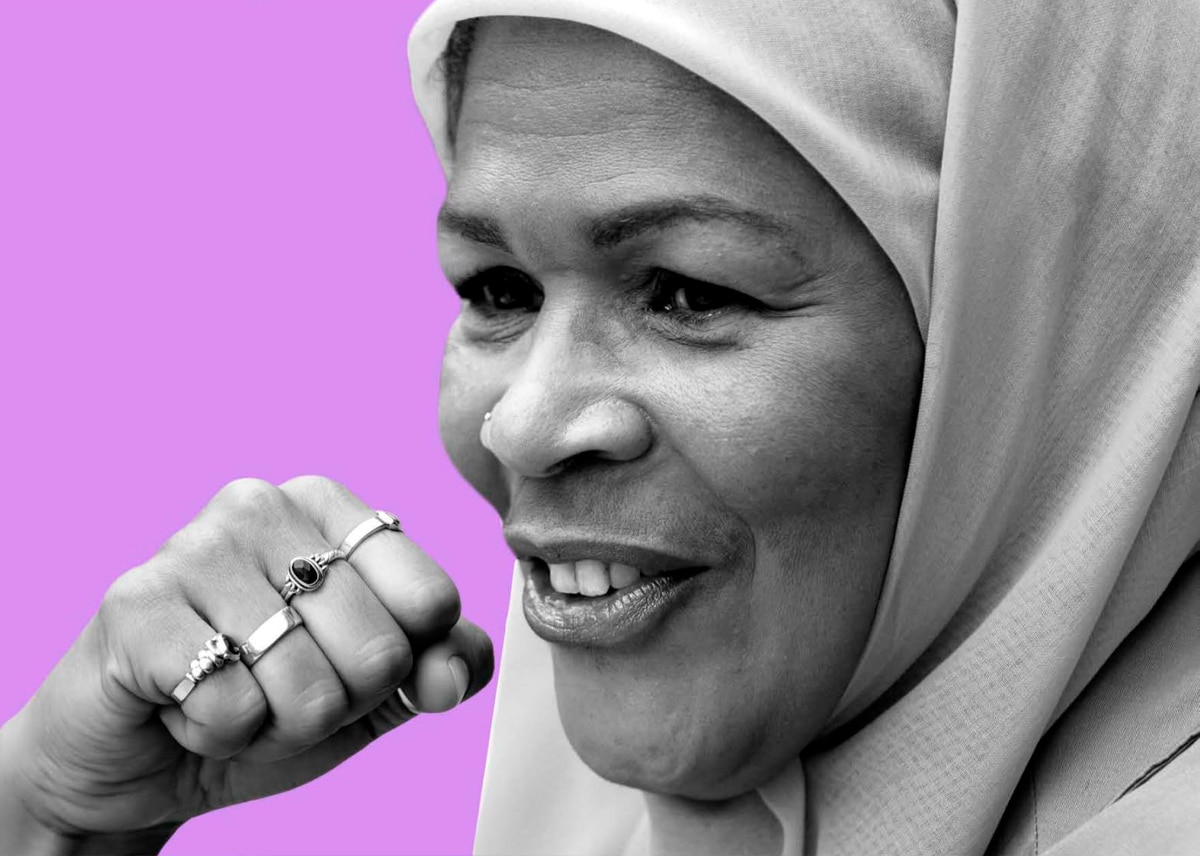
The Lady Imam
Is the world ready to catch up with amina wadud?


Illuminating, in-depth conversations between writers.
Listen to all episodes
SpotifyApple Podcasts
Amazon Music
YouTube
Other apps

The series that tells the true-life stories of migration to the UK.
Listen to all episodes
SpotifyApple Podcasts
Amazon Music
YouTube
Other apps
WritersMosaic interrogates the notion of ‘staying in your lane’ by asking writers how they attempt to think beyond the parameters of their cultural identity.
Listen to all episodes
SpotifyApple Podcasts
YouTube