
One Leg on Earth
‘Pemi Aguda
W. W. Norton & Company, 2026
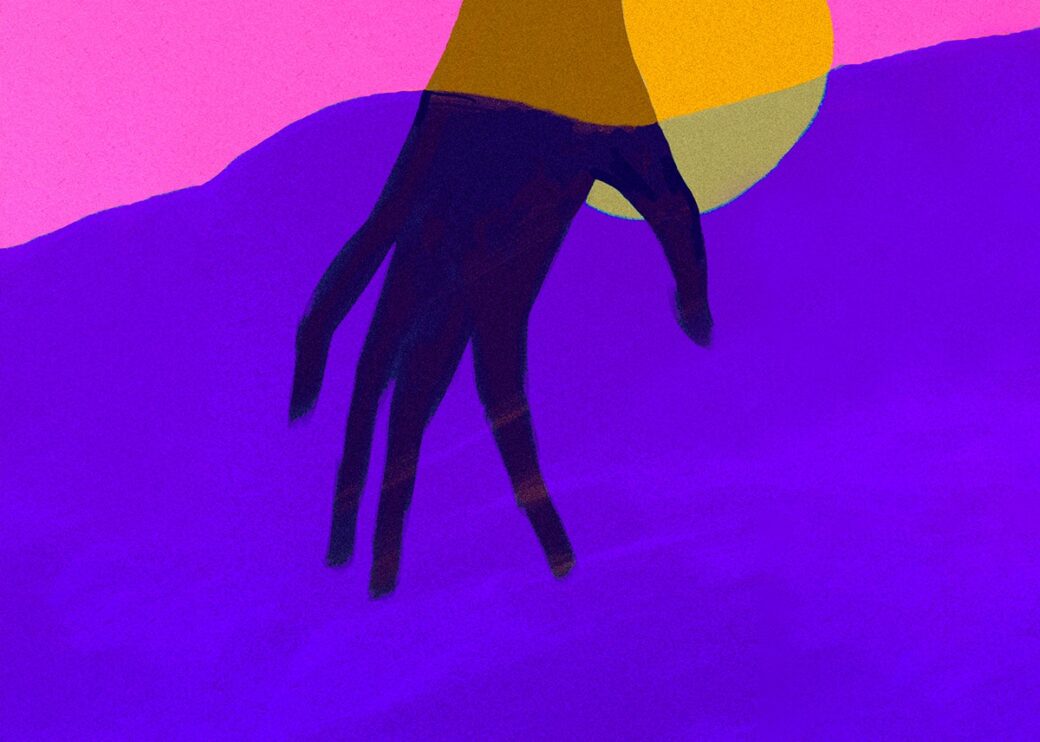
In Lagos, pregnant women are walking into the sea by the dozen and drowning. Yosoye, the protagonist of ‘Pemi Aguda’s One Leg on Earth, the debut novel from the author of the short story collection Ghostroots, barely registers the panic, too enamoured by the big city she has always dreamed of. Having secured a job at an architectural firm through Nigeria’s National Youth Service Corps, a national scheme that allocates a year of employment to new graduates, she now has an excuse to leave her home town, Ibadan, and fashion a new version of herself in Lagos, which serves as a ‘romantic filter’, like ‘a slow-motion scene from a contemporary Nigerian film that might be praised internationally: a montage of real people living real lives’.
Quickly enough, the sheen of Lagos turns to sweat, and Yosoye finds herself in a cheap motel room with a man who is never again mentioned. The consequences are almost immediate: at 22, in her first month of employment, she is pregnant.
Loneliness abounds. Her colleagues are unfriendly, her mother communicates exclusively through a weekly text of Bible verses, and friendships in the city feel transactional. It is as if her need for company produces the baby – and Yosoye nourishes whatever might fill the hollowness: ‘As it grew, she would be shaded in until she became a real person … Maybe this resonance, this heaviness, might convey something that would make people want to turn to her and keep them turned to her.’
Aguda’s language, already poetic and ethereal, floods the page as the novel progresses; metaphors for birth proliferate, and Yosoye’s sense of self begins to split in two. As her pregnancy moves along, the drowned women of Lagos occupy most of her mind. She obsessively researches them, scouring blogs, chatrooms, and news sites for any new information. She starts her own records of the women, finding that the total number is close to 50 or 60. On WhatsApp, she listens to mass-forwarded voice notes of the grieving families, voices cracking and wailing.
As Yosoye hears the stories of the drowned women, her grip on reality further loosens; she smells seawater far from the coast and dreams of communion with the dead underwater. The distinction between reality and unreality blurs. Yet how much of her strained mental state is mere suggestion based on what people have told her about pregnancy? How much of the phenomenon can be explained away by mass hysteria? The novel is less interested in explaining her experience than in sitting with it, suggesting that pregnancy, in all its mythological weight, can feel indistinguishable from a kind of haunting.
The folklore of pregnancy is at once satirised and violently implicated. Nigerian culture, like most cultures, has no shortage of lore around pregnant women: they are vessels, they are sacred, they are closer to the other side. What they are not, Aguda suggests, is supported. The institutions are indifferent, the social scaffolding is thin, and the mysticism functions less as reverence than as a substitute for it, a way of elevating women so that nothing concrete needs to be done for them.
A synecdoche for this problem is the unnamed architect, the mastermind of Omi City, an exclusive, ultra-luxe development project of the firm Yosoye works for. While he initially dismisses Yosoye as a mere prop from an outdated government program, his tune dramatically shifts once he learns of her pregnancy. While Yosoye assumed that her eventual need for maternity leave would get her fired, the architect sees her pregnancy as a symbol of luck and wants to keep her as close as possible. His language is grandiose and obscure, alien to Yosoye:
‘This state of pregnancy’, but the word was clinical on his tongue – a hardness to the g, ‘is not so different from what we’re doing here. We’re gestating a city, Yosoye. Soon, we will birth greatness. Isn’t it all creation?’ Eyes. Glinting. ‘Isn’t it all holy work?’
It is, in miniature, exactly what the novel argues at scale: that to be mythologised is not to be seen but to be used.
Aguda is a precise and biting writer, and One Leg on Earth earns its eeriness. Beneath the dreamlike surface is a novel with a clear, cold argument: the myths women are handed about pregnancy and the body are less a form of protection than a means of control, in a city thick not with the romanticism Yosoye imagined, but with rot.

WritersMosaic monthly
Get new reviews in your inbox
One email monthly, unsubscribe anytime

Pressure
What's missing from the latest 'untold story behind D-Day'?

A Trial
An examination of theatre’s complicity in post-truth politics

The Complex
The unraveling of a dynasty




Marlon James: a Jamaican reckoning
'A return to a home I barely knew'

The name of this wallpaper is ‘Childhood’
A luminescent bubble of memory

What’s in a feminist? Holding on to Gloria Steinem
Is Gloria Steinem's feminism still relevant today?






Illuminating, in-depth conversations between writers.
Listen to all episodes
SpotifyApple Podcasts
Amazon Music
YouTube
Other apps

The series that tells the true-life stories of migration to the UK.
Listen to all episodes
SpotifyApple Podcasts
Amazon Music
YouTube
Other apps
WritersMosaic interrogates the notion of ‘staying in your lane’ by asking writers how they attempt to think beyond the parameters of their cultural identity.
Listen to all episodes
SpotifyApple Podcasts
YouTube