Between Worlds
The torn worlds basted through my poems
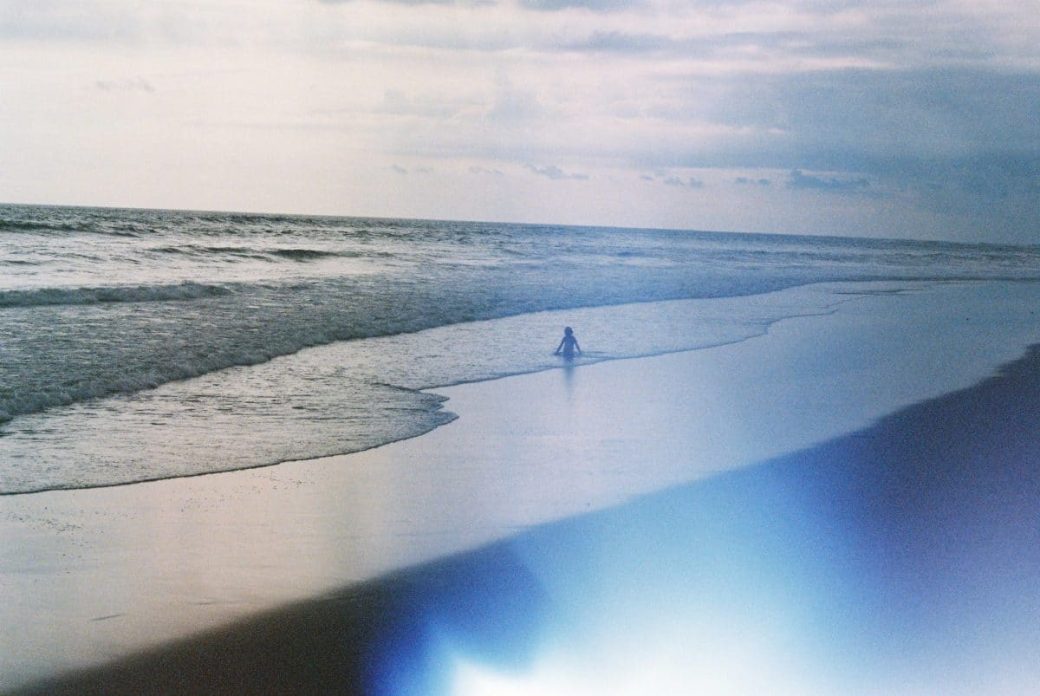

The name of the seventh war zone is
London”
When one lives between worlds, one lives in tugging continents of a mindscape, and with a panoramic view of the worlds, living in them mostly simultaneously and, at times, alternatively. Migrant, refugee, indigenous or expatriate: they are all jumbled up in this conundrum. The physicality moves in one world, the psyche sprawls as a vast and borderless net. It is a dual belonging. Some would describe it as a tearing. It depends on whether you have embraced partial reality or want it all, which is impossible. In this, home becomes a complex argument as it, too, assumes those thrusting dimensions. In an interview with BBC TV in 1982, the interviewer probed into one of my poems.
Home
Only if Abhimanyu knew!
The name of the seventh war zone is
London
And there is no way back to the womb.
If Krishna knew
He refrained in silence
(from Bottled Ganges)
As the story unfolds in the great epic Mahabharata, there were seven great strategic and circular formations of the war zones on a battlefield. Krishna, unaware that Arjun’s son, Abhimanyu, still in the womb, was listening to his tricks to be victorious in them, suddenly realised, and hence, to affect the outcome he wanted in the future Mahabharata, he stopped in time, not to part with the secret of the seventh zone. When the battle takes place there, Abhimanyu dies. My poem casts London in that seventh zone, indicating there is no escape from its reality. The physical home, London, is a trap, and that is where one’s story ends. You cannot return to its beginning because it has already happened. And the rest is a mind game.
The interviewer asked if there was any hope of home for such vagrants as us. I said the answer lies in finding the place for you to belong. It never resolves completely but brings a concord in life. To remove the tearing between the worlds, one needs to work on this aspect of belonging. I was pleased that in 2019 the Pearson Edexcel syllabus for GCSE English Literature introduced an anthology with the title Belonging, bringing together poems from various angles on the same theme, past and present, creating a debate around it.
My narrative also assumes a powerful history. This essay canoes you through its wild thunder river.
Disenfranchised
A near miss
Not one of ‘Midnight’s Children’
An African, an Indian and the British citizen
The all-in-one child
Orphaned by the Nile
Forsaken by the Thames
Abandoned by the Ganges
Sings in a school assembly
Asserts he is loved by history
He salutes the flag
Muttering, ‘And who are you exactly?’
Blyth’s reed warbler and olive-backed pipit
With sky under their wings
Sit on a pole with thoughts of nests
Far across the sea
The child learns from them the sky
Paces like a ‘Caged Bird’
Someone opens the cage
‘Bloody British!’
The child jets off
Clutching his British passport
Only to be rediscovered
As an alien
Haunted still by the rhythm of
Idi Amin’s army boots
Nehru’s bogus promise
Hum Nehruchachake pyare
(We are the children Nehru Uncle loves)
He meets Wilma the Thames whale
Watches in desperation
Her rescue. Then bones.
Wondering in which museum he would
Leave the Nehruchacha child’s bones
Defeated he wanders dazed
Muttering
We are apostrophes
We are the bones
We are the bones
We are the bones
Whale and I
(from Swimming with Whales)
Salman Rushdie plays on the idea of children born when the clock strikes midnight for India to become an independent nation. Those midnight children may have carried hopes to find a different India to meet the dreams promised by Jawaharlal Nehru, India’s first Prime Minister, but what happens to someone like me who was born outside of India? An Indian-African child transported to India may sing a patriotic celebration as much he likes in a classroom, but the Indian heritage disintegrates in a parental rejection! (Someone opens the cage/‘Bloody British!’). The unreal alternative of being British haunts the child. Suddenly, the meaning of home gets into a big muddle. For me, it is not where I was born, nor is it where my heritage came from, and not where my citizenship became a leech at birth. While schooled in India, the memory of singing a song for India and pledging a loyalty to Nehru (‘Hum Nehruchachake pyare’) both emerge in this poem as a game with my heritage: birds appear as pied pipers of Hamelin; a poem from the faraway land I belong to beckons. Such is the pull of places, tangled in reality and psyche. It goes to show how one can be an outsider even when one is an Indian in India. ‘Bloody British!’ is a line to show that ‘belonging’ differs from ‘home’. To cap it all, an image of a museum in the poem represents a London resting-place for a displaced child’s bones – ‘Bloody Indian’! Heritage and childhood memories do not make a home! Yet the poem shows where you may belong, though not perhaps in a way you envisaged. ‘Where’ can also be a journey of a lost whale. The metaphor of the Thames whale is a powerful reminder of losing the way and rejections. This leads on to what I have called a quest for belonging, to reconcile with one’s home even as a brutal reality – ‘We are apostrophes/We are the bones’. The apostrophe is an elided space, holding open a disappearance. Bones on display in a museum have no physicality of flesh that feels. I often question if this is an exile or inflicted banishment. Maybe it is a punishment and not a curse; a punishment of being born without the context of belonging to a place. You belong but only as a bone, a leftover, as a display for study or a giggle! Rather than write about this complex existence, I feel the poem expresses this more powerfully.
Most observers and students of diversity do not grasp what else also happens in such ‘driftwood’ journeys. We were anchored in the clear waters off Seychelles in our torturous migration from Mombasa in East Africa to Bombay. As an eight-year-old child sent by parents on my own, I still remember the driftwood that had lost its home!
To write what the tree couldn’t
When I witnessed the log adrift
mid-ocean with no schema,
shivering, torn apart between two lands,
on the deck of SS Karanja,
I learnt my first lesson as a child:
Even the trees don’t know
where they would end up one day!
They say there is an adventure
in the unknown
but the child always wants to know.
Clutching the British passport
in the Harmondsworth detention centre cell,
sitting on a squeaking bed,
watching the pencil of light
reaching my feet,
I knew there was a hole
in the walls they had erected.
It was up to me to hold that pencil,
a feather without a bird,
write what the tree adrift in the sea couldn’t.
I was an adult now…
(Unpublished)
Like driftwood, one cannot give up a feeling of uselessness, a constant craving for belonging and the knifing sense of desertion. If the reed warblers drew me to the land of citizenship, it did not grant me the acceptance or total sense of belonging, not that I did not want to belong. The roots of the problem are in Enoch Powell’s words: ‘The West Indian or Asian does not, being born in England, become an Englishman.’ Forget the one born elsewhere as a citizen! In my poem, ‘A Big Welcome’, I am expressing cynicism to the estranged Thames Whale to highlight how one feels in such unwelcoming waters. I suppose this meeting takes place as bones, as in my poem above.
A Big Welcome
There is nothing new
In feeling alienated
In your own cold home
Welcome to the Thames
Its heart isn’t big enough
It’s your new cold home
One day we will meet
We will compare notes
(from Swimming with Whales)
To my peril, and with permanent dismissal by the British literati, I have written about racism, a subject forbidden in poetry and enough to make one a persona non grata. While someone is knifed in the street out of racist hate, the literati tell us that racism is a well-milked old subject, and it is tiring, yet love goes back to the beginning of social evolution! Editors in England are reluctant to publish poems on this theme. This too reflects why the sense of belonging remains remote. All this adds to a denial of home to people born in one country, of the heritage of another country, and supposed to be of yet another country. Play your own game of imagination!
If there is a game of whale watching, there is also a game of immigrant watching. In this game, I have become A Strange Sighting, as per the title of one of my poems. It concludes with these lines:
A house away from home
A stranger in own home
A house that is still a passport
With no meaning to born British
I do watch often the video
Whale escorted out of the Thames
Never returning home
Yogesh Patel
A strange sighting!
(from Swimming with Whales)
This fate is certain. No matter how far you go in the newly set up home, it is a confined space. You are a different colour. You are a distinct religion. Your country of origin is perceived from your colour. Passport is not your skin. That is your context. You are ‘A strange sighting’. And you will remain one.
Yet one has to create one’s own sense of ownership, as in my following poem, in which the denials and dismissal necessitate asserting oneself through one’s cultural wealth.
Typical Mr Patel’s Typical Promotion
Mr Patel, you’re blah blah blah.
BUTT.
(May I ask you to spell it correctly? I’m only an Indian after all!)
Can you fill this form for equal opportunity?
It’s to allow us to monitor you know what.
Thank you. We’ll let you know in due course.
(Never)
Mr Patel,
Sorry,
You were one of the two selected;
BUTT.
(Hell, you smell of masala)
Try again next year. (And the year after,
and after, and after.)
Thank you for your interest in our company.
The calf butted the oak:
Mr Patel bought the company
and promoted himself.
(from Bottled Ganges)
The poem plays with the baggage that sticks to us and comes to haunt us as differences manifest.
However, to conclude, and to answer the question raised by the BBC interviewer quoted earlier, asking if there is any hope of home, I can say that there is hope. There is also a positive side in being an alien to the country of your origin. As a migrant, you are in a unique space of identity. If otherwise you would not have been noticed in the crowd, you could find yourself uniquely recognised by the opportunities you now have as a migrant. Just as the unknown whale from the vast sea emerges in the Thames to enjoy superstardom through the media as the Thames whale, Wilma, migrants could be nobody in the land they come from, but can take the advantage of equal opportunities to become a somebody here! As you are a creature of two worlds, you could enjoy importance in both countries, both worlds. If the sea for a whale is a home left, the Thames is a home found. Hence, I wrote:
Being Somebody
In the end it only proves
You were noticed, named
Only when you left home
(from Swimming with Whales)
That is why, while I write this, I am very hopeful and positive about my confusing aspects!
© Yogesh Patel

Yogesh Patel
Yogesh Patel has received an MBE for literature in the Queen’s New Year Honours list 2020. He is an internationally celebrated poet and publisher.
Between Worlds

Between worlds
Bashabi Fraser

Opposites Attract
Debjani Chatterjee

Betweenness: belonging and becoming
Nalini Paul

The Outlier: Michael Madhusudan Dutt
Namita Gokhale

To pin the wings of the butterfly
Suhayl Saadi

Price of emigration
Tariq Latif

A journey through houses of worship in Scotland
Bashabi Fraser & Hermann Rodrigues
WritersMosaic monthly
Get new episodes by email
One email monthly, unsubscribe anytime

Illuminating, in-depth conversations between writers.
Listen to all episodes
SpotifyApple Podcasts
Amazon Music
YouTube
Other apps

The series that tells the true-life stories of migration to the UK.
Listen to all episodes
SpotifyApple Podcasts
Amazon Music
YouTube
Other apps
WritersMosaic interrogates the notion of ‘staying in your lane’ by asking writers how they attempt to think beyond the parameters of their cultural identity.
Listen to all episodes
SpotifyApple Podcasts
YouTube

It’s being published I get paid for; the writing I would do for free
‘Any advance [...] for your novel is to compensate you for the horrors of being published'
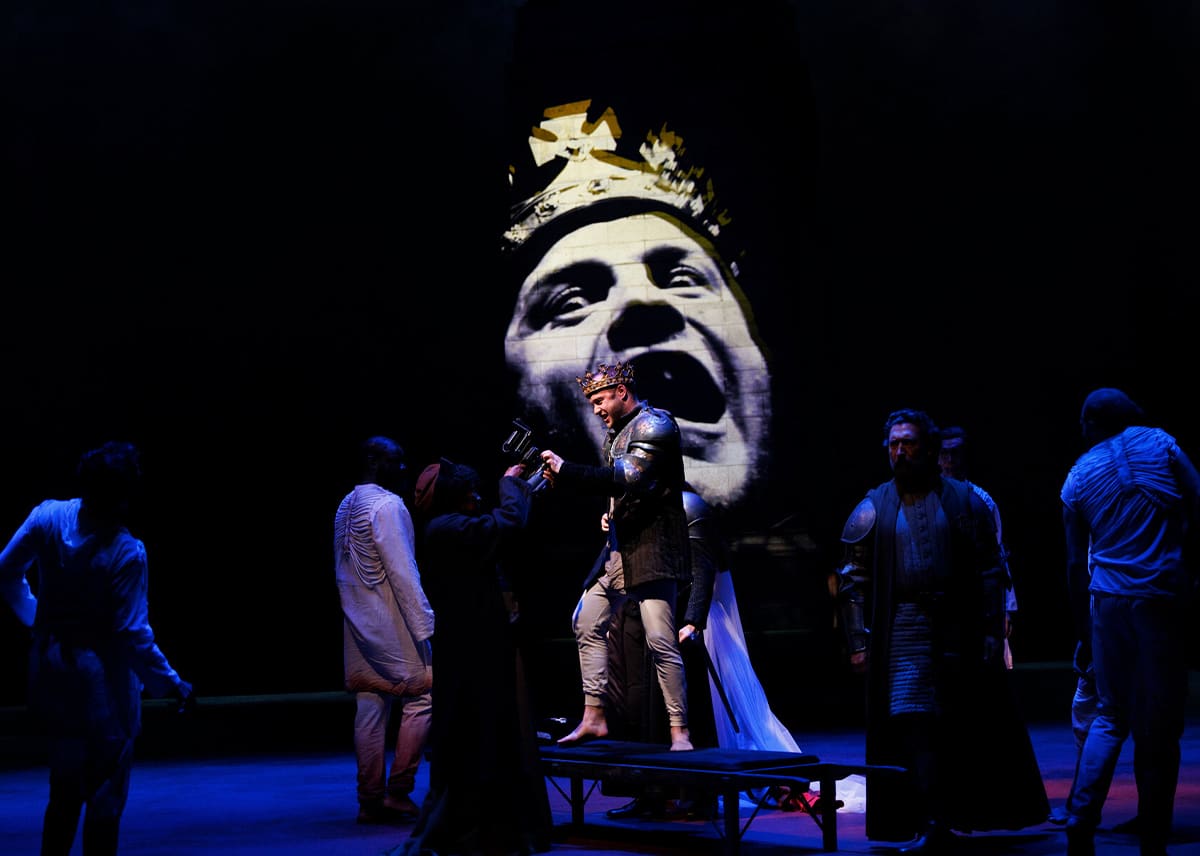
Complex antihero: an interview with Arthur Hughes
Unravelling Authur Hughes' Richard III
Marlon James: a Jamaican reckoning
'A return to a home I barely knew'

Haunting the Black Air
Poetic freedom across space and time
The Disappearers
A sprawling visceral experience that drops you in head first