
The Wickedest

Caleb Femi
4th Estate, 2024
The last time you were dancing at night, unaware of the time, did you stop for a moment to pick up your head? Did you lick your lips to taste the air and feel the music shaking your ribcage? Caleb Femi’s The Wickedest (2024), part poetry collection, part nightclub, demands you to. In poems charting the story of a ‘shoobs’, he opens up the private world of the party and says ‘So dance with all the arrogance / of youffool stupidity / to the song rupturing the speakers’.
The Wickedest is Femi’s second full-length collection, the follow-up to the enormous critical success of his debut, Forward Prize winner Poor (2020). Poor was achingly raw and swaggeringly surreal. Its poems depict the pressures on young Black boys from the North Peckham Estate, their resilience and the triumphant ways they rise above the trauma visited upon them. They spend the book escaping their surroundings, running from the police and other ‘boydem’ in Air Max 90s which ‘lift you up seven feet tall so that / they know a lighthouse is on the endz’. The Wickedest is more immediate and naturalistic. There is no trouble here. Nothing to escape. The Wickedest is the place to be. It wears its best clothes, invites us in and tells us to keep it moving.
Each poem here is time-stamped, following characters through the night from 10:45pm to 4:45am. We are given backstories and asked to follow them. ‘Brenda Dances with Jermaine’ is immediately followed by ‘Lala watches Jermaine (her ex) dancing with Brenda’ and ‘Jermaine Dances with Brenda’, all at 12:05am. ‘DJ’s shout-outs’ come every couple of hours to ask lovers to stop ‘blocking the breeze please kiss somewhere else’.

Poems come in police reports and text exchanges. At 4:04am, ‘alone in a quiet corner, Benny opens / the notes app’, revealing a poem in the form of iPhone notes. At 3:03am, we find Pris and Shelly ‘unhooking / the straps on the yutes’ wrists’, in the process of which Shelly meets Max, who describes speaking to her as the night fades out as like taking ‘the first / full breath of a new day’.
There are echoes of Poor in Lala’s view of Jermaine – ‘I loved a bushfire once. / He was a gold necklace sitting on / the collarbone of a dim horizon’ – but whereas Poor, and indeed Lala, finds the beauty in the lives Femi depicts, The Wickedest is more interested in the importance of the moment. It feels in many ways an outlet for the struggles he writes about in Poor – the B-side that says this is why we carry on. At 2:02am, he muses ‘what is suffering for / if not enjoyment / this could be our last dancing night’.
Femi has said, in an interview with the podcast Black Prose (2024), that a perception of Poor as a ‘sad’ book is partly what drove him to write this celebration. He says ‘some people have missed the point. Poor is not a book that wants your pity’. He shares an anecdote in the interview about meeting a student with both books in hand. He tells her ‘you do know you should read The Wickedest first and then Poor.… The Wickedest is a prequel’. He wants to foreground the party because, he says, ‘you need to understand the humanity in its best version first. Understand the community, their best version, and then … let’s have a deeper conversation about how it is they were able to have something like The Wickedest despite the environment that they’re living in’. If, as he says, ‘Poor and The Wickedest exist in the same universe’, then how that universe’s inhabitants party is how they should be introduced. If we want to understand them, then The Wickedest is essential prior reading.
Do not expect the same achievements as Poor from Femi’s latest work. It is not as wide-ranging, but nor does it try to be. To read it is to enter the world of the club night and enjoy it for enjoyment’s sake. Go out with The Wickedest. Drink the pre-game of ‘Jevon Catches the Fever’, tilt your head back at 5am, lose yourself in what’s important. Like Femi’s Shelly, think: ‘God / until my final breath / let me remember this night’. Let that be enough.
Magnus McDowall
Magnus McDowall is a poet from London and a postgraduate student on the Creative Writing MSt at the University of Oxford.
Hurvin Anderson
A meditation on the illusory nature of the reality of Britain’s entangled history
Kin
The journey of two childhood friends in the segregated South as their lives drastically diverge
Afghanistanism
'Red is the colour of joy and beauty and also of the killing that comes in waves.'
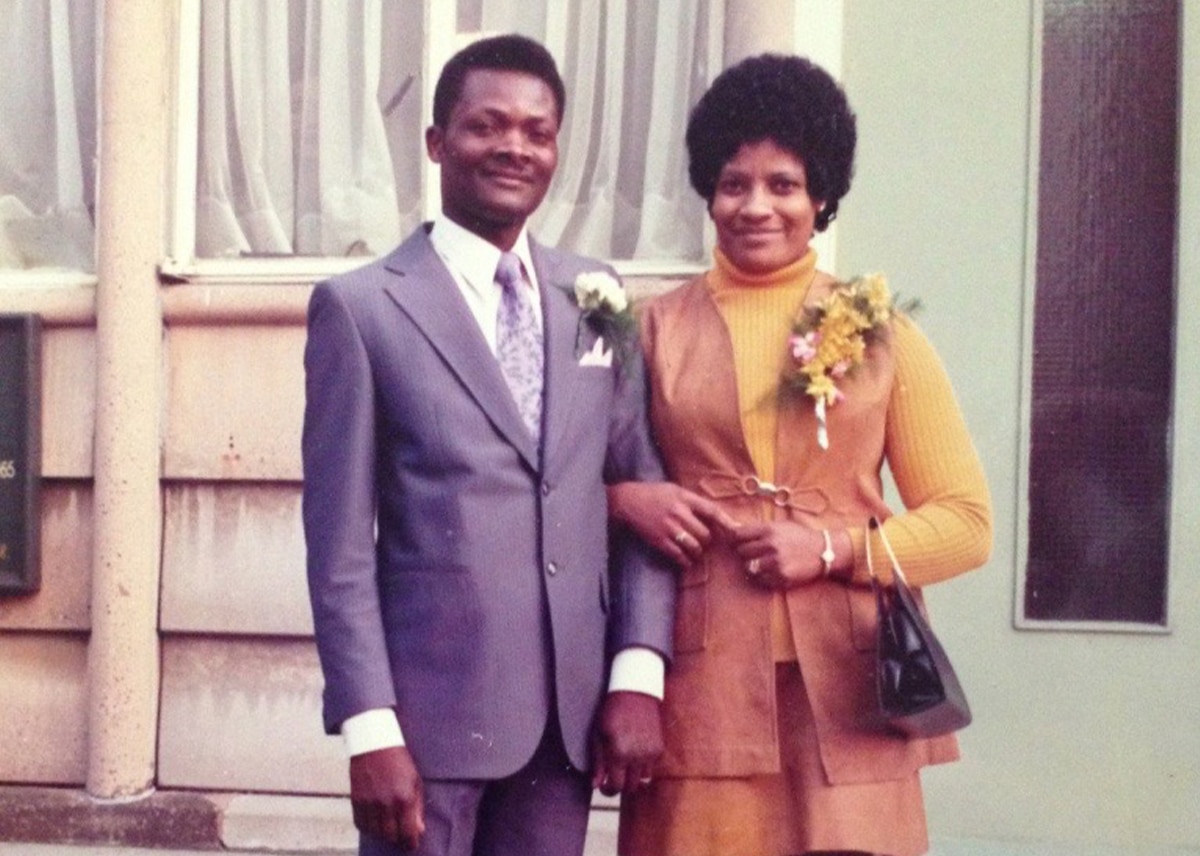
Didi
'My Grandfather did not let the world harden him. His eyes, which have greyed with his hair, shine like buttons when he laughs.'
Gentle Euphoria
A rare chance to rejoice in the collective craft of writing
Ideas are like rabbits
‘Ideas are like rabbits, you get a couple and learn how to handle them, and pretty soon you will have a dozen’

Free Will
Will Harris reads his poem, 'Free Will'. Directed by Matthew Thompson and commissioned by the Adrian Brinkerhoff Poetry Foundation.

Half Written Love Letter
Selina Nwulu reads her poem, 'Half Written Love Letter'. Directed by Matthew Thompson and commissioned by the Adrian Brinkerhoff Poetry Foundation.

Illuminating, in-depth conversations between writers.
Listen to all episodes
SpotifyApple Podcasts
Amazon Music
YouTube
Other apps

The series that tells the true-life stories of migration to the UK.
Listen to all episodes
SpotifyApple Podcasts
Amazon Music
YouTube
Other apps
Nine writers explore the elusive emotional truth behind narratives and storytelling.
Listen to all episodes
SpotifyApple Podcasts
YouTube