
The Drama
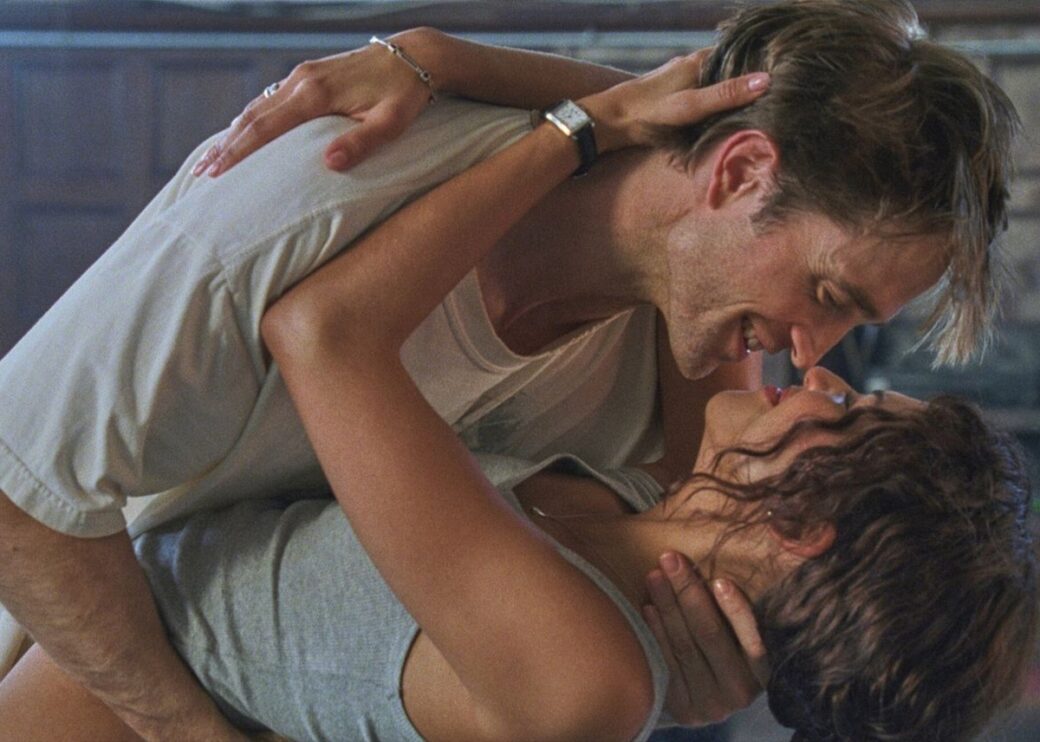
Directed by Kristoffer Borgli, 2026
It’s hard to write a spoiler-free review about The Drama, A24’s new dark comedy film by Kristoffer Borgli, because the controversial ‘twist’ happens early on and informs everything that happens thereafter. So if you want to keep the reveal a surprise, I suggest reading this review after watching the film.
But if you’ve seen it or don’t mind spoilers, here’s the premise: Charlie (Robert Pattinson) and Emma (Zendaya) are getting married in a week. The happy couple go to a menu-tasting with Charlie’s best man Mike (Mamoudou Athie) and his wife Rachel (Alana Haim), who is also Emma’s maid of honour. Eventually the conversation shifts to a cheeky provocation that Rachel and Mike asked each other before their wedding: what is the worst thing you ever did?
Mike, Rachel, and Charlie share their worst offenses, in which they all caused harm to someone else (Rachel’s is the most alarming). Tipsy from rounds of skin-contact wine, Emma admits that, at the age of 15, she planned and nearly committed a school shooting with her father’s rifle.
Theoretically, you could replace Emma’s ‘worst thing’ with another scenario, but a plan to do a mass shooting is ripe for this moral dilemma: the idea is heinous and deeply disturbing, but nobody was actually hurt. A number of questions open up. Are we our past selves? How well do you really know someone? Who deserves second chances, and under what circumstances? Borgli attempts to simultaneously tackle these questions about morality, as well as the US’s disturbing culture of mass shootings.
Borgli shrewdly decides to write Charlie as British, providing an outsider perspective to a uniquely American problem. Charlie is bewildered by a culture that is obsessed with guns but can’t seem to have an honest, collective discussion about gun violence. Robert Pattinson plays this awkward cultural disconnect well, bursting into incredulous laughter after Emma’s confession while Mike and Rachel are horrified into silence.
Charlie is likely a stand-in for Borgli’s own points of view as a Norwegian, which is probably why he can find elements of comedy in such sensitive subject matter. In a scene where Charlie and Emma visit their wedding photographer’s studio, which hilariously starts with the photographer listing the family members she’d like to ‘shoot’ for the wedding, Charlie imagines that 15-year-old Emma is posing with him, smiling for the camera with a rifle in hand. The uneasy image is so absurd that you may find yourself laughing. These surrealist moments that allow us to enter Charlie’s mind is when Borgli’s filmmaking is at its best. The Drama’s editing is superb, intercutting the storyline with memories and imagined sequences that lace the film with a dreamy yet uncanny quality.
As provocative as Borgli’s screenplay is, there remains an elephant in the room – Emma’s race and gender. Women mass shooters are exceedingly rare, and Black women mass shooters are non-existent. Borgli tries to skirt this issue in a scene where young Emma, played wonderfully by Jordyn Curet, discusses mass shootings in high school, and a girl says that this is ‘a male problem’. Emma replies that there have been a few mass shootings perpetrated by women, pointing to the song ‘I Don’t Like Mondays’ as an example. But ‘I Don’t Like Mondays’ and its inspiration – a sixteen-year-old girl who went on a shooting spree, killing eight children and two adults – happened in 1979. Emma would’ve been in high school in the 2010s.
I would argue that The Drama can function as a comedy because the would-be perpetrator is a Black mixed-race woman. To be clear, Emma was written as white, before Zendaya was cast in the role. If an American white man confessed that he planned a mass shooting as a teenager, then the narrative attention could shift to whether he’d actually commit the act because he fits the profile. In this regard, Borgli tries to have his cake and eat it too – he wants the audience to feel unthreatened by Emma in order to focus the narrative on morality, but he doesn’t truly dig into what would drive a Black girl to defy odds to plan a mass shooting in the first place.
I want to make myself clear: I’m compelled by Emma’s character, which makes the lack of exploration of race all the more frustrating. If Borgli wants to discuss the US’s fetishisation of guns while placing a Black woman at the center, then he can dissect who feels entitled to enact gun violence. Race is subtly explored in relation to who gets the benefit of the doubt, albeit through the subtext of Zendaya’s colour-blind casting rather than the script itself. While the other characters’ misgivings are forgiven, Emma (the only Black woman in the cast) is castigated. Rachel is particularly venomous towards Emma, and even microaggresses her own Black husband. However, without truly interrogating what makes Emma such an outlier as a would-be shooter, the hollowness of her character becomes apparent.
We closely follow Charlie’s mental anguish as he runs to other people to decide what to think, but we don’t know much about Emma’s interiority beyond the humiliation and fear surrounding her darkest secret. Where are Emma’s friends? Alana Haim as Rachel is pitch perfect at playing someone that you love to hate, but the character is one-note. Perhaps if Rachel were Emma’s high school friend, her self-righteous disgust (and designation as maid-of-honour) would feel more understandable. What’s more, Rachel and Emma’s conversations could reveal more about Emma’s psyche if they had a genuine friendship.
As a result, The Drama can feel more like a thought experiment than a film. Borgli wants to flip an American problem into a provocative premise without fully contending with the social ramifications. The Drama certainly sparks discussions about our own self-righteousness and judgements of others, but at the expense of fully fleshed characters.
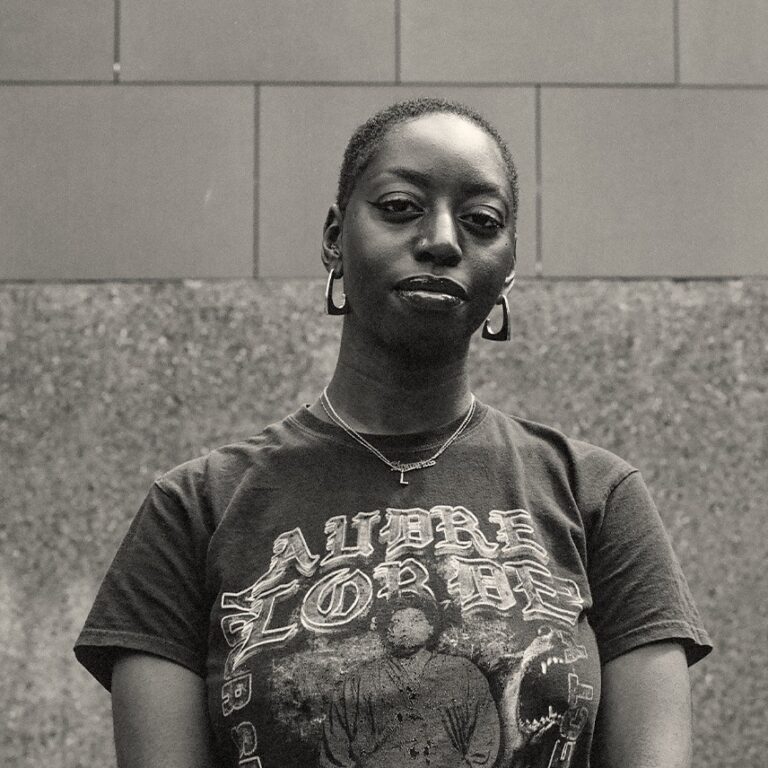
Liberty Martin
Liberty Martin is a Creative Writing Master of Studies student at the University of Oxford.
Wimmy Road Boyz
Three friends look to escape themselves for a wild night of youthful mayhem with life-changing consequences
Big Man
A deeply tender and sharply funny look at identity and connection
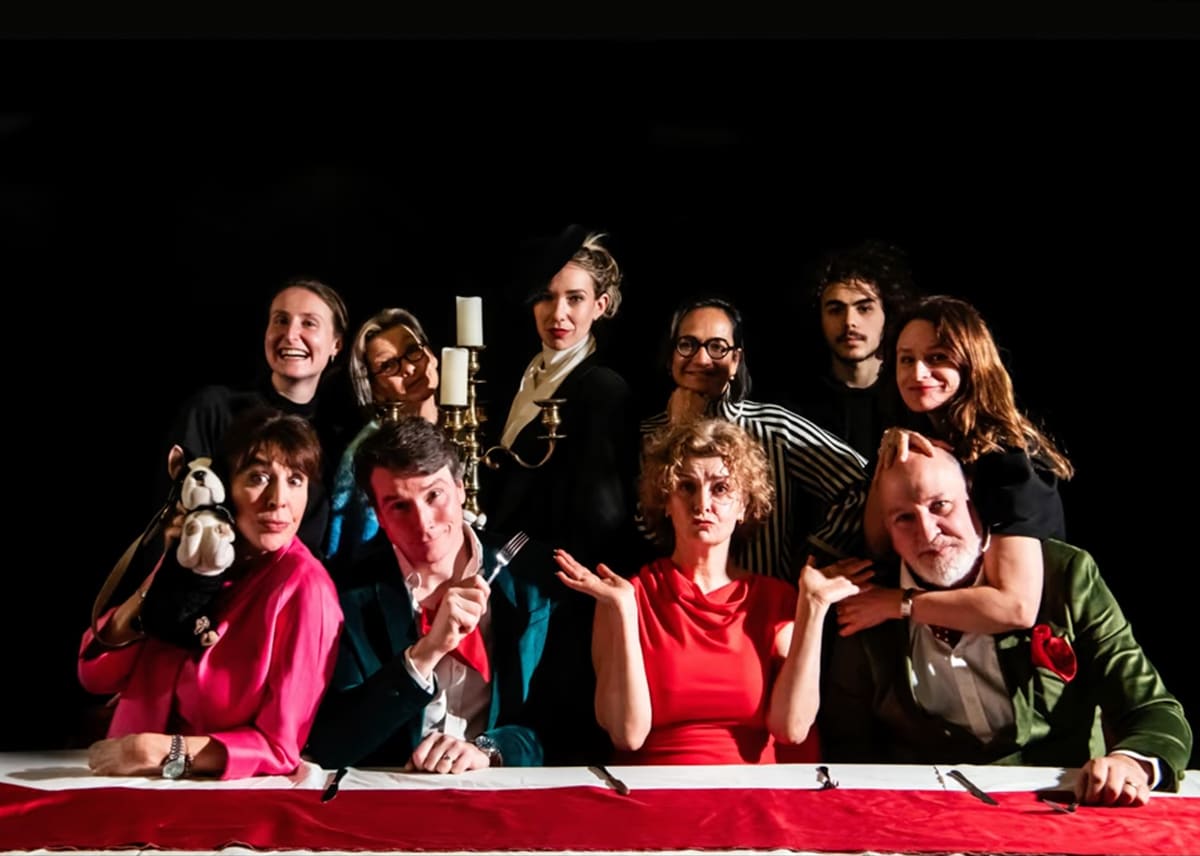
Ionesco/Dinner at the Smiths
At the frontier between immersive and absurdist theatre
When journalism is silenced
What is the responsibility of the writer?

Literally the shittiest night!
What really matters, even in literally the shittiest times

‘AI’m not gagging’
On AI and the future of the novel

Free Will
Will Harris reads his poem, 'Free Will'. Directed by Matthew Thompson and commissioned by the Adrian Brinkerhoff Poetry Foundation.

Half Written Love Letter
Selina Nwulu reads her poem, 'Half Written Love Letter'. Directed by Matthew Thompson and commissioned by the Adrian Brinkerhoff Poetry Foundation.

Illuminating, in-depth conversations between writers.
Listen to all episodes
SpotifyApple Podcasts
Amazon Music
YouTube
Other apps

The series that tells the true-life stories of migration to the UK.
Listen to all episodes
SpotifyApple Podcasts
Amazon Music
YouTube
Other apps
Seven poets celebrated by the T. S. Eliot Prize explore the concepts behind their books.
Listen to all episodes
SpotifyApple Podcasts
YouTube