Fiction Prescriptions
The manosphere
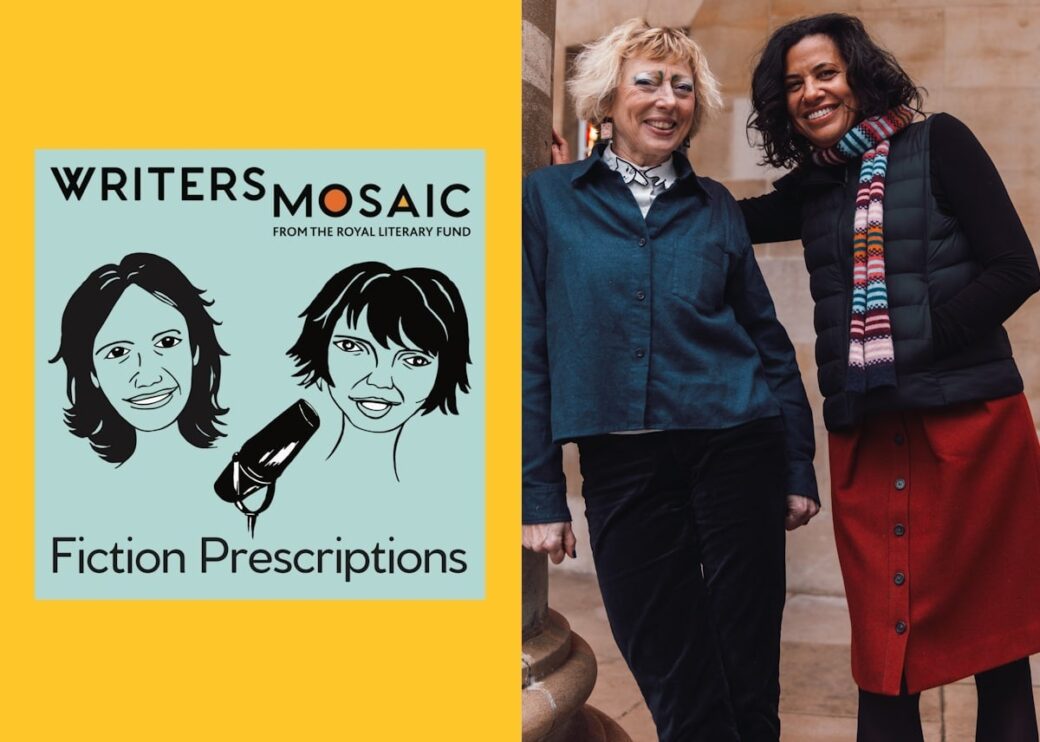

Write in with your dilemmas and our dynamic duo will suggest remedies for the head and heart, drawn from novels, poetry and prose collections.
Contact Isabelle and Ella for a literary check up here:
writersmosaic.org.uk/
Fiction prescribed in this episode:
Trad Wife by Saratoga Schaefer
Yesteryear by Caro Claire Burke
I Who Have Never Known Men by Jacqueline Harpman
Flesh by David Szalay
Waiting for the Barbarians by J. M. Coetzee
King of Nothing by Nathanael Lessore
‘I will teach my boys to be dangerous men’ (poem) by Lucas Jones
Isabelle Dupuy (ID): Hi, welcome to Fiction Prescriptions. I’m Isabelle Dupuy, and I’m a writer.
Ella Berthoud (EB): And I’m Ella Berthoud, and I’m a bibliotherapist. This episode, we’re going to be talking about the manosphere. And we have a question from a listener, John, in Nottingham, who asked, ‘What does boredom have to do with the manosphere?’
ID: Very interesting question. We were talking before starting about episodes in our lives where we’ve tried to understand what this manosphere is. And I was recalling to Ella a story that my son told me about over 10 years ago. He was in secondary school, and he had a very strange day. He came home, and he said, ‘Mumma, something very strange happened.’ I’m like, ‘What happened?’ So, there’s this girl in the class – and they’re about 14-years-old – and this girl is quite strong and tall for her age, taller and stronger than most of the boys. And she is the leader of a group of girls. So, the boys are intimidated by her, and they like to tease her, not in a very nice way. They say things to her like, ‘You’re too big. You’re too ugly. We’re never going to go with you.’ And the girl, at some point, turns around to them and says, ‘I don’t really care what you think because I am bisexual.’ And this disturbed my son. He came home, and he said, ‘You know what, this is very strange she said that. And I felt like we have no chance. There’s nothing going to happen because I can’t go to school and say I’m bisexual because if I say that, it means I’m gay. But she can say that, and it just means what it means, that she has a choice.’ And I thought, times are changing. And I thought, how interesting. And I wasn’t sure how to interpret that. What do you think?
EB: Yeah, that’s really interesting. I similarly had a lot of such discussions with my girls when they were at school. And the whole coming out thing is a whole different experience now. Anyway, they didn’t have such a positive experience of coming out, I have to say. But also, what I felt was very relevant to this whole idea of the manosphere, for them, was that it seemed that everyone they knew had terrible first sexual experiences because of porn. And I think that is a really big thing now which affects young men, and it’s not just Andrew Tate podcasts, it’s also the prevalence of porn. Apparently, 80% of people watching porn are under 18. So, it’s pretty terrifying.
ID: That is pretty terrifying. And I was thinking about what happened to my son and to the other boys in the class, and I thought, is this about power? Is this about men who feel like they’ve lost some of their power because the women have more options, or at least that they voice them now? And how do they handle that? And I guess that the link to boredom in this is if you feel like you don’t have so many choices or so much power to make choices, is that where the boredom begins in a way, right?
EB: Yeah, that’s true. And I think it’s something which is very much reflected in all the books that we’ve chosen to talk about.
ID: We have a very good selection today.
EB: A great selection. And we’re going to start with a really good pair of books which are both about this phenomenon of the trad wife. So, one of them is actually called Trad Wife by Saratoga Schaefer, and the other one is called Yesteryear by Caro Claire Burke, and they were both published at roughly the same time. Trad Wife is a kind of horror book, and it’s about a woman who is an influencer and a trad wife. So, she lives the dream, seemingly, wearing beautiful clothes, having seven children, living on a farm, and being an influencer, having thousands of followers on Instagram. But in order to actually become a proper trad wife, she has to have lots of children, and the book starts with her having none. So, she’s on Instagram all the time doing her pregnancy tests and trying to look really happy and positive, but she’s not getting pregnant. And one day, she goes into the woods outside her house, and she comes across this old, crumbling well, and she sees this kind of angel or demon coming out of the well. And to cut the story short and give a little bit of the game away, she has sex with that angel demon and gets pregnant because she can’t with her—
ID: Husband.
EB: Husband. And then the baby grows very quickly, like in two months, and pops out. It all becomes a little bit beyond reality. But she has the baby, and this is when it turns into horror because the baby has a lust for blood. And it’s actually hilarious and awful and brilliant. But what I love about it, because I’m not normally a horror lover, is that she is ultimately really empowered.
ID: I was wondering in terms of the manosphere, what does Trad Wife say about the manosphere?
EB: Well, she is pandering to the manosphere desperately by trying to live that life of being the perfect woman who has all the kids, does everything her husband wants, doesn’t work, makes fabulous food every day, and has the babies. The thing is, he can’t produce the babies.
ID: Maybe this is where it meets with Yesteryear. So, Yesteryear is a story about a young woman, who’s very smart and ambitious and Christian. And she is one of those people who has pride, and that is probably eventually her downfall. So, she thinks she wants to be a trad wife but only because she doesn’t really see how she can compete successfully in a man’s world. She’s very imbued with this idea that the cards are rigged against her, and she’s quite pessimistic about the women that she does see trying to compete out there in the man’s world. And so, she decides then to play the trad wife.
This is a preview of the show. The full text is available as a PDF here: Fiction Prescriptions: The manosphere
Next time on Fiction Prescriptions: Food.
(Playful book chat only – not medical advice. If you need serious support, contact samaritans.org)
Fiction Prescriptions
Superstitions
Ella Berthoud & Isabelle Dupuy
Food
Ella Berthoud & Isabelle Dupuy
Parenting
Ella Berthoud & Isabelle Dupuy
The state of the world
Ella Berthoud & Isabelle Dupuy
Love
Ella Berthoud & Isabelle Dupuy

New Year’s resolutions
Ella Berthoud & Isabelle Dupuy
WritersMosaic monthly
Get new episodes by email
One email monthly, unsubscribe anytime

Illuminating, in-depth conversations between writers.
Listen to all episodes
SpotifyApple Podcasts
Amazon Music
YouTube
Other apps

The series that tells the true-life stories of migration to the UK.
Listen to all episodes
SpotifyApple Podcasts
Amazon Music
YouTube
Other apps
WritersMosaic interrogates the notion of ‘staying in your lane’ by asking writers how they attempt to think beyond the parameters of their cultural identity.
Listen to all episodes
SpotifyApple Podcasts
YouTube
In the first series of poems commissioned by Hannah Lowe, six poets explore how ritual gives meaning to our lives.
Listen to all episodes
SpotifyApple Podcasts
YouTube

Free Will
Will Harris reads his poem, 'Free Will'. Directed by Matthew Thompson and commissioned by the Adrian Brinkerhoff Poetry Foundation.

Half Written Love Letter
Selina Nwulu reads her poem, 'Half Written Love Letter'. Directed by Matthew Thompson and commissioned by the Adrian Brinkerhoff Poetry Foundation.

A tribute to Bonnie Greer
Founding editor of WritersMosaic Gabriel Gbadamosi pays tribute to Bonnie Greer, the extraordinary writer, public intellectual and much admired contributor to WritersMosaic who died on 15 September, 2026.
Triage
A response to the endless spiral of worldwide conflict and tragedy
My tomorrow is today
'I clasped my hands together, not in prayer but to stop them from shaking'



Ever Land
A layered and haunting view of daily life in occupied Palestine
Mahsa Salali’s Naqqāli
'Salali positions the female body... as an active agent'