
The Sinéad Generation

Suzanne Harrington
We tend to picture Ireland as either Then or Now, the Then inhabited by Angela’s Ashes, Magdalene laundries, and Connie Dodgers during Lent; the Now by Sally Rooney, trans self-identification, and Fontaines DC.
Wedged between Angela and Sally was the ‘Sinéad generation’ – all of us born around the same time as Sinéad O’Connor; the Gen Xers who were kids in the Seventies, and got the hell out in the Eighties. Not all of us, obviously. It wasn’t like the Famine – we weren’t all piling onto coffin ships to America, as much as ferries to Fishguard – but a lot of us left, gnawing with a different kind of hunger. Hunger for the outside world, hunger for freedom, hunger for excitement and pleasure and not knowing what might happen next. Hunger for life.
The Ireland I’m from is the one where Sunday Mass was obligatory, but Top of the Pops the only weekly ritual we cared about; where every school lesson began by standing up to recite a Hail Mary, but you could get The Face and the NME in Easons, the sterling cover price hidden under a sticker with a higher price in Irish punts. There was no living together, because it was still called ‘living in sin’, and if you were having sex you had to pretend you weren’t. If you were brazen enough to live with someone, you were either at the far end of bohemianism, or a Protestant, or both. You were rare.
I’m from a picturesque provincial town that liked to call itself a city – Cork City, the home of Connie Dodgers. You might be wondering what they are. A local baseball outfit? No. Connie Dodgers were biscuits. They were named after a bishop called Cornelius Lucey who was in charge of Cork people in all matters from the bedroom to the kitchen, from 1952 until his retirement in 1980.
During Lent, Bishop Lucey told the people of Cork that they could eat one meal per day and two ‘collations’ – that is, a cup of tea and a biscuit. This was back when Lent meant giving things up – kids would hoard their sweets for 40 days then binge themselves diabetic on Easter Sunday, dads would forgo pints with a kind of wistful martyrdom you’d associate with the early Christian saints. Ash Wednesday and Good Friday were days of fast and abstinence, which meant no milk in your tea, no butter on your toast.
But the people of Cork would get peckish. So The Green Door cake shop in Patrick Street invented a giant biscuit, working on the inarguable fact that the bishop had never specified the size of the biscuit you were allowed to have with your cup of tea. Only the quantity. The Connie Dodger, as it came to be known, was a single biscuit the size of a plate. This is how we did things back then.
Here are some of things we were told by adults when we were growing up, all of which were presented as non-negotiable:
- God was everywhere, but you couldn’t see Him. Like Santa Claus, except God’s pronoun got a capital letter.
- There was no word for vagina or vulva.
- Periods happened when your ‘cell’ ‘burst’.
- In uncouth households, penises were called mickeys. The Dublin suburb of Stillorgan was known as Mickey Marbh (‘marbh’ is the Irish word for dead). We didn’t really get the joke in Cork.
- The Pope was incapable of being wrong about anything ever.
- The Virgin Mary got pregnant by not having sex with a dove.
- When the priest held up the wafer at Mass after everyone recited the long one that began I believe in God the Father the Almighty maker of heaven and earth, the wafer was turned into the body of Christ by the priest while the altar boys solemnly jingled the golden bells.
- Nobody ever specified which part of Christ’s body you were eating. You just swallowed it. It could have been his ankles.
- If you knelt in a dark wooden box and whispered your sins through a metal grille to a priest in an adjoining dark box, they were washed away like mud down a plug hole, whether it you’d stolen some sweets or raped a child.
- If a baby died without being baptised, it would be suspended forever in a kind of ectoplasm full of other tiny floating dead babies. This was called limbo. It existed because babies were born in sin.
- God was called Holy God when you were a small child, then just God as you got nearer Confirmation age.
- Babies came from Holy God’s garden, where they lay in rows of pink and blue cots, awaiting selection and dispatch by Himself, along strict racial lines; if you were white, you couldn’t get a brown baby. Holy God didn’t like that.
- Later, babies came from ‘Mummy’s Tummy’, but nobody knew how they got in there until Inter Cert Biology chapter nine. Turned out no doves were involved.
- A woman could be married to God, and wear a wedding ring to show this. You didn’t even have to be a nun. Our headmistress – Miss O’Driscoll, who had a grey moustache and lace-up shoes – wore a gold wedding band even though everyone knew she’d never seen a mickey in her life. She ran an after-school catechism study group for pupils keen to suck up.
- If you didn’t go to Mass on Sunday it was a mortal sin.
- A mortal sin meant a ticket to hell if you died before you went to confession. There were lots of mortal sins, from murder to using Durex.
- You couldn’t get pregnant unless you were married.
- Being married was an irreversible condition, like being disabled or being dead. (We didn’t say disabled back then – we said handicapped, and older people said crippled).
- If you went to bed with wet hair, you’d get nits.
- There was no God in England. This was official.
- All contraception was a mortal sin.
- All contraception was illegal.
- If you washed your hair during your period, you’d become infertile.*
*Why then were we not vigorously shampooing our hair when we had our period, if shampoo and warm water worked as contraception?
Nothing made sense in Ireland. Nothing.
*
THE ABORTION EXPRESS
21 July 1987.
It was a Tuesday.
I remember the date because I had arranged to meet the Skinhead Queen at Daunt Square the following Saturday, after she’d cornered me in the toilets of Coco’s, or maybe it was Zoe’s – definitely not Chandra’s because only people with homemade tattoos went there – demanding reparation for the contact lens I’d punched out of one of her eyeballs a few weeks earlier.
I’d punched her on the side of her shaved bleached head, outside the pub. I had zero experience of punching people. I’d only ever seen it on telly. There had been some kind of blurry reason – she’d been threatening Saoirse, half her size – and I was drunk enough to wade in. The rage inside me had been metastasising, and here was an outlet. An opportunity to let it out, the way men do, without thinking.
Big mistake.
Unlike me, she wasn’t an inexperienced violence virgin; within seconds of my lens-expelling punch, I was on the pavement with her on top of me. She was fucking huge. I think she worked out, which nobody did back then, or maybe I’m making that up to make myself sound less pathetic, less like a drunk skittle bowled over onto cold stone.
I’d never been in a proper fight before, and had no idea what to do. I was as surprised as anyone else to have taken it upon myself to thump the toughest girl in the pub. It’s not like we had history – I didn’t even know her, other than to see. Some other drinkers saw what was happening and dragged her off me. I weaved my way home, thick headed and reeling.
I’ll focken kill ya, she shouted after me.
I was afraid to leave the flat after that.
Cork is a small place.
THE BAKERY
The Abortion Express was parked and waiting on the quay opposite what would one day become Merchants Quay Shopping Centre, where an actual Marks & Spencers would make the citizens of Cork feel more sophisticated with its prawn sandwiches and lacy bras.
Back then it was just Roches Stores, the department store with oversized custard slices in its customer canteen – you couldn’t really call the place a café, with its strip lighting and stewed Barry’s tea, its giant lumps of industrial confectionery supplied by the bakery where I worked. The bakery I was being groomed to take over; the one from which I was keen to escape.
The bakery where I worked was not some elegant patisserie, the kind you’d see in a French romcom; nor was it small and artisanal, staffed by muscular men in floured aprons shoving racks of sourdough into hot ovens. No, it was a factory unit the size of a football pitch that churned out frisbee-sized Danish pastries, cream slices with the heft of sledgehammers, eclairs the length of a child’s arm. For the Cork housewife on a budget, size mattered. Nobody wanted neat and dainty.
It was a family business, my dad taking it over in his teens when his own dad dropped dead in his early forties on the flour-grimed factory floor. My dad had to leave school in a hurry, working brutal hours to keep the business afloat – it was that or the boat to England. Overnight, he was not just the breadwinner but the bread maker, a household of younger siblings depending on him. He did it. He saved the business, kept the family together, by working, working, working. The bakery started making money.
Since then, he’d sweated and slaved six days a week, shiny car parked out the front, as he grafted tirelessly alongside his employees, up to his elbows in goo. They didn’t have cars, but walked to work from the surrounding neighbourhood. The bakery paid for foreign holidays and private schools – ours, not theirs – and the idea was that I would one day take over, be the third generation cake maker. Have my own flash car out the front.
That was the plan until I actually started working there.
Early mornings, brutally hungover, facing into vast vats of industrial custard, industrial jam, industrial buttercream. Endless hours and days and weeks of slicing, icing, smearing, slathering. Stacking, racking, packing. The same every day, every day, every day. The clanking of machines, the smell you could never wash off. It was no place for teenagers, which is why all the girls who worked there, icing and slicing alongside me, seemed to get pregnant at sixteen. I definitely didn’t want to do that. I just wanted to not be there, but didn’t know how, or when, or where.
THE SKINHEAD QUEEN
I was also running away from the Skinhead Queen, but she was more of a footnote to the real reason, which was that I might kill myself if I stayed. This seemed to be the only way out of a lifetime overseeing oversized cakes and underpaid workers who didn’t want to be there either, but had no other employment options on account of all leaving school aged fourteen.
The Skinhead Queen was more of an immediate situation. During our second unplanned encounter in the nightclub toilets, weeks after that first one on the pavement outside the pub, my only option was to grovel. She and her gigantic Dr Martens had appeared from inside a cubicle, catching my eye in the mirror as I sloshed on more lip gloss. My voice activated before my brain could intervene.
‘Sorry about the other night, like,’ I said.
I could hear myself singsonging my voice so that I would sound more like her. Then I tensed, wondering what nose cartilage on sink porcelain would feel like. The Cork colours of red on white.
Her response was surprising, and pleasingly non-violent, as she told me in quite a reasonable manner how much her contact lens had cost to have replaced. They were expensive back then, precious little discs of hard unyielding plastic that needed special storage in tiny twin jacuzzis, floating in their very own amniotic fluid. You’d see people on all fours earnestly feeling the carpet with their finger tips like they were part of a forensics team, in the days before disposables, back when dropping a contact lens on the floor was like dropping your wallet down the drain.
They cost a focken bomb, she said.
She was so tall in the smoked glass reflection. The shape of her head illuminated as she loomed, a lit Major between her lips, clouds of smoke flaring through her nostrils. There was nobody else in there; they were all far away, down a long corridor, everything muffled by the music from the dancefloor. Was it Shalimar? Shakatak? I had to extricate myself.
‘I’ll have the money for you a week on Saturday,’ I’d blurted.
Then I paused, and improvised some more:
‘Meet me at Daunt Square. Two o’clock.’
‘Grand so girl,’ she’d said.
I’d felt so clever and so relieved, walking away from her, the fake promises falling from my mouth. The idea that maybe reimbursing her for the damage I’d caused might actually be the fair and right thing to do never once crossed my mind.
I’d got away with it.
WritersMosaic monthly
Get new writing in your inbox
One email monthly, unsubscribe anytime
It’s being published I get paid for; the writing I would do for free
‘Any advance [...] for your novel is to compensate you for the horrors of being published'
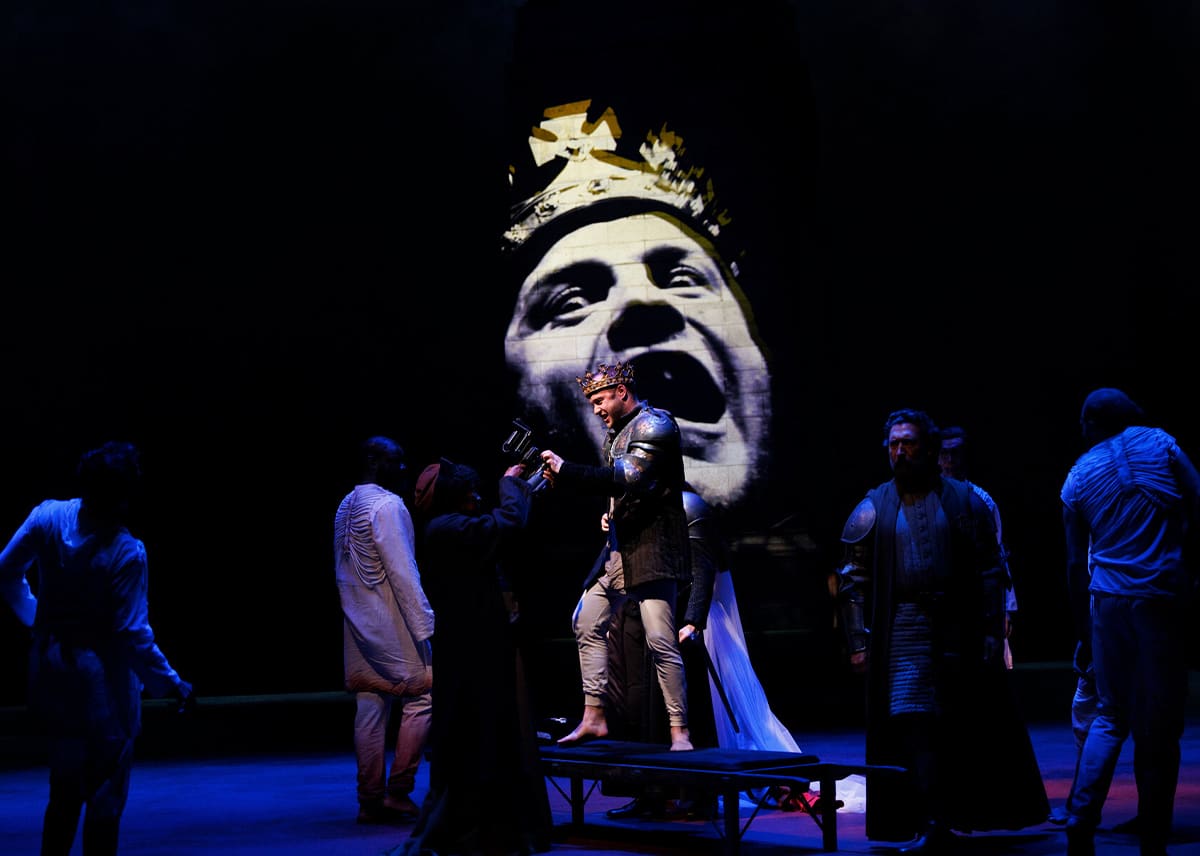
Complex antihero: an interview with Arthur Hughes
Unravelling Authur Hughes' Richard III
Marlon James: a Jamaican reckoning
'A return to a home I barely knew'




Haunting the Black Air
Poetic freedom across space and time
The Disappearers
A sprawling visceral experience that drops you in head first
The Lady Imam
Is the world ready to catch up with amina wadud?


Illuminating, in-depth conversations between writers.
Listen to all episodes
SpotifyApple Podcasts
Amazon Music
YouTube
Other apps

The series that tells the true-life stories of migration to the UK.
Listen to all episodes
SpotifyApple Podcasts
Amazon Music
YouTube
Other apps
WritersMosaic interrogates the notion of ‘staying in your lane’ by asking writers how they attempt to think beyond the parameters of their cultural identity.
Listen to all episodes
SpotifyApple Podcasts
YouTube