Common world
Common world

One of the many joys of reading is that of being transported to another world, far from our own. When, in 2011, the judges of the Commonwealth Writers’ Prize gathered in Sydney, many hours were spent deciding the overall winner, but a significant amount of time was also spent with the five regional judges swapping insights and shedding light on the contexts of work coming out of their respective regions – Africa, Asia, the Caribbean, Canada and Europe, and the Pacific. The overall winner of the prize was a powerful novel set in post-civil war Sierra Leone, The Memory of Love, by Aminatta Forna.
As an observer to this conversation, I was struck by how much I had missed in my own reading of the books, particularly those set in the Caribbean and the wider Pacific region. It also highlighted for me the importance of access to the stories themselves, both locally and globally. Later, as a judge for the EBRD (European Bank for Reconstruction and Development) Literature Prize in 2018, I walked around London’s bookshops out of curiosity to see how many of our shortlisted fictional works in translation to English were on offer in major bookstores – very few, and usually sitting on an out-of-the-way shelf, beyond the eyeline of shoppers.
As readers, we are well aware that literature offers us a chance to remember that, as Jean Rhys observes in her Caribbean and European modernist classic, Wide Sargasso Sea, ‘there’s always the other side… always.’ Of course, there is also the problem of stories which get stuck in the margins, when they have the potential to alter how we see the world, in the spirit of what the Indian author, Kiran Desai, said of The Memory of Love: ‘it delivers us to a common centre, no matter where we happen to have been born.’
For writers lucky enough to live in a place with a healthy publishing infrastructure, their imagined worlds have a chance to reach and engage readers far beyond their country’s borders. For those without such luck, it’s a different story. Some leave home – to work, to live, to forget, or to remember in long backward glances, and be able to write and publish – the literary world is full of writers who have left one place for another. For those who do move, by choice, or out of necessity, the act of writing offers a way to re-examine the shifts in themselves and others, to observe and respond to changes. It can shed light on the always unfinished business of remembering and forgetting. In this ‘Common World’ edition of WritersMosaic, the writer Stefanie Seddon catches herself looking back at an upbringing in New Zealand, ‘trying to make sense of the view’. And the character in Romesh Gunesekera’s story is driven ‘to find the thread that connected us to a place, or an idea, or a community.’ The ties of connection to where we have come from may wear and rupture over the course of time, but they cannot be forgotten.
Duality can be a writer’s natural habitat – belonging/un-belonging, whether at home or further afield, can fuel stories and bring new experiences to draw on. The Trinidadian-British writer, Monique Roffey, in her reflection on a European-Caribbean upbringing, ‘Fish Out Of Two Waters’, explains how she uses her hybrid identity as a useful vantage point to inspire, rather than hinder, the creation of new work. Exile, too, can be helpful for many writers who see it as a chance for new or imagined worlds to come to life; some, most notably Dante in The Divine Comedy, have produced their strongest works in exile. Nada Awar Jarrar, from Lebanon, writing in The Guardian, talks poignantly about being far from home: ‘I carried my city with me as I would a worn suitcase, that I could not put down, the weight of it like some unspecified regret, a memory that came alive at unexpected moments and left me breathless.’ And Mahmoud Darwish, the revered Palestinian poet and author, referred to his exile similarly: ‘I carry it everywhere, as I carry my homeland’ – belonging and unbelonging packed into the same writerly suitcase.
In many countries, years of chronic political, social and economic instability have meant that industries like publishing are virtually non-existent. Any local infrastructure to re-boot creative production is often hampered by the threats of more unrest. Writers may have to wait for years for a book to be published and marketed within, never mind across, borders.
In Afghanistan recently, I asked professional radio drama scriptwriters if they also wrote prose fiction. The answer was a resounding yes, of course, why wouldn’t they? Maryam (not her real name) writes in Dari, a language with over 12 million native speakers, but says ‘I have never come across a local publisher who is willing to publish a book without asking for money, and it’s impossible to find a foreign publisher who wants to read about anything except the war.’ She has self-published short stories on social media, under a pseudonym for safety’s sake, but only in Dari. For Maryam and many other writers, leaving the country is not an option, and they are left with little or no chance of developing an internal market for their work. As with Deets, the character in Jacob Ross’s story for this edition, they cannot be heard.
Of course, technology is borderless and makes it possible to be read and to write from pretty much anywhere. The internet offers writers a creative route through which to express themselves in words, through their voices and images. The visual, digital screen is challenging and changing the form of what gets written; and there is change in the way that the new digital platforms offer writers a further creative role as content providers. The many online international literary journals – Words Without Borders, Asymptote, Brittle Paper, PEN Transmissions, addastories, Himal and many others – share and promote new work, often in translation. However, online censorship and the digital divide in terms of access, with haves and have nots, are ever present. The internet remains limited, slow, and dysfunctional in some countries, particularly in rural areas, with little or no mobile phone coverage.
In conversation for this edition, Gillian Slovo refers to the idea of ‘the fractured novel’ and observes that it’s often easier to write linked short stories in a censored, pressured, underfunded environment than to set about writing a longer novel. Writing at length requires peace of mind, space, concentration and, crucially, the knowledge that if the work is strong enough, there is a well-developed creative industry which has the enthusiasm and the resources to find you a readership.
At a meeting in the UK with a global publisher, my pitch for supporting long-term development of writers in Afghanistan was met with wariness at the very idea of offering support. Publishing, it seemed, was not about support, despite these being writers who, through some combination of talent and will, had produced quality work in need of shaping and revision, and who would benefit from mentors to guide them through the woods of the wider literary and publishing world.
Almost a decade ago, Commonwealth Writers, the cultural initiative of the Commonwealth Foundation, looked into what the development and publishing opportunities were for writers in different regions of the Commonwealth. A writer in Samoa recalled the first and last literary agent to have visited, who left saying he couldn’t find the global ‘sales angle’. Emerging writers in remote territories, or from areas of conflict, have not only a slim chance of their fiction being read beyond their borders, but also a dearth of opportunities to have that work published locally.
More recently, on BBC Radio 4’s Open Book, the writer and performer Stella Duffy celebrated the work of the New Zealand writer, Patricia Grace. In 1975, Grace was the first Maori woman to publish a book of short stories, despite the fact that she had not – by the time she finished high school – ever read a book by a local writer, let alone an indigenous one. In 2020, Grace’s spellbinding 1986 novel, Potiki, about a Maori community’s fight for survival, was published as a Penguin Classic. Stella Duffy urged publishers to ‘take the leap’ as they have with this and other novels like The Imaginary Lives of James Poneke (Lightning Books, 2019). Set in London at the time of the 1851 Great Exhibition, the book features a central Maori character and was written by New Zealand writer, Tina Makereti, whose short story ‘Black Milk’ won the Pacific Regional Commonwealth Short Story Prize in 2016. As Stella Duffy commented, there are many more novels from New Zealand which open new worlds to readers, and we’re ‘missing a trick by not sharing them.’
There continue to be vital ongoing initiatives and awards which try to address this absence of new voices and worlds. International literary awards, such as the Caine Prize for African Writing, contribute to the bringing of new voices from one part of the world to readers in another. They buy time for writers and inspire confidence, particularly for the less experienced. And some awards, though not enough, also accept work in translation – the Commonwealth Short Story Prize now receives submissions in 11 languages, and the EBRD Literature Prize divides the award equally between the writer and translator.
As well as prizes, international literature networks – The Word Alliance (eight leading literature festivals) and the Hay Festival’s franchise model, for example – support and showcase the work of established writers and new emerging voices. But beyond these relatively small pockets of enthusiasm there is a need to support longer, slow-burn initiatives from which emerging writers can develop careers.
Southern Australian Nunga poet and writer Ali Cobby Eckermann has campaigned for much more strategic funding in the area of Aboriginal literature, arguing that ‘we need to encourage and protect the original voice.’ The challenge is to build professional local publishing industries that know what they are doing and that can build up strong lists of work backed by serious promotion and distribution. Anything less will just be tinkering with the problem and won’t make a significant difference in the long run.
In Nigeria, Cassava Republic Press realized that the dearth of local publishing houses discourages those interested in writing and doesn’t inspire readers. Co-founded in 2006 by publishing director, Bibi Bakare Yusuf, Cassava Republic was originally set up to respond to this situation and to build a new body of African writing. It now has offices in Nigeria and the UK to give global readers access to local stories. Peekash Press – the vision of a group of Caribbean writers, international publishers and the Bocas LitFest in Trinidad and Tobago – has published six titles since 2011 featuring emerging Caribbean writers based in the region. The Bocas LitFest assumed responsibility for the imprint in 2017 and continues to lobby individual Caribbean island governments for the strategic regional will to support a sustainable pan-Caribbean fiction publishing industry.
These are unfinished stories which need more time and support to unfold. Meanwhile, Caribbean fiction writers are still having to rely largely on external acknowledgement to be read within, never mind beyond, the region and many writers leave home in search of those publishers and readers.
The coronavirus lockdown saw fiction sales surge in the UK and across the globe. People want to be absorbed in stories from other worlds, that are not about the four walls of themselves. In this edition, the writer Nadifa Mohammed tells us how she relies on writing in print to bring to life untold stories from the past, ‘what we can never know, we can re-imagine.’ Never has it been more urgent to unlock the publishing gates in places where stories are waiting to inspire and connect us. Meanwhile, Maryam in Afghanistan and others continue to create their own stories, in their own languages, because if you are a fiction writer, that is what you do, particularly when the power fails and the internet goes down again.
© Lucy Hannah
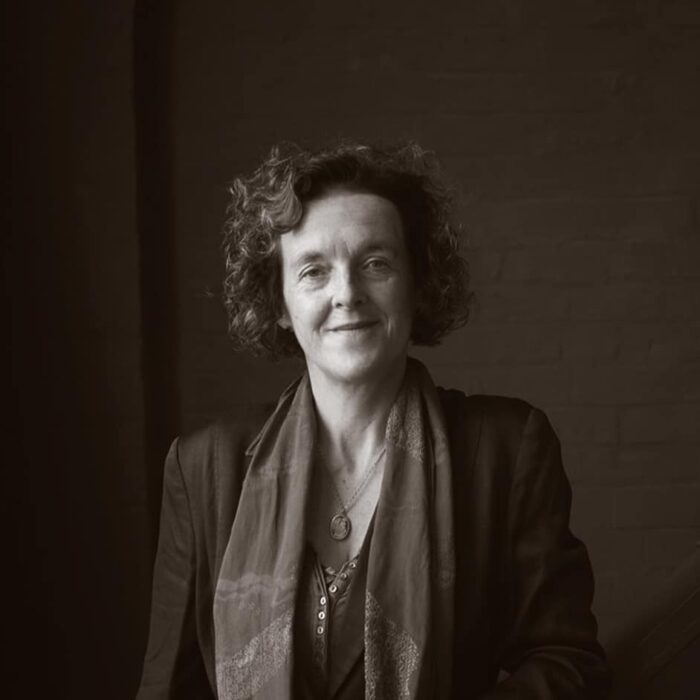
Lucy Hannah
Lucy Hannah is a Visiting Research Fellow at King’s College, London, Director of the BOCAS LitFest in Trinidad and a trustee of Vital Xposure Theatre.
Common world

Kopuwai
Stefanie Seddon

The green room
Jacob Ross

Raising the dead
Nadifa Mohamed

The family
Romesh Gunesekera

Fish out of two waters
Monique Roffey

A common world
Gillian Slovo & Kamila Shamsie

Our world
Robert Huggins
WritersMosaic monthly
Get new episodes by email
One email monthly, unsubscribe anytime

Illuminating, in-depth conversations between writers.
Listen to all episodes
SpotifyApple Podcasts
Amazon Music
YouTube
Other apps

The series that tells the true-life stories of migration to the UK.
Listen to all episodes
SpotifyApple Podcasts
Amazon Music
YouTube
Other apps
WritersMosaic interrogates the notion of ‘staying in your lane’ by asking writers how they attempt to think beyond the parameters of their cultural identity.
Listen to all episodes
SpotifyApple Podcasts
YouTube


Marlon James: a Jamaican reckoning
'A return to a home I barely knew'
The name of this wallpaper is ‘Childhood’
A luminescent bubble of memory
What’s in a feminist? Holding on to Gloria Steinem
Is Gloria Steinem's feminism still relevant today?

Pressure
What's missing from the latest 'untold story behind D-Day'?
A Trial
An examination of theatre’s complicity in post-truth politics