Common world
Fish out of two waters

In the messy aftermath of centuries of European colonisation, many people – 84.6% – live in the ex-colonial world. (This sounds high, but as Ania Loomba reminds us in Colonialism/Post Colonialism, only parts of Arabia, Persia, Afghanistan, Mongolia, Tibet, China, Siam and Japan have never been under colonial rule.) As a result, many of us have a blurred identity. These days, it’s actually quite common. I’m one of these common, post-colonial people with a hybrid identity. And, having had a long writing career spanning the first two decades of the twenty-first century, I’ve come to know it’s a gift. Hybridity equals multi-POV: it is the gift of ‘this and that’, of not one thing and not the other, and this type of knowing makes for an excellent sweet spot, a vantage point. Let me say it again: 84.6%. Though Europe is only 8% of the world’s landmass, between 1492 and 1914 it conquered and colonized much of the world. This was a massive onslaught, a more or less total ‘world capture’ experience, from which we are all still recovering.
In the aftermath of this small window of time, the ancient world that was before became transfigured and mixed up by conquistadores bearing the Christian cross, slavers, explorers, mavericks, opportunists and the like. What was once ancient became the New World. Gods, myths, ideas, race, language, all things that tell us who we are, were displaced, moved, overlaid, stolen, fused together. Academics call the resulting mix of human identity: mestizaje, hybridity, identity ambivalence, creolization etc. Then, in the mid-twentieth century came several collectives of nations, a coming together of allies in an attempt to harmonize, embrace and celebrate our commonality and the universal bond which connects us all. And so we have NATO (1949), the Commonwealth of Nations (1949), the UN (1945). In the late twentieth century there also came cheap (i.e. mass) air travel, and, in 1989, the World Wide Web which brought globalization, a revolution in communication. More mix up.
My hybridity is multi-generational: my mother was born in Egypt of Italian, Maltese and Lebanese parentage; she spoke three languages from birth (Arabic, Italian and French). She then married my very British father, imagining a life of domestic bliss in the northwest suburbs of London. Instead, this dream was scuppered when he accepted a job in Port of Spain, Trinidad, soon after they’d moved into a nice new home in Harrow on the Hill. They arrived in Trinidad by banana boat, the Cavina, with two suitcases and a green Raleigh bicycle, in January 1956, the same month Eric Williams launched his People’s National Movement (PNM) party, a Black Nationalist party, forever ushering in the winds of change. My parents were part of one of the last boatloads of European colonials to arrive in the then ‘British West Indies’, hoping to live a comfortable expat life. They never left. My father died in 1993, having long traded in his British passport, and my mother still resides in Port of Spain. Mum has been a European settler (in Egypt), an immigrant (to Trinidad) and her direct family were mostly refugees (after the Suez Crisis).
Though my father’s side is hardy, rural Anglo-Saxon through and through, via my mother’s bloodline, my identity is wildly unbidden. This works well for me.
In the UK, from the age of 13, there was boarding school, then university in Norwich then, in my 20s, a life working on newspapers and magazines in London. From the get go, I didn’t quite fit in. Looking back, I know this was a matter of cultural schism, of another set of social references and conditioning, not a weird narcissism of youth and feeling ‘different’. I actually was different. I was white/light-skinned, but not white like my more purebred British/English friends. At boarding school, I’d arrive back from holidays, tanned and gushing a creole-type English, which most of my school friends stared at and asked me to repeat, like a performing monkey. I decided, over time, to fit in as best I could. I chose to speak BBC RP and suppressed my Trini song. But it wasn’t just the parlance of my hometown, Port of Spain, that marked me out; being from a mixed up post-colonial space like Trinidad, is coming from audaciousness, from Technicolor flora and a bacchanalian carnival, from iguanas falling out of trees and from weevils in the flour, from beaches with a sea of wild currents, from bathing under waterfalls which splash down onto the road, from treks to forgotten satellite dishes high up on a hill, from bamboo cathedrals and calypso; it is coming from people with a powerful self-belief and confidence, a dazzling world forged in the crucible of surviving slavery, indenture and colonisation. It’s coming from a space of unrest, social and political rejection of Britain and all it stands for. So, yes, these circumstances made me awkward in the homeland of the ex-colonizer. Awkward being half-British, too. Also, I just wasn’t white enough, and blue-blooded enough, to pass in the higher echelons of British society. I was in some way an imposter, a reject from that elite sphere of life in the UK; whereas to be white in Trinidad is to be part of the 1%.
Being a hybrid, a creole, has given me the gift of double sight, a double take from the outside, and this goes both ways. In the West Indies, being a local white means belonging to a narrow societal margin of privilege, and so I qualify as outsider when I’m at home. Trinidad is a mostly Indo-African space. Being white is a rarefied and marginal position associated with all the perpetrators of the crimes of the past. I’m not just a white Trinidadian, but also a white diaspora Trinidadian. Tricky. This is what has made me a fish out of two waters. Okay by me, as from a very young age, I have always been a pretty strong swimmer. From island state, I witness the metropole, and from metropole I also look towards home in the Caribbean. The colonial past, the place of women, the island itself, all look very different when viewed from each position.
In Trinidad, the colonial era is far from forgotten. It’s everywhere to be seen, on street names and maps, in architecture, in our Westminster style of government and education and, of course, in academia and in the intelligentsia, where the word ‘reparations’ is ever present. The Caricom Reparations Commission has a ten-point plan which they will take to the highest courts in Europe. From the UK, however, the colonial era is forgotten by the man in the street, disassociated from. No one wants to remember it and/or be held accountable. It was all caused by the ruling class, by the state and agents of war: the navy, army. The common person had nothing to do with it. And while this has been disproved by David Olusoga in his BBC2 documentary Britain’s Forgotten Slave Owners, reparations are deemed unrealistic and even unnecessary. There’s been an erasure, or an amnesia about history.
Women? In the UK I live a life where feminism has become mainstream, after four waves of societal unrest and campaigning by women. There are female MPs, CEOs, there’s been a wake up around the commonality of sexual abuse since the #metoo movement. There’s also been a boom in women in publishing too, and in the world of books. The gap between equality in theory and life is closing. In Trinidad, things are very different. Women’s groups often don’t like to use the world ‘feminist’ as this might clash with Christian ideas about marriage and a woman’s place. In Trinidad and Guyana, domestic abuse is rife. Incest is a serious problem too; child marriage was only made illegal in Trinidad two years ago. A 2016 Children’s Authority report in Trinidad revealed that of the children found to be suffering from sexual abuse, 86.8% were girls. Infidelity is common, even celebrated in popular culture, such as calypsos.
Having two homes, a back and forth life, gives me the possibility of seeing two worlds, one made rich on the other. This other has disremembered this fact. Britain has forgotten Trinidad, but not the other way round.
The place itself? Britain looks at the West Indies with sentimental nostalgia and a naïve longing. The islands are still a commodity, if only for holidaymakers, seen as ‘beautiful’, placid and warm, a holiday paradise. The ex-British island colonies all converge into one landmass too: ‘Jamaicidad’. Or ‘Jamaicidos’. Brits don’t seem to know the difference between the islands they once used to own and govern. The islands are exoticized and reduced to landscape (coconut trees, sunsets) and reggae. Whereas the Trinidad I know is complex, highly cultured and self-aware, globally aware, art-producing, literate, and its topography is wild and bold, as it was once part of the South American mainland. Its shadow side is a high drug-, gangand poverty-related murder rate and its oil money has dried up; we live on the doorstep of a collapsed state, Venezuela, and have absorbed tens of thousands of new immigrants. Syrians from Syria have come too. Our society rejects an easy exoticism. Climate change will soon have tens of thousands of Caribbean people trying to emigrate north or very far south.
Of course, this double lens would have an impact on anyone who wishes to make creative work, be it film, books, or fine art. I’m very conscious that my position on both sides comes from privilege. I’m middle class. And I have light, (but not light enough) skin. My literary work has been about these pale-skinned outsiders, like George and Sabine Harwood in The White Woman on the Green Bicycle, who have to learn the rules of Trinidad and they gradually do. Then there is Arcadia Rain in The Mermaid of Black Conch, a woman who owns land and loves and lives in a small, once-colonized island, amongst a people who should (and some do) hate her. Yet she has navigated this space and even earned respect. My work is often about white people who exist in a difficult postcolonial space, where to be white carries the historic charge of ‘criminal’. It is also magical-real, with falling iguanas and all that; this also comes from a Caribbean space where what is unlikely and improbable in Europe is everyday; in Trinidad, where iguanas do fall from trees. My mountains and trees speak, and an ancient Taino woman becomes a mermaid, and then a woman again. She falls in love and claims Eros, romantic love, as her due rite of passage. My mermaid, in The Mermaid of Black Conch is, like me, a half and half, a double fish out of water, in the sea and on land, an exile and an outcast, banished from her homeland, who knows how to swim well. She is bound by a curse to swim alone for a long time. I’m a writer, so I get to both invent her and write her, then free her, bless her with love, and see that she beats the curse. No one can write of these things unless they know about this gift of twice being a fish out of water.
© Monique Roffey
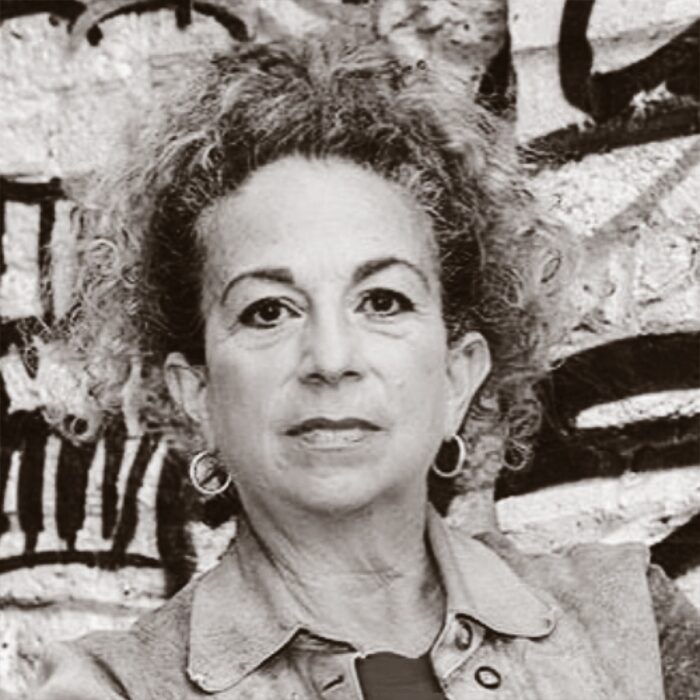
Monique Roffey
Monique Roffey is an award winning Trinidadian-born British writer of novels, essays, literary journalism and a memoir.
Common world

Common world
Lucy Hannah

Kopuwai
Stefanie Seddon

The green room
Jacob Ross

Raising the dead
Nadifa Mohamed

The family
Romesh Gunesekera

A common world
Gillian Slovo & Kamila Shamsie

Our world
Robert Huggins
WritersMosaic monthly
Get new episodes by email
One email monthly, unsubscribe anytime

Illuminating, in-depth conversations between writers.
Listen to all episodes
SpotifyApple Podcasts
Amazon Music
YouTube
Other apps

The series that tells the true-life stories of migration to the UK.
Listen to all episodes
SpotifyApple Podcasts
Amazon Music
YouTube
Other apps
WritersMosaic interrogates the notion of ‘staying in your lane’ by asking writers how they attempt to think beyond the parameters of their cultural identity.
Listen to all episodes
SpotifyApple Podcasts
YouTube

Marlon James: a Jamaican reckoning
'A return to a home I barely knew'
The name of this wallpaper is ‘Childhood’
A luminescent bubble of memory
What’s in a feminist? Holding on to Gloria Steinem
Is Gloria Steinem's feminism still relevant today?
Pressure
What's missing from the latest 'untold story behind D-Day'?
A Trial
An examination of theatre’s complicity in post-truth politics