Stay in your lane?
Beyond Baldwin

Nobody likes to be told what to do. The fin-de-siècle French civil servant and novelist J.-K. Huysmans made a name for himself when he broke away from Émile Zola’s Naturalist school, which dominated French literature in the 1870s, and instigated a literary response to the Symbolist paintings of Odilon Redon and Gustave Moreau with his 1884 novel À Rebours (Against Nature), probably the most important novel I’ve ever read.
When my debut novel Rainbow Milk was about to be published, it was decided that the marketing needed to invoke James Baldwin, which resulted in an expectation that I would be this generation’s answer to him, to tell us who we are and to become the black, sexless voice of reason. I had read him, and we do have a lot in common: both black and gay, raised in religious households in which we made our godliness our own, only to reject it late in our teens and embrace a life of de-indoctrination, risk and discovery. Even our love lives are similar; both of us are attracted to men who are emotionally but not physically available to us.
The burden of being the voice of black America pitched Baldwin into potentially uncomfortable situations, such as having to infiltrate, at the behest of mainstream magazines, the Nation of Islam and the Black Power Movement, the bleeding edges of a community that was coming to view homosexuality as anti-black. It cannot be ignored that at the back of his mind was the fear that in leaving the US in his mid-twenties and never living there permanently again, he had absconded from the duty he had created for himself: to lead and guide the youth through the necessarily painful transition towards racial equality. Later in his career, he looked to ingratiate himself with them by being the father he thought that they wanted him to be.
Baldwin has become my father, someone who, the more he is pushed onto me, makes me want to go ahead and do the opposite, think the opposite. Although almost everything he said will be of value to somebody, and I will always encourage others to read him, I have become almost allergic to his preacherly, didactic, often repetitive voice. He is impressive, of course, and his archive of shareable soundbites is endless, but I cannot read him anymore. I have become resentful of him, as if he really was my father and I’ve knowingly decided to try to replicate his path. I have to do to Baldwin, and to my own father, what Baldwin did to his, and to Richard Wright: to destroy, in order to create. My father, a retired truck driver, is a Christian fundamentalist; I, therefore, am a non-driving agnostic.
Original work comes out of a rejection of norms and embracing unexpected juxtapositions. Solange, as early as 2011, stepped out from the shadow of her superstar sister Beyoncé by admitting that she was a ‘huge fan’ of ambient electronic acts like Kraftwerk – whose modus operandi was to make music that was the sound of modern industrial Germany, with the unexpected result of carving a forward path for most future black and electronic musical forms. Solange has written of experiencing racism from fellow punters while attending one of Kraftwerk’s concerts; her presence apparently disrupted their expectations of a purely Teutonic experience.
I have never been commissioned to write about music, clothes or football, which are probably the three most important things in my life. I have taken it upon myself to explore football in the form of a novel, currently titled Play Alone (after an obscure single by the French ‘80s post-punk band Asylum Party). I appreciate that music and fashion criticism are each highly coded. When it comes to music, it sounds clichéd to say that my tastes are eclectic, but I understand it through the contexts of history and pop culture, centred around what the Welsh call hiraeth – a longing to be returned to a place we never were.
Radio 1 was always on in my childhood home, especially in the mornings and as we completed cleaning duties at weekends, and to this day I still listen to ‘80s alternative pop as I cook and clean, turning domestic drudgery into narrative. The acts each had their own personalities, politics and aesthetics, valued songcraft and yet could now afford the technologies that only a decade before had been reserved for privileged major-label innovators. Being able to program the music, they were now able to concentrate on image. When I dare to play some of these songs for others, they hear them anew through an unexpected source. It gives these listeners a window into my true inner life.
I am curious about hauntology, a term coined by Mark Fisher to describe the feeling of loss we experience over a future we were promised but that never materialised; this is the sort of concept that does not rely upon, but also holds space for, identity. The post-punk era remains fascinating to me. The traditional rock codes punk subverted were married to the basslines and rhythms of dub, illuminated by the artificiality of analogue synths, to create a new sound that was both darkly reflective and tentatively hopeful.
In four centuries of black and white people coexisting in the US, that nation has not produced a musical form that takes from both heritages to create something new that involves both. In the UK, within 30 years of Windrush, we created 2 Tone, a marriage of punk and dub that brought together black and white musicians under the same band names: The Specials, The Selecter, The Beat, UB40, A Certain Ratio (the latter two were not 2 Tone but the sentiment remains). At punk gigs, there would be an assembly of soundsystem acolytes; at soundsystems, the punks would congregate. Eventually the tribes saw that they dressed similarly, liked the same music and supported the same football teams; they were equally disillusioned with mainstream politics, and therefore, they could work together. Doing so, they visibly created a new sense of what it meant to be British. They did not wait for the politicians of the day to tell them how to live together; they found common ground, and changed the face of Britain.
You might be comfortable staying in your lane, but where is the spark? Sometimes you have to check your mirrors, indicate, put your foot down and overtake.
© Taíno Mendez
Stay in your lane?
Editorial
Colin Grant


Reading for Carnival
Magnus McDowall

Scuffing the lines
Naomi Foyle
Cul-de-sacs of the mind
Chitra Ramaswamy

Thinking white
Will Harris

On finding kinship in difference
Amy Abdelnoor
A matter of survival
Maggie Gee

Not another poem about my father
Hannah Lowe
WritersMosaic monthly
Get new episodes by email
One email monthly, unsubscribe anytime

Illuminating, in-depth conversations between writers.
Listen to all episodes
SpotifyApple Podcasts
Amazon Music
YouTube
Other apps

The series that tells the true-life stories of migration to the UK.
Listen to all episodes
SpotifyApple Podcasts
Amazon Music
YouTube
Other apps
In the first series of poems commissioned by Hannah Lowe, six poets explore how ritual gives meaning to our lives.
Listen to all episodes
SpotifyApple Podcasts
YouTube

It’s being published I get paid for; the writing I would do for free
‘Any advance [...] for your novel is to compensate you for the horrors of being published'
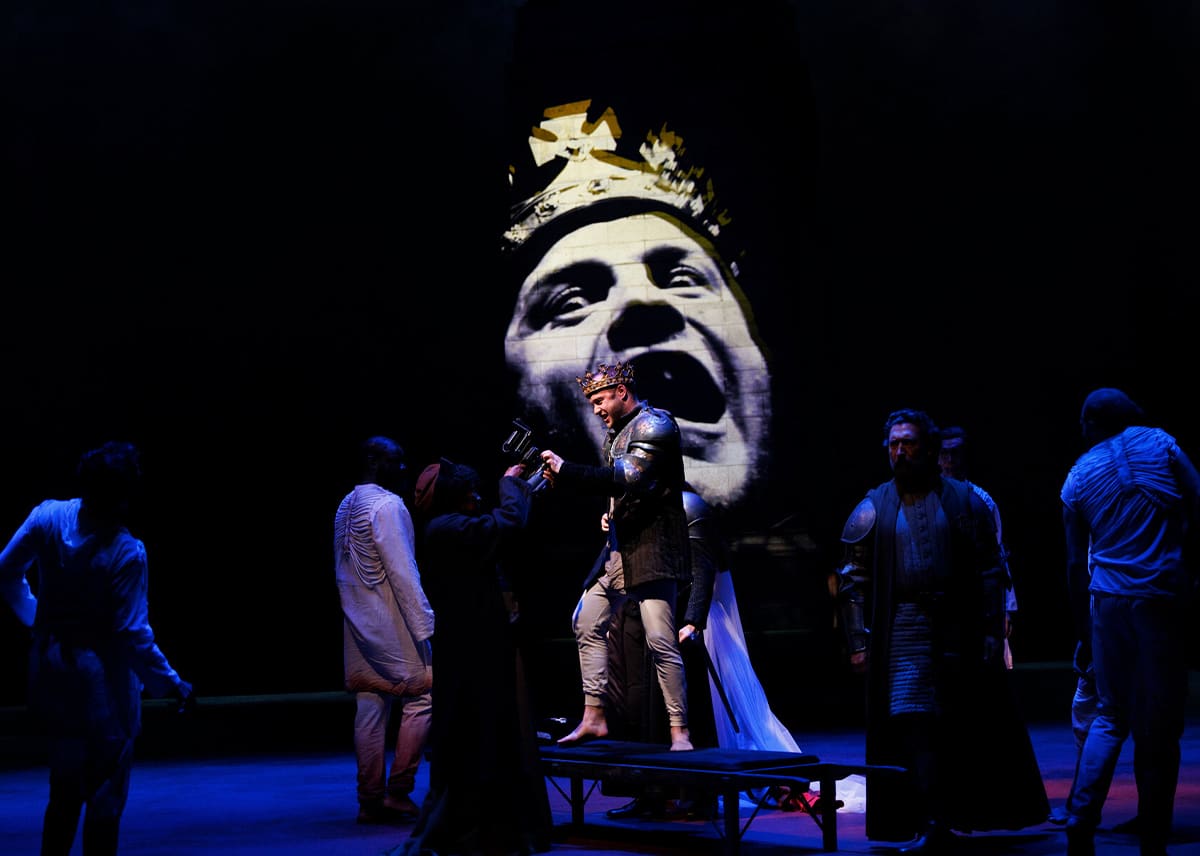
Complex antihero: an interview with Arthur Hughes
Unravelling Authur Hughes' Richard III
Marlon James: a Jamaican reckoning
'A return to a home I barely knew'

Haunting the Black Air
Poetic freedom across space and time
The Disappearers
A sprawling visceral experience that drops you in head first