Stay in your lane?
Scuffing the lines

As a White autistic middle-class woman, I respect the rationale behind the injunction to ‘stay in your lane’. The phrase conjures for me the essence of capitalism: a racetrack full of people sprinting or staggering toward eco-catastrophe in a blatantly rigged contest. For while some lanes are studded with pit stops and prizes, others are potholed, end at brick walls, lead to prison or gates through which only a few ‘chosen ones’ run on to highly scrutinised, even fatal success. As the media lynching of Prof Jason Arday has yet again tragically proved, all too often those in the over-resourced centre lanes – mainly White professionals, politicians and activists, but also some of the Global Majority – protect their positions and the whole stadium from radical grassroots demands. Understanding my own relative privilege in this toxic competition, I positively hear ‘stay in your lane’ as an instruction to respect the right of working-class, LGBTQI+, Black, Brown and differently disabled people to lead their own complex liberation struggles, in which I should act as an ally ‒ and at times get out of the way.
As a writer, educator and editor, I understand this slogan in a narrower and problematic sense: a command to stick to writing from one’s own lived experience. To start with, though, lived experience is porous, open to others. In my case, I grew up witnessing the painful effects of racism on my adopted Brown sister. Later, my dying mother told me how much she had loved the ayah who cared for her as a child in India – where my great-great-grandfather was a Scottish missionary. While I felt for my mother, who considered her ayah a lost family member, empathy for my sister deepens my anger at the terrible power imbalances inherent in this maternal colonial legacy. But though White privilege cannot be peeled off, my Quaker parents rejected the cruel dogmas of empire, instilling in me values of justice and equality that drive all my work in the world. And as an autistic, single, older, partially employed woman, I feel the sting of injustice too: facing marginalisation and economic precarity strengthens my sense of solidarity with people from more severely disadvantaged communities. Obviously, even just entering a supermarket, my lived experience differs hugely from that of Black and Brown people. But my ‘lane’ encompasses my upbringing, neurodivergence and political activism, which inevitably inform characters and themes in my writing.
Having said that, literature cannot be reduced to personal experience. I reject facile arguments that literature is inherently universal, that of course creative writers can imagine other lives and any attempt to criticise this process is censorship. Privilege generates blind spots: unconscious bias can be incredibly hurtful to others and identifying it in oneself is not easy. But at the same time, great literature demonstrates the Blakean truth that ‘the imagination is not a state: it is the human existence itself’. A Toni Morrison novel or an Abeer Ameer poem about the Israeli genocide in Gaza leaves me feeling expanded ‒ my heart with grief, fury and compassion, and my mind with awe at the ability of a writer to so profoundly transport the reader into times or places historically or geographically distant from her own life. For Morrison, invention was a credo. Famously, she instructed students not to write ‘what you know’, because ‘you don’t know anything […] Imagine it, create it.’
Of course, Morrison and Ameer are Global Majority writers imagining Black and Brown lives: can White writers ever do so as powerfully? Maybe not, but I think more White writers should, with humility and respect, dare to try. Through lived experience, research and imagination, White writers including Jean Rhys, Angela Carter, Philip Pullman, Ursula K. Le Guin, Barbara Kingsolver, Edna O’Brien, Carolyn Forché, Jonathan Wonham and Helen Moore have, in my view, produced valuable work that variously confronts racialised trauma, celebrates human diversity, and examines White privilege.
As a lecturer, I teach my own students that through widening our reading and reaching out socially and professionally to other people, we can stray or at least ‘sway’ from our lanes ‒ by leaning into marginalised lives and listening hard, learning to write richer, more socially relevant fiction and poetry. Hopefully, by actively embracing a wider humanity in our work, writers of all backgrounds can help create common ground at this increasingly polarised and perilous time on Earth.
My approach has been to celebrate diversity and challenge racism in speculative literature, poetry of witness and collaborative projects. In my twenties, as librettist for the fairy tale chamber opera Hush, I worked with progressive Canadian directors to hire performers and creatives of the Global Majority. Later, teaching English in South Korea informed my first novel, cyberchiller Seoul Survivors, which portrayed a range of Korean characters and satirised young Westerners trying to make a quick buck in the country. I had positive responses from Korean readers, but also felt the limits of mockery as a tool against racism. Back in the UK, I began campaigning for Palestinian liberation, work which has taken me to Jerusalem and the West Bank and fed my poetry and fiction. Muslim and Jewish activists encouraged me to ‘leap from my lane’ into The Gaia Chronicles, an eco-science fantasy quartet about an uprising of disabled refugees in a post-apocalyptic parallel West Asia. Later, cultural organisers from the Global Majority invited me to speak and write about these Silk Road fantasies ‒ which inevitably draw on my settler-colonial Canadian childhood. In 2022, I returned to theatre with the on-going project ASTRA, an inclusive, creatively accessible adaptation of The Gaia Chronicles. Post-show discussions confirmed my belief that speculative literature can be an imaginative shared space: I was profoundly moved to hear diverse audience members empathising with the characters in their fictional setting.
In this work, I do fear making mistakes; indeed, my ignorance of history, geography and terminology is constantly being revealed. But without risk ‒ and without dialogue ‒ there can be no progress. As a writer, and as an editor for presses and journals including Critical Muslim, I consult with Global Majority colleagues, heed national debates initiated by marginalised critics and am grateful to WritersMosaic, Ledbury Poetry Critics, Spread the Word and other organisations for their ongoing work to decolonise the publishing industry.
My own work has scuffed the lines between lanes and blessed me with a thriving, diverse community. A recent cross-cultural collaboration resulted in two internationally celebrated filmpoems. My next poetry pamphlet is a fundraiser for the Gatwick Detainees Welfare Group, whom I met this summer through Refugee Tales – a community of activists, writers and experts by experience who walk to end Britain’s cruel practice of detaining migrants, and tell their stories in anthologies published by Comma Press. I too believe that together we can change our sociopolitical ‘transport infrastructure’ and its destinations ‒ from competitive tracks to interwinding paths and truly shared spaces; from individual success to collective wellbeing. Capitalism threatens all life on Earth: only ever ‘staying in my lane’ would just perpetuate the contest. Straying, swaying and scuffing suggest another way is possible: a radical way of empathy, imagination and mutual transformation.
© Naomi Foyle
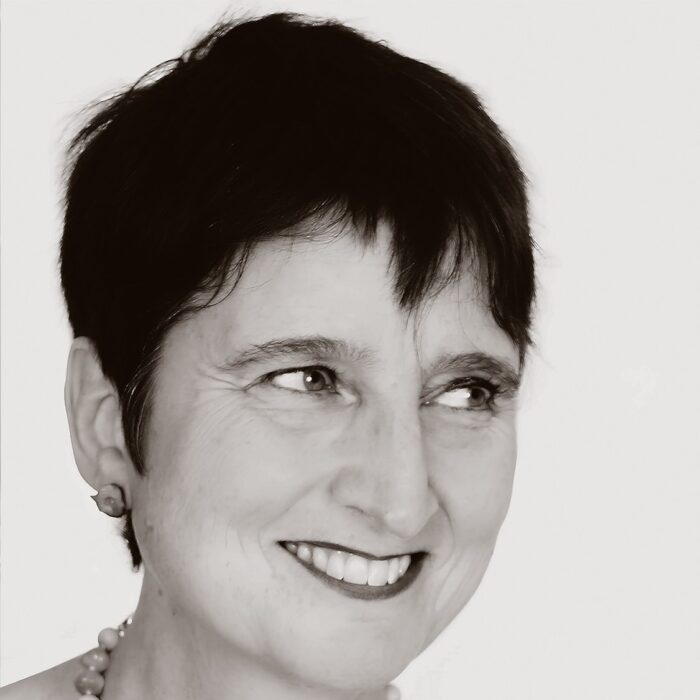
Naomi Foyle
Naomi Foyle is a British-Canadian poet, science fantasy novelist, essayist and dramatist.
Stay in your lane?
Editorial
Colin Grant
Reading for Carnival
Magnus McDowall
Beyond Baldwin
Taíno Mendez
Cul-de-sacs of the mind
Chitra Ramaswamy
Thinking white
Will Harris
On finding kinship in difference
Amy Abdelnoor
A matter of survival
Maggie Gee

Not another poem about my father
Hannah Lowe
WritersMosaic monthly
Get new episodes by email
One email monthly, unsubscribe anytime

Illuminating, in-depth conversations between writers.
Listen to all episodes
SpotifyApple Podcasts
Amazon Music
YouTube
Other apps

The series that tells the true-life stories of migration to the UK.
Listen to all episodes
SpotifyApple Podcasts
Amazon Music
YouTube
Other apps
In the first series of poems commissioned by Hannah Lowe, six poets explore how ritual gives meaning to our lives.
Listen to all episodes
SpotifyApple Podcasts
YouTube

It’s being published I get paid for; the writing I would do for free
‘Any advance [...] for your novel is to compensate you for the horrors of being published'
Complex antihero: an interview with Arthur Hughes
Unravelling Authur Hughes' Richard III
Marlon James: a Jamaican reckoning
'A return to a home I barely knew'
Haunting the Black Air
Poetic freedom across space and time
The Disappearers
A sprawling visceral experience that drops you in head first