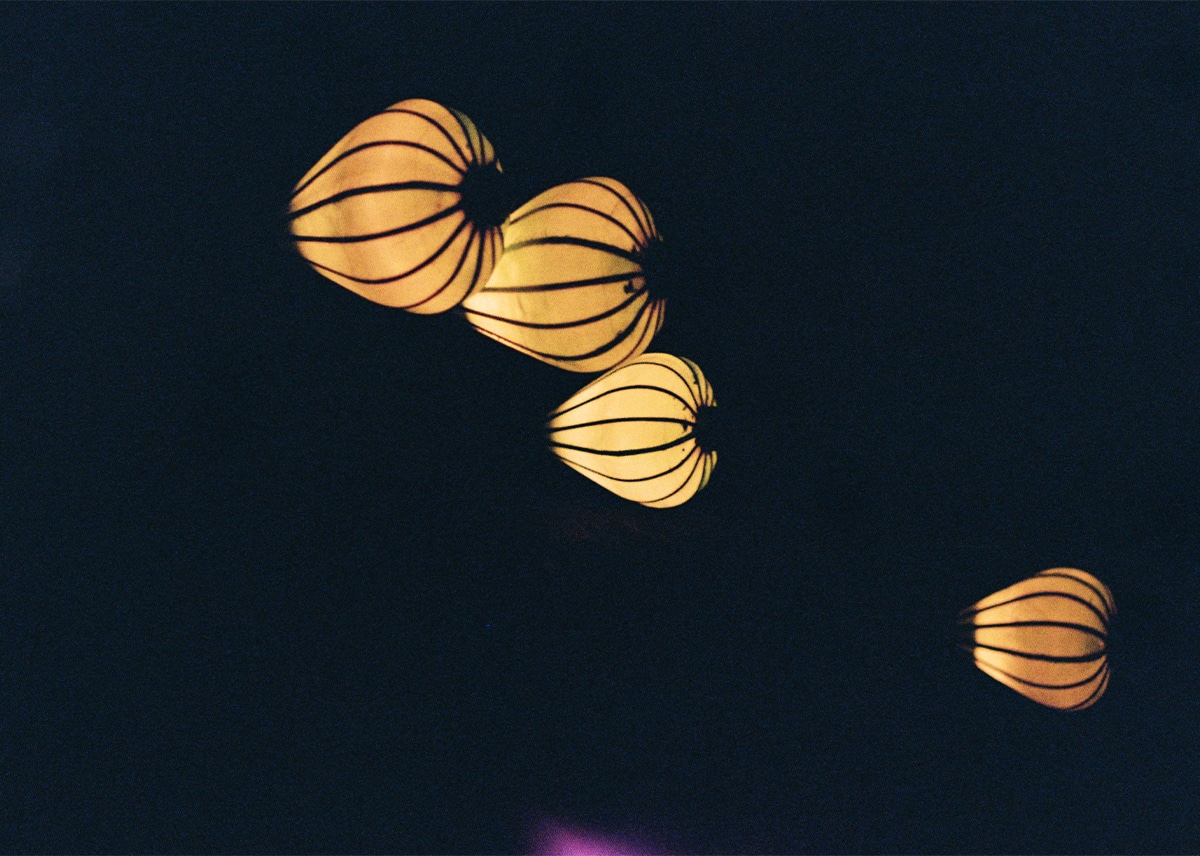
Time and Fiction
Between the story and the clock


‘When we talk about time, we describe it as grandparents of grandparents; this connection is strong, it is in the weaving and in the landscape all around us. The old knowledge is better – the textiles are stronger, the colours don’t fade, just as we hope the memory of our ancestors doesn’t fade either.’
– Nilda Callañaupa Alvarez, indigenous Peruvian weaver and author
In my childhood my uncle once brought a watch for me from Delhi. It was a Casio electronic watch (things weren’t yet called digital), with an LCD screen and a soft plastic wrist strap. It was sleek and stylish, and something of a novelty. Until then, my idea of a watch had been the heavy manacle-like Seiko my father wore or the slim, gold-plated ‘feminine’ watches that some younger aunts owned.
I remember being hypnotised by the fast-moving digits, the seconds changing like those on the countdown screens I’d seen in movies. I kept waiting to witness the hour digit turn the moment the minutes reached :60. Hitherto, the main markers of time for me had been the liberatory dong of the school bell, the subtle movement of the minute hand on the grandfather clock in our forever-shaded sitting room. When I close my eyes and think back in time, I can sometimes still catch the sonorous ring of its silver-coloured pendulum. The Casio was a turning point: time raced differently now; it somehow felt more acute, quicker, imposing a kind of urgency on life. A new iteration of the appearance of time, it was atomised and pressing. But after some time, the initial thrill wore off and I began to look less frequently at the charcoal grey integers, once again forgetting myself in the long, timeless hours of the playground or in the twilight hour when we played hide-and-seek and prayed for it to stretch on and on. The experience of time had once again subsumed measurement of it.
Of course, back then, I had no idea that thinkers across the ages had grappled with the question of time and its passage, postulating this theory or that. I certainly had no clue about Einstein’s relativity, the scientific quest for a unified theory of time and space – ‘space-time’. What I did know, though, was that my maternal grandmother, Mouj, measured time differently from everybody else. She’d wake up before dawn to pray, then set alight coals in the copper samovar and start working the large clay oven in the kitchen she presided over. To ‘see’ the time, she simply looked at the pehar, or phase, of the working day. It had very little to do with clocks and everything with her experience of time. When my grandfather died, time for her and others turned into denominators such as ‘14 days since’, ‘the 40th’, then the wahrwaer or death anniversary. At one level, time was neither solar nor lunar for my grandmother. Time was patriarchal. We don’t simply measure time; we bear its imprint on our lives. Then we take in and consider the sum of its imprints.
The eleventh-century polymath Abū al-Rayḥān Muḥammad al-Bīrūnī was fascinated by attempts at the accurate measurement of time, so much so that he dedicated a large part of his life to writing a book on chronography, the mapping of time. He did this by examining how major religions determined and counted down the time of their feasts and festivals. Al-Bīrūnī believed that to count, to enumerate was fundamental to the nature of man.
In the ages before and since al-Bīrūnī, we’ve grappled with the idea of time in broadly two ways: through observation and empirical measurement, leading to a scientific view of time, tied inextricably with our conception of space – the circling of the earth in relation to the sun, the movement of the stars, the waning and waxing of the moon; and subjective, spiritual or psychological views of time – how we perceive and grasp time in our minds, how we process it in our remembrance. These two broad strands may intersect and run parallel together, perhaps touching again at infinity, which it is, after all, in the essence of time to evoke.
While conceptualisations of time have been a focus of philosophical and scientific inquiry for millennia, the idea of time is of equal if not more significance in storytelling. The essays and stories in this edition of WritersMosaic aim to explore and interrogate this aspect above all: time in narrative. What do we do with it in our stories, how do we write time, how do we tell it? And how do we perceive its passing? In the nineteenth century, it was the French philosopher Henri Bergson who made perhaps the most significant and provocative intervention in our understanding of time. Broadly, it was Bergson’s argument that clock time was different from psychological time, that the passage of time as we experience it is inseparably linked to the past, to memory, to what has passed before. Bergson proposed that time can linger, stretch in our perception because we see it back and forth, in conjunction with the past. What has passed before not only affects but also coexists with the present.
In our impulse to tell a story, we are driven by memory and at the same time, we also create and recreate memory in the present. Storytelling implicates all the points of view from which we may see time: clock or historical time and psychological time can, as Bergson suggested, be present at once. And it’s this idea of the all-inclusiveness of time in literature, this complex flux, time as moment and history, that we find captivating. As a reader, I’ve always been fascinated by how writers play between clock time and what may be termed as ‘story time’. In the great Urdu writer Qurratulain Hyder’s magnum opus, Aag ka Darya or River of Fire, a civilisation is seen through the passage of four characters through two millennia: centuries held in one frame, joining up to form one vision of humanity. In Virginia Woolf’s Mrs Dalloway, by contrast, we are shown entire lifetimes as we travel back and forth in time in the course of a single day.
Sheherzad must freeze time each night through her storytelling to stave off death itself. Penelope in the Homeric Odyssey unspools at night what she’s woven in the day in order to delay an event, the choosing of one of her suitors – to suspend time. Examples abound, countless, because in narrative literature we hold time in our hands even as we see it pass. In this sense, it could be said that stories – stories unfolding from memory – both consist of and hold time.
At least one of the seeds that germinated into this edition was a conversation I had with the WritersMosaic editor, Gabriel Gbadamosi, about the treatment of the long scene in novelist Nadeem Aslam’s work. Aslam excavates layer upon layer of a place, and its time, to reveal texture upon texture of his characters’ past and present, indeed their whole making, the culmination often leaving the reader breathless. Aslam populates his scenes with relentlessly beautiful detail, so that the landscapes that the characters inhabit grow and surround us. There’s no escape then from what follows, often an unexpected reveal or a tragic turn of events. In Aslam’s fiction, the reader is attached to and immersed in the moment, held in place. I have in mind the recumbent Buddha statue scene in The Wasted Vigil (2008), a novel about the brutality of modern-day Afghanistan told with such intense beauty that it slows down time itself – to read it is to linger in its unfolding quality.
As a writer of fiction, I have naturally been interested in how other writers treat narrative time, how they inhabit multiple times, often simultaneously, in their work, and how time is conceptualised both as narrative flow and as the passage of the characters’ lives.
In his meditative piece on time and memory, British-Sudanese writer Jamal Mahjoub delves into cultural time as different from calendar time. The long, unchanging afternoons in the summer heat of Khartoum allow a young Mahjoub an escape as the world of his parents disappears into daytime sleep. At this siesta time, he transfers into the forbidden world of older children and the world of his parents’ bookshelves that he reads voraciously. Later in his life, writing allows Mahjoub to recreate the timelessness of a culture where a siesta – quite literally a suspension of activity time – is a daily ritual of stand-still-ness.
British writer Kerry Hudson’s piece is an exquisite record of time lived through the coronavirus pandemic in Prague, where tourists gravitate towards the clock in the city centre, and then do not because a deadly virus has arrived. Soon, Hudson begins to see time differently – through her pregnancy. Heartbeats measured alongside a count of the growing number of neurons developing in her baby: ‘250,000 nerve cells per minute’. Time becomes a deeply felt entity, linked more to her newborn child’s breaths than the hands of the clock, which merely mark day and night. Her child marks out the whole of life.
This brings me to concepts of spiritual time explored by Indian poet Tishani Doshi in her sweeping essay. Doshi considers time from the granular to the universal, from the breathy rhythms of the Dhrupad compositions she listens to as she settles down to write, to the occurrences of time across birth and death. In stories, time is not linear – it stretches into the past and bends towards the future. Stories give us the power to be both present and eternal. We have a chance to leap across the moment and the momentary. ‘We are freed from tick-tock’, Doshi says. It’s ‘time travel through language’.
In his beautiful auto-fictional story, Pakistani short story writer and critic Aamer Hussein shifts between time zones, recounting conversations and relationships perhaps already altered by the onslaught of time. What he retrieves from lost time are inviolate moments of love, friendship and beauty, anchored in memory. Memory that feels immune to time’s decay.
Nikesh Shukla’s story, a poignant fusion of memoir and fiction, dwells on what cannot be recovered. A beloved remembered across time, regrets chewed over… what might have been if only the narrator had seized his moment. The clock cannot be turned back; the only thing that can be reset is our humanity.
Tahmima Anam’s astutely crafted story turns linear time on its head, her character confronting the idea of the path not taken. What kind of imagined life can one construct if allowed a fissure in time? It’s a heart-breaking exploration of emotional attitudes to time; and how we are programmed to measure our lives against time’s restless, onward flow.
The closest we come to fully grasping time, therefore, is in our imaginations, not just as it is defined by the learned markers of days, nights, festivals, and so on, but because in our minds and bodies we can sense time in different ways: present, past, future, parallel, at multiple levels – all at the same time. Time in literature is forever, fluid. Books become vehicles for journeys across time and space, glimpses into places far from where we are located. Perhaps this is the most fascinating of all the explorations of time: that moment or hour at bedtime when, drifting into sleep, we’re transported into another universe as another Sheherzad spins story after story. Story time is in many ways the most complex version of time – enabling us to do what we can’t do with real time. As Doshi describes its onset in her essay, ‘When we are in the time of a story, we forget the time around us’. I understand this to mean all variations of time, from universal time in its infinite vastness to the imperceptible lifespan of a subatomic particle.
My grandmother translated time into chunks of moon time: paechwaer or fortnight, and so on. It is chronological time, no doubt, like the Gregorian calendar, but in my perception, perhaps because where I grew up it’s more often cold than not, or perhaps because subliminally we associate grandmothers with shade, it is somehow cooler then than sun time. Its taseer, or effect, is of shade.
This is how I relate to time. In perpetual wonder.
© Mirza Waheed
Time and Fiction

The cusp
Aamer Hussein

Time is an egg
Tishani Doshi

Time after time
Tahmima Anam

DOPE
Nikesh Shukla

A Prague minute
Kerry Hudson

The echo of my footprints
Jamal Mahjoub
WritersMosaic monthly
Get new episodes by email
One email monthly, unsubscribe anytime

Illuminating, in-depth conversations between writers.
Listen to all episodes
SpotifyApple Podcasts
Amazon Music
YouTube
Other apps

The series that tells the true-life stories of migration to the UK.
Listen to all episodes
SpotifyApple Podcasts
Amazon Music
YouTube
Other apps
WritersMosaic interrogates the notion of ‘staying in your lane’ by asking writers how they attempt to think beyond the parameters of their cultural identity.
Listen to all episodes
SpotifyApple Podcasts
YouTube


Marlon James: a Jamaican reckoning
'A return to a home I barely knew'
The name of this wallpaper is ‘Childhood’
A luminescent bubble of memory
What’s in a feminist? Holding on to Gloria Steinem
Is Gloria Steinem's feminism still relevant today?
Pressure
What's missing from the latest 'untold story behind D-Day'?
A Trial
An examination of theatre’s complicity in post-truth politics