
Kin

Created by Amit Lahav with Gecko Theatre
Royal National Theatre, 12 – 27 January 2024
Review by Karla Williams
The subject of migration, and the journey from one place to another in the quest for a home, is always a live issue. But with the current Russia/Ukraine war and the conflicts in Sudan, Israel/Palestine and elsewhere, the topic seems even more pressing.
Kin was devised by Amit Lahav and Gecko Theatre as a show to explore racism, family, migration, and home. Their physical theatre production features an international cast of nine performers who speak a variety of languages, including Cantonese, Nahuatl, Hebrew and Spanish. Movement, lighting and sound are also used to convey meaning and tell the story of two families who have left home in search of a better life. When the first family reaches their new location, they are forced to live as persecuted refugees. While the other family must make devastating sacrifices to be allowed to reach their desired destination.
Kin is a show that speaks to any human being on the planet, and I found it truly remarkable how engaging the production was, despite not understanding 95% of the dialogue. The choreography is exceptional; each of the performers’ movements conveys a variety of emotion, from sadness to anger, relief to happiness. While I couldn’t fully understand specific details or plot points, I knew how the characters felt and what significance that had for their wider stories.
There were images that were particularly powerful for me, which explored themes of racism and assimilation. In one scene, the migrants are restricted from entry onto a boat, the reason being they don’t have the necessary visas. When one of them puts on a blonde wig and speaks English, they are instantly allowed on board, despite still not having the necessary paperwork.

In a mirroring scene, the second family has learnt that the only way forward is to give up their culture and assimilate to whiteness. In a visceral and moving performance, each of the family members changes items of their traditional dress for western clothes. They then take a white cloth and wipe it over their faces and hands, making their skin white. But one of the sons refuses to change, and the family is separated because of it. The cast give outstanding performances, transitioning impeccably between multiple roles and often playing both the oppressor and the oppressed. During group performances, they move with beautiful synchronicity and elegance.
Sound and lighting played an integral role in conveying meaning and story. Often, when you couldn’t understand what a character was saying, the use of emotive music aided in communicating how they were feeling. Lighting frequently set the tone of the scenes, and there were several moments when the show relied on lighting to tell the story. One of these was when the mother of one family feels trapped and tormented. This was signified using targeted bright lights within a pitch-black stage that slowly pushed her down, until she disappeared into the darkness.
At the end of the show, the cast received three standing ovations. And, as the crowd exited the theatre, I remained in my seat processing what I had just experienced and felt. Kin is a show that strips back dialogue to replace it with palpable and arresting emotion. I haven’t left a theatre feeling this way in a very long time.

WritersMosaic monthly
Get new reviews in your inbox
One email monthly, unsubscribe anytime
The Disappearers
A sprawling visceral experience that drops you in head first
The Lady Imam
Is the world ready to catch up with amina wadud?

Pressure
What's missing from the latest 'untold story behind D-Day'?


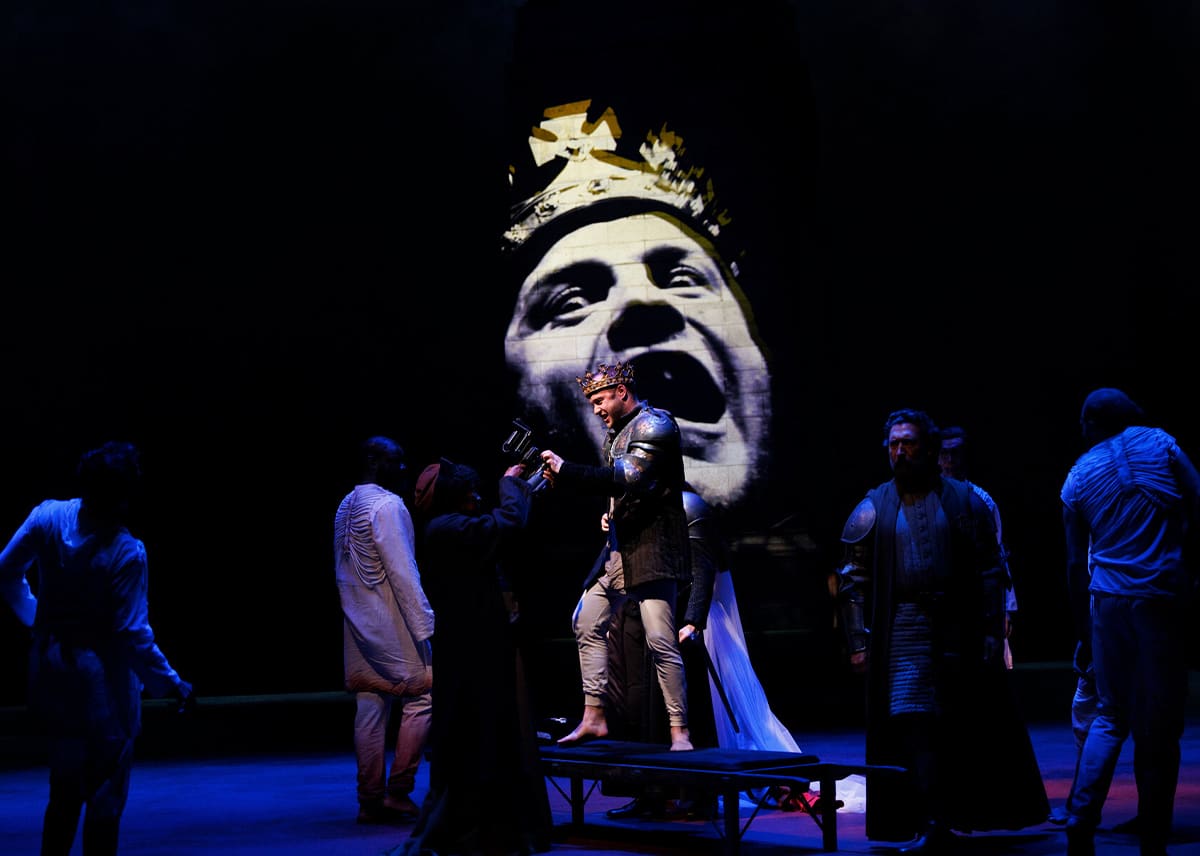
Complex antihero: an interview with Arthur Hughes
Unravelling Authur Hughes' Richard III

Marlon James: a Jamaican reckoning
'A return to a home I barely knew'
The name of this wallpaper is ‘Childhood’
A luminescent bubble of memory



Illuminating, in-depth conversations between writers.
Listen to all episodes
SpotifyApple Podcasts
Amazon Music
YouTube
Other apps

The series that tells the true-life stories of migration to the UK.
Listen to all episodes
SpotifyApple Podcasts
Amazon Music
YouTube
Other apps
WritersMosaic interrogates the notion of ‘staying in your lane’ by asking writers how they attempt to think beyond the parameters of their cultural identity.
Listen to all episodes
SpotifyApple Podcasts
YouTube