
Nickel Boys

Directed by RaMell Ross (2024)
Review by Roger Robinson
1.
If you knew me during my teen years in Trinidad, you’d know I was an avid table tennis player. And I’m not talking about friendly ping-pong – I’m talking about coaches, leagues, travelling, and teams.
One of our club’s yearly trips was to play against the team from St. Michael’s School for Boys – a school for incarcerated teenagers who couldn’t leave the grounds. Every year, after our required table tennis bouts, we’d hang out with them and even get to know them a little. Our coach knew that the boys looked forward to our visits, as this was one of their rare glimpses of the outside world.
For the most part, they were just regular teenage boys. Some had committed minor infractions, like stealing a goldfish. Others had sold weed, robbed houses, or lived as street beggars without parents. Their requests for when we returned the following year were for everyday things they couldn’t get inside – biscuits, trainers, and, for some of the younger ones, even marbles.
As we left, we knew they’d still be there next year. And we left with the realisation that our freedom was a privilege – a privilege shaped by circumstances of comparative wealth when measured against the lives of those young men.
2.
Being a fan of Colson Whitehead’s novels (though I haven’t read Nickel Boys), I was primed with excitement after watching the lush, visually striking trailer for this film.
The first ten minutes – often symbolic of a film’s style, if not its visual language – offered little dialogue but showcased some stunning cinematography: fleeting reflections in an iron, close-up POV shots at a child’s eye level, cutaways to documentary footage. A story was beginning to unfold in oblique snippets.
I thought, Wow, what an opening. Now let’s get into the film.
But half an hour in, the momentum began to falter. There was an excess of visual imagery, yet little in terms of story, dialogue, or character development to ground it. An hour and twenty minutes in, I had reached the point of burnout – overwhelmed by the sheer visual overload. Confused by seemingly random shifts in perspective, I watched the rest of the film (which, by the way, moved at a glacial pace) without any real emotional investment in the characters, further disoriented by the relentless, unexplained cutaways with so many digressions, it felt more like a fever dream than a film.
It made me think of those boys at St. Michael’s School – how they’d gaze at the sunlight gleaming through the eye of a marble while talking about the carpentry courses they were taking, convinced they’d start their own joinery business once they got out at eighteen. Or how one of the older boys had perfected the skill of shooting a basketball into the net with his back turned – a trick he insisted on proving to us every year we visited. That kind of character specificity seemed to be missing in the film..
Instead, we got a series of thin monologues, barely differentiating the characters in their delivery – despite the actors doing their best with what little they had to work with.
3.
But perhaps I’m looking at this all wrong. Perhaps its pretensions to art cinema have made me approach it with the wrong lens. Maybe it’s not about what this film accomplishes on a craft level but rather about the work it’s doing in the world.
Maybe I should view this film as a modern take on a documentary. (It is, after all, a true story.) Perhaps I should see it as an arthouse documentary in the vein of Black Audio Film Collective’s Handsworth Songs – a different kind of storytelling altogether.
Perhaps I should read it as a visual prose poem, where logic does not unfold in a conventional manner, where we are led down cul-de-sacs only to shift direction, where the film resists the viewer’s expectations and forces them to search for epiphany.
Perhaps I should see it as an artefact. And if I do, then what it accomplishes is good – even when held against the so-called ‘bad youths’ of Trinidad’s St. Michael’s School for Boys. Because in the end, all I really have of them are anecdotes, and memory. And both anecdotes and memory, as we well know, can so easily be forgotten.
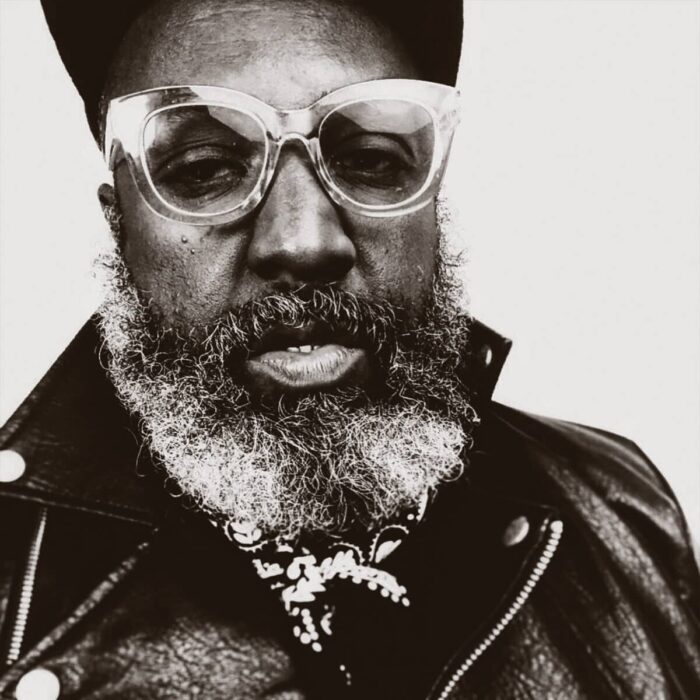
Roger Robinson
Roger Robinson is an award-winning writer and performer from Trinidad now living in Britain.
WritersMosaic monthly
Get new reviews in your inbox
One email monthly, unsubscribe anytime
The Disappearers
A sprawling visceral experience that drops you in head first

The Lady Imam
Is the world ready to catch up with amina wadud?
Pressure
What's missing from the latest 'untold story behind D-Day'?



Complex antihero: an interview with Arthur Hughes
Unravelling Authur Hughes' Richard III
Marlon James: a Jamaican reckoning
'A return to a home I barely knew'
The name of this wallpaper is ‘Childhood’
A luminescent bubble of memory



Illuminating, in-depth conversations between writers.
Listen to all episodes
SpotifyApple Podcasts
Amazon Music
YouTube
Other apps

The series that tells the true-life stories of migration to the UK.
Listen to all episodes
SpotifyApple Podcasts
Amazon Music
YouTube
Other apps
WritersMosaic interrogates the notion of ‘staying in your lane’ by asking writers how they attempt to think beyond the parameters of their cultural identity.
Listen to all episodes
SpotifyApple Podcasts
YouTube