
When We Were Birds
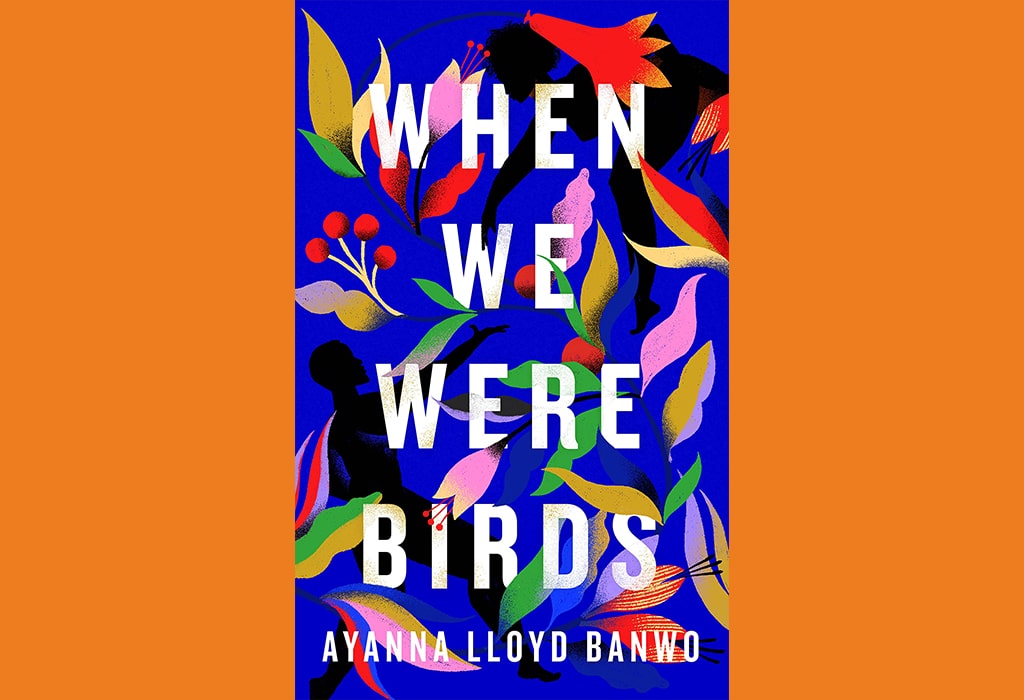
Ayanna Lloyd Banwo
Hamish Hamilton, 2022
Review by Nicole-Rachelle Moore
With lush descriptions and the cadences of nation language, Ayanna Lloyd Banwo’s debut novel introduces us to Emmanuel Darwin and Yejide St. Bernard living in contemporary, fictionalised Trinidad. Each must manage and negotiate their complex and particular journeys to maturity, including their romance with each other.
Darwin breaks his mother Janaya’s heart twice over. Economic hardship finds him defying their Rastafarian faith by taking a job as a gravedigger in the city (the Nazarite’s Vow prohibits him from being in contact with the dead). Her pain is exacerbated by the fact that the city of Port Angeles is where, years before, his father had gone never to return: ‘That place could swallow a man whole’, Janaya tells her only child. ‘Police and tief and prostitute and dutty politician. You think it have any silver and gold in this world that could make up for your soul, Emmanuel? If you leave this house, you not coming back.’
Yejide belongs to a line of women (originally birds) whose duties are to commune with and look after the dead. She awaits instructions from her dying mother on how to carry on this work. Petronella, always resentful of this heavy spiritual obligation and more bound to her twin sister than her child, has been a distant mother at a painful cost to Yejide: ‘She only know her mother through moments meant for someone else – glimpses through a half-open door.’
The novel effortlessly plays with subjective experiences of place and time, the characters experiencing time in relation to where they are and what is happening, for instance in the sprawling, ancient cemetery of Fidelis: ‘Some days Darwin can’t work out how long he in the city. Fidelis have a different kind of time – the hours longer, the days deeper, and digging graves and lowering coffins is like watching whole lives fast-forward beginning to end’.
Petronella impatiently counsels Yejide: ‘Look, stop trying to see one thing, one place. You grow up in a house of dead people. Any place is ever one place?’
Lloyd Banwo has spoken of wanting ‘to make time extremely long, trying to pin individual timelines to each other in a very close way.’
Though no mention is made of any specific African sacred practice, When We Were Birds (WWWB) brims with resonances emanating from Yoruba spirituality. Apart from its concern about caring for and honouring the dead, Yejide’s name is itself Yoruba, meaning ’the Mother has re-awoken’. The ability of the St. Bernard women to transform themselves into storms speaks to Oya, the Yoruba goddess/orisha of lightning, violent storms, the whirlwind. She is also the orisha of death and rebirth.
Lloyd Banwo deftly exposes the pain and vulnerability interwoven in the relationships Darwin and Yejide have with their respective mothers. We are compelled to look at and think about the impact and significance of duty and love. Petronella in the afterlife tells her daughter: ‘You are a child still thinking that love is something soft, something nice.’
Darwin (along with the reader) is given an education about the dead by Shirley, the administrator at the Fidelis cemetery: ‘Each grave have a story. Why you think we don’t just bury people anyhow? Why people bother with headstone and decoration and flowers? Grave is home, grave is lineage. Grave is to know where your people is, even if you can’t see them anymore.’
Lloyd Banwo herself has spoken of the necessity to remember our dead: ‘When we remember those who have died, they are alive. Attend to your dead, to your ancestors. They have things to teach you, to tell you.’
The novel is finely tuned and paced, moving between Darwin and Yejide and plaiting different genres together before taking us to its end. When We Were Birds has been described as a ghost story, a love story and a thriller. It is all of these and more. This richly layered tapestry of a novel is the first of Lloyd Banwo’s three books promised to her dead. It is a stellar debut to be read and read again.
https://www.penguin.co.uk/books/442/442939/when-we-were-birds/9780241502792.html
WritersMosaic monthly
Get new reviews in your inbox
One email monthly, unsubscribe anytime
Pressure
What's missing from the latest 'untold story behind D-Day'?
A Trial
An examination of theatre’s complicity in post-truth politics
The Complex
The unraveling of a dynasty
Marlon James: a Jamaican reckoning
'A return to a home I barely knew'
The name of this wallpaper is ‘Childhood’
A luminescent bubble of memory
What’s in a feminist? Holding on to Gloria Steinem
Is Gloria Steinem's feminism still relevant today?


Illuminating, in-depth conversations between writers.
Listen to all episodes
SpotifyApple Podcasts
Amazon Music
YouTube
Other apps

The series that tells the true-life stories of migration to the UK.
Listen to all episodes
SpotifyApple Podcasts
Amazon Music
YouTube
Other apps
WritersMosaic interrogates the notion of ‘staying in your lane’ by asking writers how they attempt to think beyond the parameters of their cultural identity.
Listen to all episodes
SpotifyApple Podcasts
YouTube