Portholes
My dear father

Marie, translated by Parwana Fayyaz
Siegen-Wittgenstein, Germany, Spring 2024
My dear father,
As I write this letter, the sun is setting. Old habits are still with me: I sit next to the window with a cup of tea. At times, I look out to see people and taxis passing on the road. The sun is descending slowly behind the hill to the south. It is the same hill from which they cut trees each day. The story of those trees and the story of my life feel very similar – we are uprooted and placed where we have no connection. My eyes fall on the smallest tree up on the hill. I am reminded of my childhood and how we wrote letters together. May the memory of those days bring joy. They were very happy days – at that time you cared more about my writing and spelling than whether anyone saw my hair.
Do you know padar-jan, dear father, that I’ve hated growing up? The older I became, the more the distance between us grew. Now it is so immense that each time I hope to reach you, I must cross boundaries of family, society, custom, religion, and a thousand other obstacles – and yes, these passages are painful.
Before I forget, father, I cut my hair short. I understand that in your belief system, a woman’s head must always remain covered. My mother will be very upset. She will think that now no one will ever look on her daughter as someone who could be a bride. I know my mother doesn’t like others to talk behind our backs and say what a shameless and vulgar daughter you have. She has made herself ugly and now she won’t find a husband. But you know this sort of talk never bothered me.
Well, allow me to tell you about today. As I said, I cut my hair. I also bought myself a comfortable dress without sleeves. To be clear, this means that from the shoulder downward, it has no sleeves. Spring is coming, and in this weather, it is better to wear dresses that allow the breeze to reach you. The weather is dancing happily, and humans can feel more relaxed and comfortable in sleeveless dresses.
I know this will shock you more. This is what was in my mind when I purchased it. I kept thinking how you would have reacted if you had seen me buy this dress. It is strange: we are thousands of miles apart, and I still think about what you and Madar would think.
I know that you think that wearing modest clothes grants protection to girls. I have heard you say this during our arguments. To some extent, I agree with you. In regions where men are allowed to act on any temptation, there can be little protection for anyone. Still, padar-jan, I don’t know why it has to be the girls and women of Afghanistan who have to experience harassment and rape to this extent. Should we cover ourselves with eight fabric wraps, like some characterless corpse?
Of course, I do not deny that the world is not a safe place for women. Here too, at the centre of the first world, women and girls experience street harassment and rape, but with one difference – here, our bodies and the way we dress are not held responsible for arousing any man. Here, whoever commits the crime is the one guilty and accountable for their actions.
Not long ago, I was on an overnight bus going to visit my sister. It was between eleven and midnight when a young female passenger complained to the bus driver about a man touching her arm. The police came. After asking the man a few questions, they arrested him.
It was that simple. No passenger turned around to blame the woman for what she was wearing. For the first time that night, each cell of my body began to liberate itself from a lifelong fear. I had not felt that free or calm until that moment.
My head is bursting with pain now. I will write more words to you later –
Until then,
Your disobedient daughter,
Marie from Germany
Two and a half years earlier:
Marie
Kabul, Afghanistan, October 2021
I am very sad. A few days ago, I was contacted and told to bring all my documents to prepare for travel. Next week I will probably fly and leave my country forever. I try to stay happy, but I cannot. Something is lying very heavy on my chest. I feel no emotion, as if I don’t care to go. I will escape, but my family, parents, siblings and friends will have to live and breathe here under the rule of these horrible, bearded men.
I worry how my mother will bear the longing. All her children are leaving her, one by one, when she needs them the most. What kind of children are we, really? When I think about my father, my heart breaks. How can I tell him that I am going away and I will not come back?
I am scared that when I meet my parents again, their eyes will no longer see and their backs will be bent. I look at my mother’s face and memorise the wrinkles on her face. I say in my heart: I just hope that when I see you next, you’ll look just like this. I start crying, then I hate myself for not controlling my emotions.
I walk towards my father. ‘I will probably leave next week.’ His eyes light up and he laughs and thanks God for it. ‘May you have a good trip,’ he says and asks me details about it. I feel that he is faking his happiness.
I tell him that if he wants me to be here, I won’t go anywhere. ‘No,’ he says. ‘You should go, you have no future here. Follow your own life and dreams. We will be here, and if fate brings us together, we will see each other again. If not, I send you in the hands of God.’ His words break my heart into pieces, and I feel the pain of being a father to a family. I feel again that we never existed: not in the past, present or future.
An extract from My Dear Kabul: A year in the life of an Afghan women’s writing group (Coronet, 2024). Following the Taliban’s return to power in August 2021, twenty-one writers in Afghanistan – among them the five contributors to this guest edition – kept a collective diary in their WhatsApp chat group, in which they recorded and responded to the changes they were all living through.
*
My Dear Kabul © Untold Narratives CIC 2024; English translation © Parwana Fayyaz and Dr Negeen Kargar
Extract read by Ellie Dobing
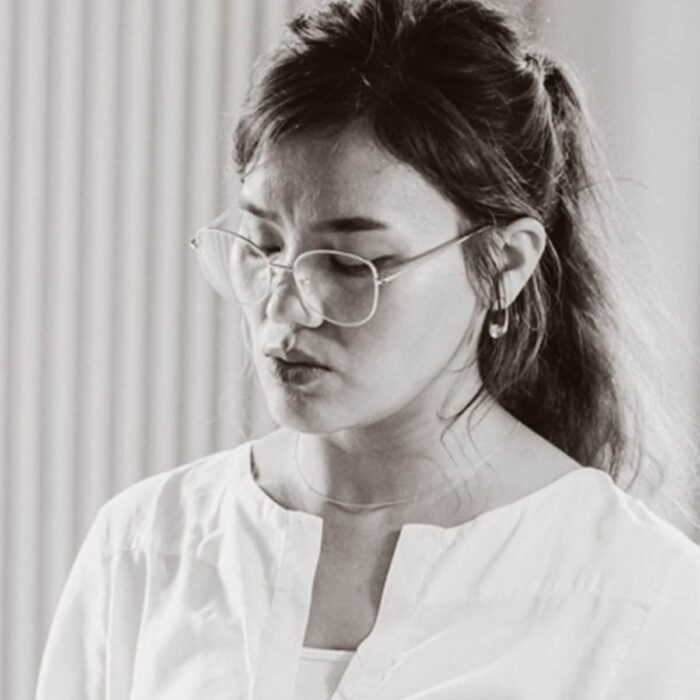
Marie
In Kabul, Marie worked for NGOs while running her own women-led counselling service, called the Meaning of Life.
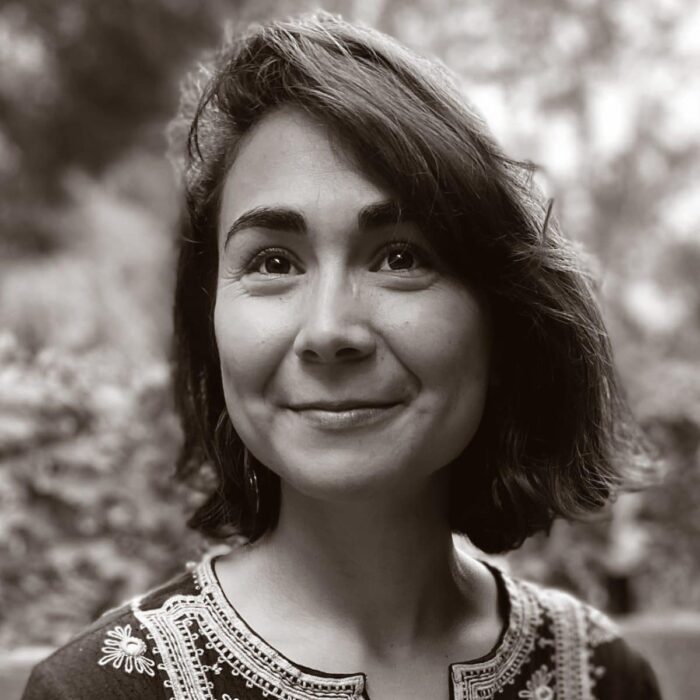
Parwana Fayyaz
Parwana Fayyaz is a scholar and teacher of Persian literature at the University of Cambridge.
Portholes

Private conversations with history
Sunila Galappatti

A false return
Fakhta & Parwana Fayyaz

A place for today
Fakhta & Parwana Fayyaz

My Eid is my daughter’s dance
Freshta & Dr Negeen Kargar

A new arrival
Zainab & Parwana Fayyaz

Someone else’s place
Batool & Parwana Fayyaz
WritersMosaic monthly
Get new episodes by email
One email monthly, unsubscribe anytime

Illuminating, in-depth conversations between writers.
Listen to all episodes
SpotifyApple Podcasts
Amazon Music
YouTube
Other apps

The series that tells the true-life stories of migration to the UK.
Listen to all episodes
SpotifyApple Podcasts
Amazon Music
YouTube
Other apps
WritersMosaic interrogates the notion of ‘staying in your lane’ by asking writers how they attempt to think beyond the parameters of their cultural identity.
Listen to all episodes
SpotifyApple Podcasts
YouTube

Marlon James: a Jamaican reckoning
'A return to a home I barely knew'
The name of this wallpaper is ‘Childhood’
A luminescent bubble of memory
What’s in a feminist? Holding on to Gloria Steinem
Is Gloria Steinem's feminism still relevant today?
Pressure
What's missing from the latest 'untold story behind D-Day'?
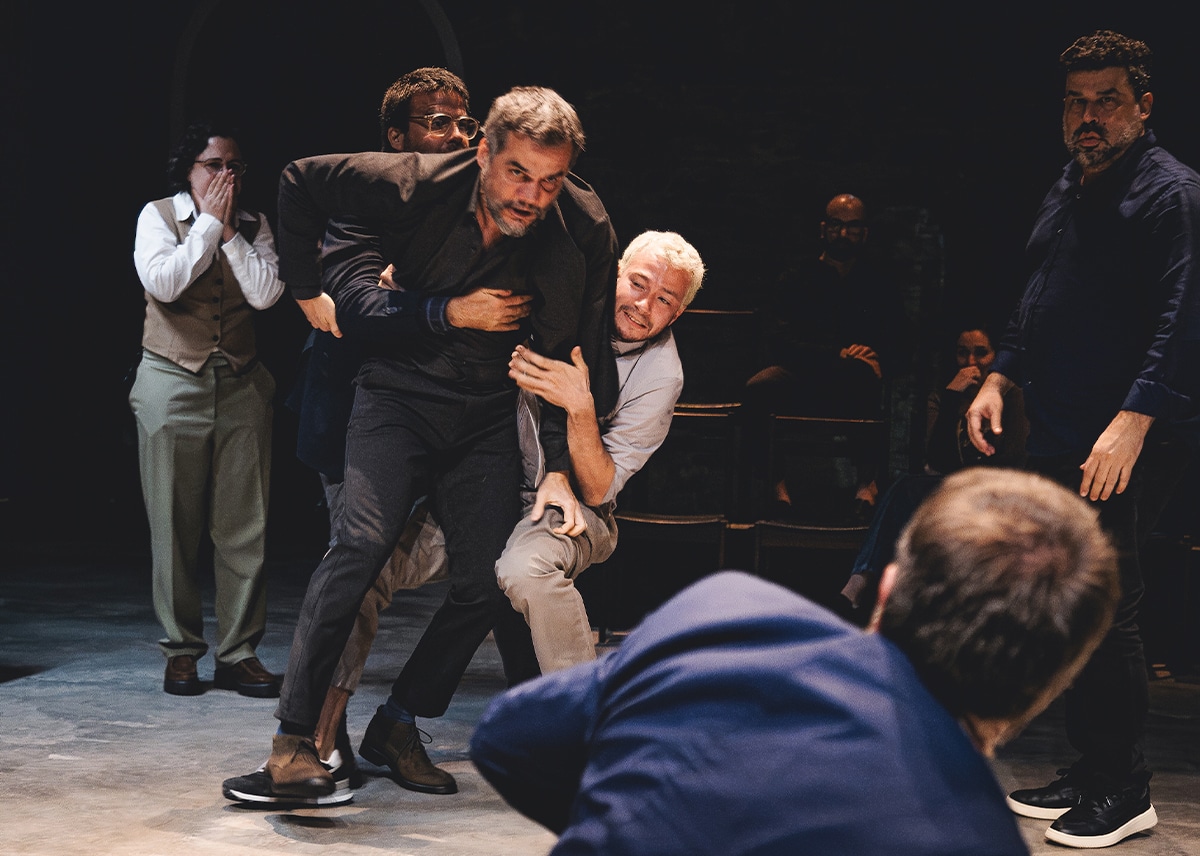
A Trial
An examination of theatre’s complicity in post-truth politics