
Borderline Fiction

Derek Owusu
Canongate, 2025
Kweku, as Marcus, the eloquent young narrator of Borderline Fiction, sometimes prefers to be called, is an Akan name given to boys born on a Wednesday. Connoting headstrong determination, the name is also associated with the West African trickster and storyteller Anansi. In Britain, meanwhile, according to the old nursery rhyme, ‘Wednesday’s child is full of woe’. So it is that tensions between ambition and mental precarity, ancestral strength and diasporic grief, fuel Derek Owusu’s remarkable third novel.
Borderline Fiction is an immersive and innovative portrait of a Black British writer as a young man. In alternating first-person accounts of Marcus’s romantic relationships at the ages of 19 and 25, the book sets two compelling love stories spinning in inexorable motion with painful colonial histories of fracture and erasure. Eschewing speech marks and conventional paragraphing, and blending languages, literary references, playlists, spoken-word rhyme and West African folklore, Owusu skilfully deploys modernist narrative techniques to express the trauma and powerful creativity inherent in Black consciousness – and the profoundly intertextual nature of British multiculturalism.
Intelligent, fit, liked by his peers and appealing to women, Marcus nevertheless battles a constant sense of ‘skinless sensitivity’. His dual narrative voices, both evasive and disarmingly candid, delineate this mental distress as a web with no clear centre or edges. The son of Ghanaian migrants to London, Marcus has obviously been damaged by intergenerational racism. Having spent his early years in care, he retains affection for his white foster mother, but his biological mother – a teacher who ‘comes and goes’ – is a shadowy presence in the book. His father, a gifted but ‘remnant […] dormant’ storyteller, looms large in Marcus’s psyche, but the son physically avoids this discomforting, alcoholic, slowly dying parent. This aversion stems in part from hurt, in part from a phobia – Marcus intensely fears death, the ‘eternal abandonment’.
From adolescence onward, perhaps due to a bad reaction to skunk, Marcus also experiences disorienting episodes of ‘just watching myself moving mad’. At 19, a successful personal trainer and regular clubber, he self-medicates with cocaine and alcohol. At 25, studying English literature in Bolton, he has embarked on a carefully researched but excessive diet of prescription meds, pocketed from his father and washed down with whiskey. Trazodone, Xanax, Sertraline, Sodium valproate, Seroquel, ‘the alchemy of benzodiazepines and codeine’ – the names function like punctuation or musical motifs in Owusu’s swirling streams of consciousness.
For a while this regime works. Marcus functions in society, forms relationships, expresses his phobias and self-calming mantras as lyrical existential philosophies. As a lover, he is a giver: the novel’s breathtaking sex scenes, fluid continuums of verbal and physical communication, demonstrate Marcus’s empathic ability to ‘feel’ and navigate his partners’ often mercurial desires. The reward is intimacy – from the wonder of falling in love, ‘pleasure running through our fingers’, to the domestic care of a lover squeezing his facial pores. But worrying patterns emerge. Attracted to women with a strong moral code – Christians Hannah and Adwoa; Layal, a Muslim; San, a pan-Africanist – Marcus wraps their beliefs like protective mantles over his hollow sense of self. And empathy can fail or go unreciprocated. Sex can be a site of disassociation. His first major breakup is a slow-motion pile-up, a series of jarring collisions from which trust cannot recover.
Bruised, Marcus approaches his next big love affair with ‘curiosity’ and patience, and perhaps sheer idealisation. Although drawn to San’s faith in a ‘universe flowering into a black cosmos held under the noses of gods’, he hides his interest in white writers – Conrad, Fitzgerald, Nabokov – from her, and dreams that she rips up Eldridge Cleaver’s Soul on Ice. For her part, she’s not into poetry. Other women, his ‘situationships’, seem to ‘get him’ far better than San does. In or out of love, language is his lifeline: though with a father nicknamed ‘bra Nancy’, he’s inherited a slippery sense of truth. His lies to others are usually minor or soon confessed, but Kweku’s constant self-talk masks his denial about the depth and complexity of his mental health condition, suggested in clues including the title, food sensitivities and a medical coda. To what extent psychiatric diagnoses mislabel neurodivergence or whitewash sociopolitical conditions – or just how much we differ from the stories we tell ourselves – are questions Owusu leaves drifting like just-out-of-reach cobwebs.
In a novel of such introspective intensity, it is difficult to separate character from structure. But while I believed a thoughtful and articulate personal trainer might later dedicate himself to becoming a writer, and enjoyed the differences in the two voices, it seemed a leap from never, apart from the Bible and the Qur’an, mentioning a book by name, to becoming a voracious and erudite scholar. I wanted to learn how Marcus’s passion for literature began, and more about how he met the challenge of his dyslexia, mentioned once in passing. Especially given Owusu’s consummate skill with dialogue, I also would have liked more direct conversation between Marcus and his once silken-tongued father, whose dramatic potential felt not quite fully realised in their many indirectly remembered exchanges.
The book builds to a hallucinatory yet profoundly inescapable climax. Marcus’s experiences throughout will strike chords with many readers and should provoke much needed conversations about male vulnerability in Black and other communities. Other readers will gain crucial insights into the realities of lives all too often hidden behind racist headlines. As a white middle-class reader I also appreciated Owusu’s kinetic mix of Standard and Multicultural London English, and Twi. Honouring the polyglot nature of modern Britain, Borderline Fiction swings open the gates of literature to the energy, music and nuance of marginalised tongues. I hope an audiobook is in the works. As with Bernardine Evaristo’s Girl, Woman, Other, an audio version will help readers who struggle with unconventional formatting. Above all, Owusu’s sublime poetic prose, with its distinctive convergence of African orality and literary modernism, deserves to be heard as well as read, many times over.
Canongate Books: Borderline Fiction
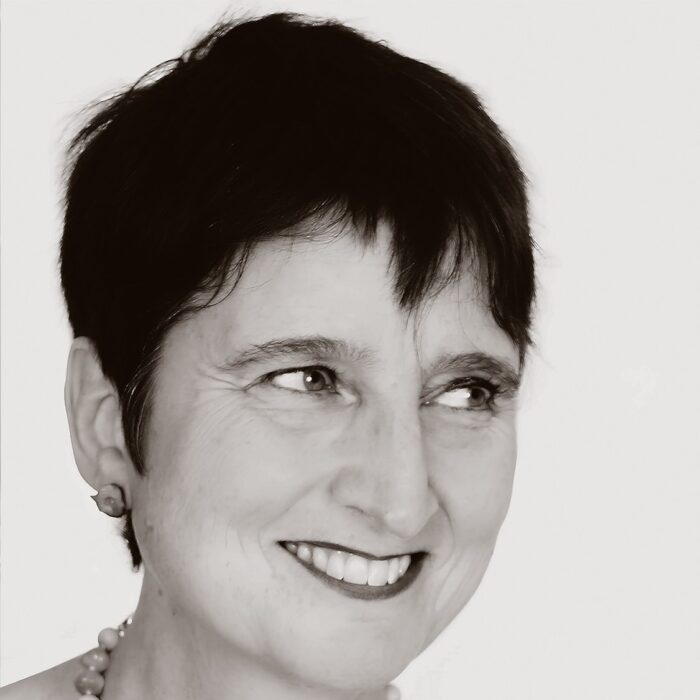
Naomi Foyle
Naomi Foyle is a British-Canadian poet, science fantasy novelist, essayist and dramatist.
WritersMosaic monthly
Get new reviews in your inbox
One email monthly, unsubscribe anytime
The Disappearers
A sprawling visceral experience that drops you in head first
The Lady Imam
Is the world ready to catch up with amina wadud?
Pressure
What's missing from the latest 'untold story behind D-Day'?

Complex antihero: an interview with Arthur Hughes
Unravelling Authur Hughes' Richard III
Marlon James: a Jamaican reckoning
'A return to a home I barely knew'
The name of this wallpaper is ‘Childhood’
A luminescent bubble of memory






Illuminating, in-depth conversations between writers.
Listen to all episodes
SpotifyApple Podcasts
Amazon Music
YouTube
Other apps

The series that tells the true-life stories of migration to the UK.
Listen to all episodes
SpotifyApple Podcasts
Amazon Music
YouTube
Other apps
WritersMosaic interrogates the notion of ‘staying in your lane’ by asking writers how they attempt to think beyond the parameters of their cultural identity.
Listen to all episodes
SpotifyApple Podcasts
YouTube