Race in the time of childhood
Comics and literature
Fergal Harte (FH): Your Ash Mistry series features Indian characters and myths. Was that something you wanted to deliberately focus on as a point of diversity, or was it purely for the purposes of creating a good story?
Sarwat Chadda (SC): So in the 1990s I travelled a lot around India. Even then I wanted to write comics, but wasn’t quite good enough. But just visiting those sites – wow, they’re real, especially Varanasi; it was such a fantasy setting for real. So I knew at some point there was going to be a story there, but I had no idea of which direction it was going to take or how I was going to go about it. My big fantasy love at that point was gothic horror, so when I first started writing, that seemed like the natural beginning. But even when I was doing the first thing, I knew I was getting into teenage fiction next and it was really a case of what style it would take. Then I had an epiphany; I was going to do the Anti-Indiana Jones and The Temple of Doom. In Indiana Jones the white saviour comes along and rescues all the poor Indians blah, blah, blah, and the Thuggees were the bad guys; but you know, in fantasy, all the assassin cults are always super-cool and everybody wants to be the Ninja. I thought, hold on, India’s got really cool assassin cults. So I thought, great, I’ll turn it on its head and have the Thuggees as the heroes and the Western archaeologist as the villain. Once that decision was made, it was fairly easy to move forward.
For me, the key thing was the idea that Ash gets empowered because he ends up being an agent of the goddess Kali. So what does death signify to him? And there’s the fact that he becomes more powerful when something dies. In the first two books he seems to be taking a very dark path, but the third book is actually a celebration of life and this is the big turning point. What he realises is he’s being powered by life. First he thinks it’s just about the significance of the person, but then he realises all life is very significant; it doesn’t matter who you are, if you’re a king or a beggar, all life has equal worth. So it ended up being more philosophical than I’d originally anticipated; but it was great to be able to write the three books, to do the nice arc where you take his character all the way through the stages. But, yeah, it was my travels around India at the very beginning to see these amazing locations; and actually, when I knew I was going to write it, I went back out to Varanasi in 2010 to specifically research all the key locations for the book. So it ended up being really authentic, and that was how I ended going to one of the burning ghats and seeing an actual funeral. I thought, right, the setting is something I hardly need to change, I really just dropped the characters in and just saw what they did.
FH: Going back to your point about the white saviour trope, when I’m thinking of a story, especially fantasy, I often instantly jump to a white male protagonist. A trope which I’m sure other aspiring writers fall into. In your opinion, how do we go about changing that?
SC: Right, there was this interview with Marlon Brando that I half-heard on the radio. They were talking about some recording back in the fifties and he said ‘I look at the clichés and then I do the opposite’ and I thought that’s a really good way of looking at it and that’s why, when I am writing a story, developing it, I’m constantly looking out for the cliché that I am falling into. The trouble is, the opposite of the cliché could end up being a cliché as well, so you’ve got to be careful. So, for example, this whole thing about the white male hero protagonist; okay, I gender swap that to a female, but then am I just writing the warrior woman, which has now become a cliché of its own, where she’s considered powerful by merely mimicking the skills and abilities of male warriors? Is that really a strong female character? It’s one of those situations where I find myself going round a bit, thinking how do I make her, for want of a better word, a more feminist hero rather than a female hero mimicking a male hero? So later, when I wrote a fantasy series under the pen name Joshua Khan, I knew I wanted a female character who was powerful without being a warrior. So then the cliché becomes she’s a sorceress…
FH: Yeah.
SC: But then what sort of sorceress is she? I realised that, actually, the best way for me to make the opposite of ‘a cliché not a cliché’ was that she needed to be a dark sorceress but with empathy, because those two things seem to be completely opposite. So she’s a dark sorceress who rules a kingdom of undead, but she does it for the benefit of her people, so it’s all altruistic even though her modus of operation is dark sorcery. You can tie yourself in knots over clichés of clichés and the opposites and the classics redefined … and then come up with something really, really new.
FH: In terms of diversity in other media, one of the ways that is often brought in is by re-casting a character who was white in the source material as a person of colour, for example Anya Chalotra as Yennefer in The Witcher.
SC: The Witcher is an interesting example because I came to it without having read the books, so I didn’t have any preconceptions about it, but on social media a lot of people were making a fuss, which evaporated when everyone watched the TV series. So, people will moan about everything on social media. For me, in The Witcher, you know the kingdom of Cintra where the blonde female character came from? You know there was a black captain with the guards? He stood out because he was the only one.
FH: Yes.
SC: But if there had been more ethnically diverse people in the background, he wouldn’t have. While, with the wizard, you accept there’s ethnic diversity because there are people from all sorts of different parts of the world, all congregating, yeah? The captain seemed odd because I thought why just him? It came across as tokenistic in that situation, whereas the casting of an Indian actress as the main sorceress didn’t. So even when there’s a way, when they are too self-conscious about it, too contrived, it becomes a little bit jarring.
I’m a big fan of history and there’s something I bring up a lot when I do school visits. A couple of years ago we did a walk along Hadrian’s Wall and there’s an old Roman town with lots of artefacts, etc. What is curious is that, in the first century AD, Hadrian’s Wall was protected by Auxiliaries. Now, with Rome, the Roman Legion were all Romans, but they kept Auxiliaries, who were people from other parts of the empire to whom they said: ‘Serve us for twenty-five years and you became a Roman citizen.’ The Auxiliaries came from Syria – this was in 2016, Brexit year, and people forget how there were all those newspaper headlines about how the Syrians were all coming, boatloads of them arriving every single day. I was reminding people that Syrians were here before the English; we had Celts, Britons then and Syrians. Those we term ‘Anglo-Saxons’ turned up in the fourth and fifth century, and were themselves immigrants. So there’s a much more complicated picture as regards the past that I think a lot of fantasy writers neglect; they think the past was completely white. No, it never was, right?
FH: In some of my lists that I’ve written for Whatculture.com, I’ve suggested a person of colour plays a character who is traditionally white, and I’ve been met with the criticism that that’s as bad as suggesting a white actor play a character who is a person of colour…
SC: People will complain about any old rubbish; as soon as you go into the public realm, someone’s going to complain. I’ve given up caring, I really have; they’ve got their ideas, so we can give them space to explore those. If you’ve got a fresh perspective, go for it.
FH: So, to you, the idea of a person of colour being cast as a character who was white is fine?
SC: That matters to me less and less and less. What interests me is the crap replication. Let’s say they decide to cast a black actor – say, Michael Jordan – as Superman, I think fair enough, I don’t really mind, although I love Henry Cavill. But why not just create a new hero? I can see that there’s a brand name attached to it, but it’s the same reason why I don’t like extended superhero families. You’ve got Superman, Supergirl, Krypto, Beppo the Super-Monkey…
FH: Two Superboys.
SC: Several Superboys; and Batman – the supposed lone night vigilante – oh my gosh, half the population of Gotham is related to him in one way, shape or form. How many Robins does he have now? Right, so we create a hero, but the hero then creates attachments to the hero. We just want The Bat. Comics are going through a rough patch right now and I think the reason is because – how many Batman titles are there? Batman, Detective Comics, there used to be Legends of the Dark Knight blah, blah, blah … don’t! Focus on one or two main stories, make them awesome and then write something new; if it works re-use it, if not try something different. Ms Marvel is a good example; on the periphery there’s something different, so that’s more the way I would go.
FH: What sort of myths and mythology would you like to see more of in Western media?
SC: My next novel comes out with the imprint Rick Riordan Presents. The first book in the series is an expansion of the Mahabharata. There’s been Norse, West African, Central American, there’s been Mexican stories. I’m really enjoying reading stuff like this that’s embracing non-European stories. We’ve got enough European ones. I’m hoping this feeds into the next generation of fantasy, because the thing I find most ironic about fantasy is that it’s so unfantastical! It’s just dragons and dwarves and elves and I’m thinking, ‘Really?’ I can understand that not everyone’s a fan of Tolkien but this constant regurgitation… All you are getting are pale imitations of the original and it dilutes everything, then nothing becomes special. I’m hoping that embracing non-European culture will utilise these interesting ideas and fantasy will actually become fantastical again.
FH: What sort of books, comics and movies are your biggest personal inspirations?
SC: The Ash Mistry books fulfilled a certain mythological aspect, but there’s other Indian historical aspects I’ve never really looked at. I find my biggest break from reading/writing fiction is reading history books. I am a big fan of Rome, a big fan of Dark Ages Britain and there’s a lot of historical stuff in India that I want to do some really serious research on. That’s a nice way of refreshing one’s enthusiasm. You can gain new insight from historical events — like George R. R. Martin: it’s well established that Game of Throneswas inspired by the War of the Roses. So there’s loads of material out there that, if you just thought about it in a slightly different way, could be really cool fantasy spin.
FH: And finally, do you consider comics to be proper literature?
SC: Yes! It depends on what you mean by literature, right? If you mean just words on a page then you have to ask whether newspapers are literature. Is non-fiction literature? Literature is a storytelling craft that generates an emotional response in the reader. So I think it’s then arrogant to say that only text counts, because one can also be ‘reading’ visual images and getting an emotional response from that. So it’s interesting what you define literature as. I really like reading comics. The format and the conciseness really appeal to me; what I find interesting are the comic book writers who clearly are repressed novelists, because their speech bubbles are so long and laborious! But, yeah, of course comics are literature. The question is, what is literature? It’s a really complicated question actually. That’s the best answer I can give.
© Sarwat Chadda and Fergal Harte
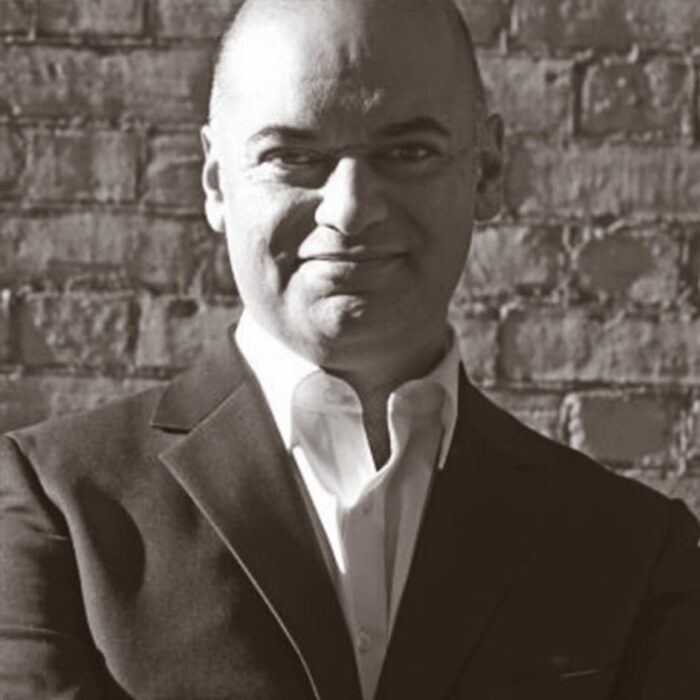
Sarwat Chadda
Sarwat Chadda is a Londoner whose writing for young adults depicts the world from both East and West.
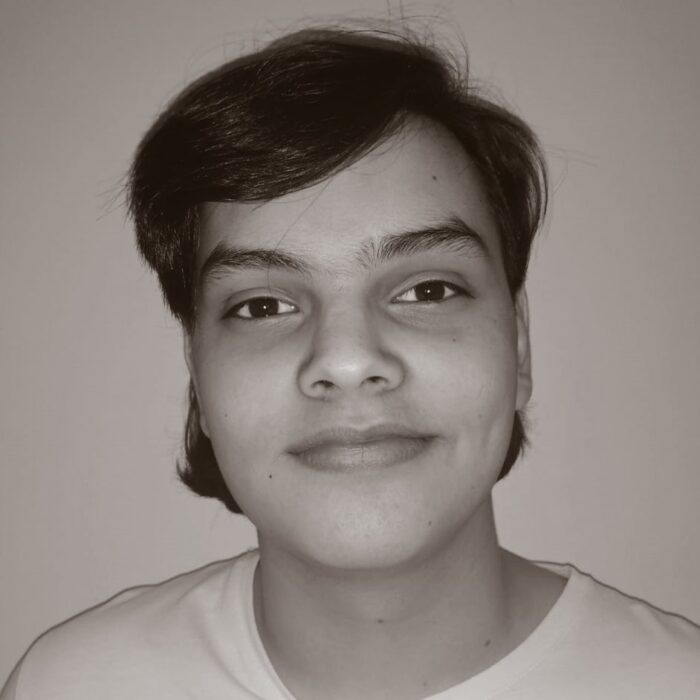
Fergal Harte
Fergal Harte writes features on WhatCulture.com, which he has been writing for since June 2018.
Race in the time of childhood

Race in the time of childhood
Sharmilla Beezmohun


Mixed race, mixed up Britain
Louisa Adjoa Parker

Salad cream sandwiches
Selina Nwulu

Buried
Maame Blue


If it isn’t me
Bobby Nayyar

Me and Mowgli
Sarwat Chadda
WritersMosaic monthly
Get new episodes by email
One email monthly, unsubscribe anytime

Illuminating, in-depth conversations between writers.
Listen to all episodes
SpotifyApple Podcasts
Amazon Music
YouTube
Other apps

The series that tells the true-life stories of migration to the UK.
Listen to all episodes
SpotifyApple Podcasts
Amazon Music
YouTube
Other apps
WritersMosaic interrogates the notion of ‘staying in your lane’ by asking writers how they attempt to think beyond the parameters of their cultural identity.
Listen to all episodes
SpotifyApple Podcasts
YouTube

Marlon James: a Jamaican reckoning
'A return to a home I barely knew'
The name of this wallpaper is ‘Childhood’
A luminescent bubble of memory
What’s in a feminist? Holding on to Gloria Steinem
Is Gloria Steinem's feminism still relevant today?

Pressure
What's missing from the latest 'untold story behind D-Day'?
A Trial
An examination of theatre’s complicity in post-truth politics