Race in the time of childhood
Salad cream sandwiches
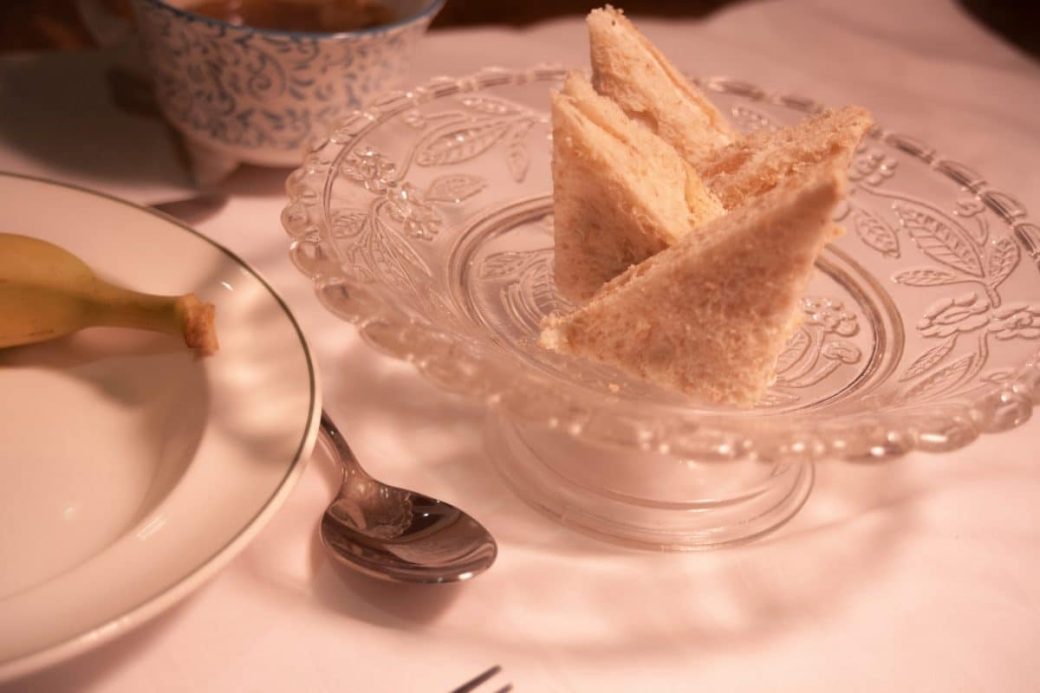
I loved them. And though the idea of their taste makes me retch today, salad cream sandwiches were a staple of my childhood. An easy snack I could make myself, sometimes with a Kraft cheese slice, if I was feeling particularly fancy. It was when I was eating them at my house with my classmate, Riley, that the sandwiches gave me the seal of approval I didn’t realise I had been auditioning for.
‘Your food is like everyone else’s, isn’t it? Just normal. Everyone told me the food in your house would be awful.’
Riley, the brave warrior who’d come into the foreign territory of my house, where others hadn’t dared to tread. I still remember feeling crushed by what I’d thought was a good time between friends but was actually a fact-finding mission, an expedition into how the only black family in the area lived.
Memories of my upbringing in Rotherham are punctuated by similar experiences — the rumours that I carried a knife in my sock, gossip that only got back to me years down the line (after all, who would dare ask?) after a friend mentioned it in passing, assuming I’d known. This reputation was a mixed blessing; when I straightened up and puffed out my chest towards any bully, they would cower, but when I tried to talk to a boy about God, on discovering his dad was a vicar, he was too panicked by the idea of me to have a conversation, instead shuffling off, never turning his back towards me. These were my first lessons in the illogical nature of racism, which tells a tired narrative in the face of all evidence. How the colour of my skin overshadowed my bookish nature and my troublesome addiction to fruit pastilles (must have been the reason why I carried the knife).
Growing up in Rotherham in the 1990s was difficult, more so than I could admit at the time, having no real point of comparison. The children’s song ‘Black and White’ was a routine nightmare during assembly. When we would sing the lyric, ‘A child is black, a child is white’, half the school and their mother would crane their heads to see if, yes, I was still there and, yes, still black, while I tried to disappear. Come Comic Relief and teachers would speak about starving children in Africa; one teacher in particular kindly let everyone in the class know that if they were curious about what those children looked like, they need look no further than their black classmate sitting in the corner, trying to disappear.
Riley’s comment clarified why I didn’t have many friends over at my house. Because outside the intermission of salad cream sandwiches, we did eat differently. When you are surviving, there’s no room to celebrate the steaming bowls of jollof rice, yam and stew and egusi soup. Better to be the girl with the salad cream sandwiches. Pride in the other stuff would come later … much later.
© Selina Nwulu

Race in the time of childhood

Race in the time of childhood
Sharmilla Beezmohun


Mixed race, mixed up Britain
Louisa Adjoa Parker

Buried
Maame Blue


If it isn’t me
Bobby Nayyar

Me and Mowgli
Sarwat Chadda

Comics and literature
Sarwat Chadda & Fergal Harte
WritersMosaic monthly
Get new episodes by email
One email monthly, unsubscribe anytime

Illuminating, in-depth conversations between writers.
Listen to all episodes
SpotifyApple Podcasts
Amazon Music
YouTube
Other apps

The series that tells the true-life stories of migration to the UK.
Listen to all episodes
SpotifyApple Podcasts
Amazon Music
YouTube
Other apps
WritersMosaic interrogates the notion of ‘staying in your lane’ by asking writers how they attempt to think beyond the parameters of their cultural identity.
Listen to all episodes
SpotifyApple Podcasts
YouTube




Marlon James: a Jamaican reckoning
'A return to a home I barely knew'
The name of this wallpaper is ‘Childhood’
A luminescent bubble of memory

What’s in a feminist? Holding on to Gloria Steinem
Is Gloria Steinem's feminism still relevant today?





Pressure
What's missing from the latest 'untold story behind D-Day'?

A Trial
An examination of theatre’s complicity in post-truth politics