Race in the time of childhood
Mixed race, mixed up Britain
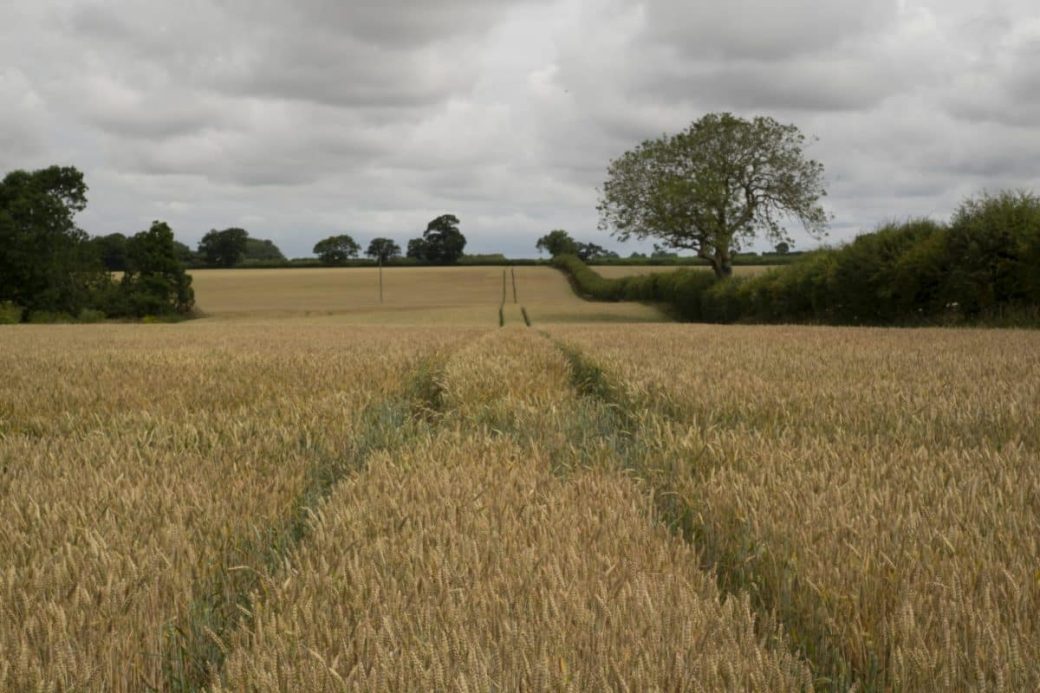
1984: I’m at school in East Anglia — all chalk or clay flatlands, swathes of arable land. It had taken a while to fit in; I’d been home-educated for four years and when I rocked up to my new school sporting a short afro, Clarks black lace-ups and an A-line skirt, I didn’t look right. The other girls wore tight, short skirts, pointed shoes in pastel shades. I stood out for many reasons, but the main one? I was mixed race.1
I’m in the doorway of a Portacabin classroom, with its wooden steps and paper-thin walls, the smell of packed lunch – eggs, ham and fruit. I’m talking to Michelle, who’s white with brown curly hair and wearing the required pencil skirt and pointy shoes. ‘You know,’ she says conversationally, ‘you’re quite pretty, for a coloured girl’. Her words form part of a rhetoric I’m all too familiar with; brown girls can’t be considered pretty, like white girls can. Black and brown people can’t be thought of as people, like white ones can.
1985: my parents have split up. A boy, known to us as John-on-thegreen, shoves a stink bomb through our letter box and throws eggs at our house while my Ghanaian dad is visiting. The stink bomb smells sulphurous, grotesque. My parents chase him down the road, but he gets away. What hurts most is that, not long ago, I’d been friends with John. He’d seemed a sweet lad with long hair and a baggy jumper that he’d swapped for a shaven head and Doctor Martens when he joined the National Front, that group of hate-filled boys and men who chased me in my nightmares.
***
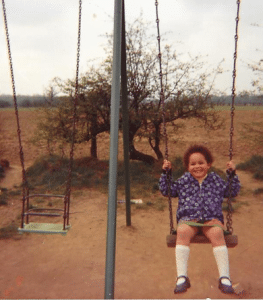 I grew up in 1970s and 1980s Britain, under a Thatcher government. It was a time of overt, unashamed racism – from our government and their wish to ‘tighten’ immigration control to articles in our newspapers, from stories on our TV screens to stares and abuse from the stranger in the street. A time of ‘Paki-bashing’, of the British flag being used as a warning. ‘Go home,’ it told people like me, ‘you’re not wanted here’. A time when my white, ‘best’ friend said to me, ‘I don’t know what will happen if Thatcher sends the blacks home. We’ll lose our best sportspeople’. When having racism hurled at you was part of everyday life.
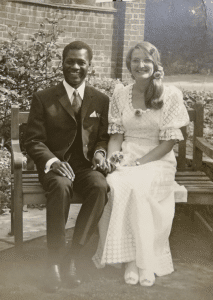
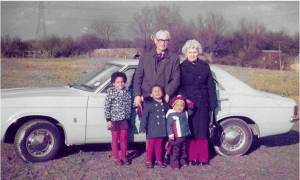
My dad was born in Ghana and had come to the UK in the early 1960s for his education. He met and married my white English mother, much to the initial horror of her parents, who claimed to be purely concerned about cultural differences. They were invited to the wedding, but my parents didn’t expect them to come. My mum burst into tears when they arrived. After that, they accepted the situation. During the ‘No Irish, no blacks, no dogs’ era, attitudes towards inter-racial marriages were generally hostile.
Most black and brown people experienced racism during this time. But for mixed race kids there were added challenges: not having a parent who looked like you, and feeling – or being told – we didn’t ‘belong’ to either ‘race’. I hated the descriptors, especially ‘half-caste’, a term humorously explored in John Agard’s poem of the same name.2 We were freaks, not one thing or another. But just like fully black or Asian people, we struggled. In the words of Margaret Clarke, writing in the 1977 Harmony newsletter:
As it is now, [mixed race children] learn only British History in schools, British culture. They leave school and the majority find it very hard to get jobs. The British culture rejects them because their skin is not white.3
***
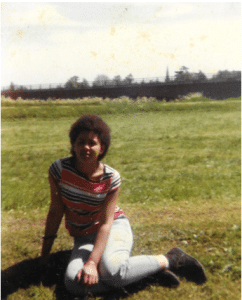 Summer 1985: Sister Sledge warbles on the radio, ‘Do you remember me, Frankie?’ I move to Devon with my mum and siblings, swapping East Anglian plains for green hills, terracotta earth, the sea. Devon is totally, utterly white. It’s like stepping back in time; other than my siblings, I don’t see another person of colour for years. I befriend the local boys, to whom we are n-words. These children, and probably the large majority of Devon residents, have never seen a black person, other than on telly. They hang around with us, yet constantly abuse us.
Devon is familiar; we’d been visiting my grandparents there since I was little. But living somewhere is different to being on holiday. You get to see the ugliness underneath the veneer, the racism, bigotry and poverty that lurk under the rolling hills, glittering sea and long stretches of sand, the salt-scoured beach huts, flashing penny arcades, seafronts with lights strung against the sky.
***
In Devon, and Dorset where I later lived, racism appeared to spill from the land itself, manifesting itself through racist abuse, or bullying when the racial element wasn’t obvious. Racism is complex, multi-layered, easy to recognise when it’s overt, less so when it’s subtle. Its insidious, ever-evolving nature is part of the problem. The impact, however, of the micro-aggressions – seemingly harmless comments and racist jokes – is huge. I and many others can testify to how being brown and living in white-only spaces can have a detrimental effect on your mental health.4
In Britain things improved under a New Labour government during the late nineties and the noughties, an era of renewed commitment to multiculturalism and integration. We were shaking off the colonial hangover of the past, moving into a modern, post-racial society. Finally allowed our own box on the 2001 census – imagine! – the numbers of mixed race people was now seen to be growing. Being mixed became desirable, a commodity, fetishized. Images of brown babies were used to sell products; sections of society professed their love for babies with curls and golden skin. It felt, for a time, that we’d reached a new dawn in the racial landscape.
***
Mixed race people are often viewed as a contemporary social phenomenon. We have, in fact, a long history and pre-history; humans have been migrating and mixing for thousands of years. The decolonising and reimagining of our past currently taking place shows that African and Asian histories are so deeply intertwined with British history that it’s impossible to separate them. Long before the Empire Windrush sailed into London’s Tilbury Docks, people of African heritage had been coming to Britain, as far back as Roman times. During the transatlantic slave trade, white slave owners raped enslaved female Africans and many ‘mulatto’ children were born, some of whom came to the UK. It is thought that eighteenth-century London had a black population of at least 10,000. From the nineteenth century to the 1940s, relationships between white British women and black or brown men were prevalent in certain areas including the port cities of Liverpool, London and Cardiff. And during World War Two, thousands of African-American soldiers came to Britain, leaving behind at least 2,000 ‘Brown Babies’.
Today, mixed race ethnicity is the fastest growing population group in the UK; 1.25 million people classified themselves this way in the 2011 census.5 According to a report published that same year, the actual figure may be double that.6 Yet an increase in numbers alone is not enough to end prejudice. More work needs to be done to educate British society about racism, its history and its complexity. As Michelle Balach-Ali writes:
‘Mixed race’ identity is a constructed census category that specifies separation from other ethnic groups, but does not serve as evidence that we live in a multicultural or post-race society.7
***
June 2016: the morning after the UK referendum on Europe. I wake to the news that we’re leaving the EU. Like most of the country, I can’t believe it. Many people, myself included, are of the opinion that the Leave campaign blatantly focused on a single issue: immigration. I step out of my cottage in Dorset’s county town and it’s like travelling back to the 1970s, when the colour of my skin marked me out as different. I peer suspiciously at people in supermarkets, wondering, did you vote Leave? Do you want immigrants to leave?
It feels as though we have come full circle — as though Britain, just like when I was born, doesn’t want me here. In the days that follow, there is a sense that our country has split sharply in half. It saddens me. People fall out with those who voted differently to them, on social media, in the pub, at work. The atmosphere of our country has changed; there’s a heaviness in the air, as though a storm is about to break.
***
It’s widely thought that the Brexit referendum emboldened people to voice racist thoughts they might previously have thought wiser to keep to themselves. It was a fire stoked up into a blazing furnace by our media, which incited racial hatred, often exemplified by angry white men (of a breed now referred to by some as ‘gammon’) shouting at minorities on our morning telly. If politicians and TV presenters were saying this, it must be true! Forget that political correctness malarkey! The rhetoric has been frightening, comparable for many to Nazi propaganda during the Second World War and, consequently, hate crime has increased in post-Brexit Britain. Figures released by the Home Office in 2019 showed that in Dorset, for example, where I lived for twenty-five years, hate crime increased by 29% on the previous year, with two-thirds of that increase related to ‘race’.
The UK has long prided itself on being a tolerant nation and many don’t ‘see’ racism; a YouGov poll found that up to 40% of Brits don’t think black, Asian and minority ethnic people experience greater discrimination than whites.8 On the surface, much has changed; many black or mixed Britons have had success in fields such as sport and music. Examples are held up as proof – look, we have a mixed race royal! The discrimination even the most successful of us can face is not widely understood.
Some stories are being told. Last year, Natalie Morris ran a series in the Metro newspaper on being mixed race. Morris, who interviewed over fifty people, says:
The mixed-race UK population has wildly diverse backgrounds, yet themes came up that point to collective experiences. Developing a solid sense of identity was one – a struggle to place yourself within the world, and a longing to define your identity for yourself. Almost everyone I spoke to mentioned the powerlessness that comes with having others define your identity.9 We seem to be living in a strange moment when it comes to the perception of mixed-race people in the UK. Racial ambiguity is on trend – mixed-race faces are splashed all over advertising campaigns and magazine covers. It’s easy to paint this as a sign of progression – but representation without giving these faces a voice, isn’t progress.
We need, as a country, to dig deeper, examine our lived experience, and create a positive space for us – and our narratives – to belong.
***
31 January 2020: Brexit day, not long past dawn. The sky is a watery pink. Today is an historic day – tonight, at 11pm, the UK is leaving the European Union. Prime Minister Boris Johnson speaks of this day as ‘heralding a new dawn’. #NotMyBrexit is trending on Twitter. Our ties to Europe are being severed; we are a tiny island, floating in a giant sea. I think I might be in the numb stage of grief but, like others, I’m simultaneously relieved it’s finally over and now worried about the future.
And yet. I remain hopeful, grateful for all the work anti-racist activists have done and continue to do – the black and brown people who are not afraid to speak out. The white allies who’ve done the uncomfortable work of examining their own privilege, learning the history, listening. There’s a lot of work to be done and we must remain vigilant and challenge all forms of racism but, at the risk of sounding hopelessly naïve, I hold on to the hope that one day people of all ethnic backgrounds will feel welcome on our small, beautiful, rainy island.
Notes
1 Although I dislike the term ‘mixed race’ because ‘race’ is purely a social construct, I and others who have expressed the same sentiment use this term because we haven’t found a better descriptor and readers will understand what it refers to.
2 John Agard. ‘Half-caste’ in Half-caste and Other Poems. London: Hachette, 2005. See the National Poetry Library website for his rendition of the poem. https://www.nationalpoetrylibrary.org.uk/online-poetry/poems/half-caste.
3 From: Being Mixed Race, 1970s/80s examples from newsletters published by Harmony, now known as People in Harmony. Sent via email.
4 See ‘How racism impacted my mental health’. London: Wellcome Trust, 20 March 2020.
5 UK Government website. 1 August 2018.
6 Mark Easton, ‘Mixed race UK population double official figure says new report’. BBC news website, 6 October 2011.
7 Michelle Ballach-Ali. ‘Has “Multiculturalism” made a difference for Mixed Race individuals living in the UK?’. People in Harmony website, 4 October, 2019.
8 Aamna Mohdin. ‘Up to 40% of Britons think BAME people do not face more discrimination’. The Guardian, 20 December. 2018.
9 Natalie Morris. ‘Mixed Up: What the UK’s mixed-race population want you to know’. Metro newspaper, 4 December. 2019.
© Louisa Adjoa Parker
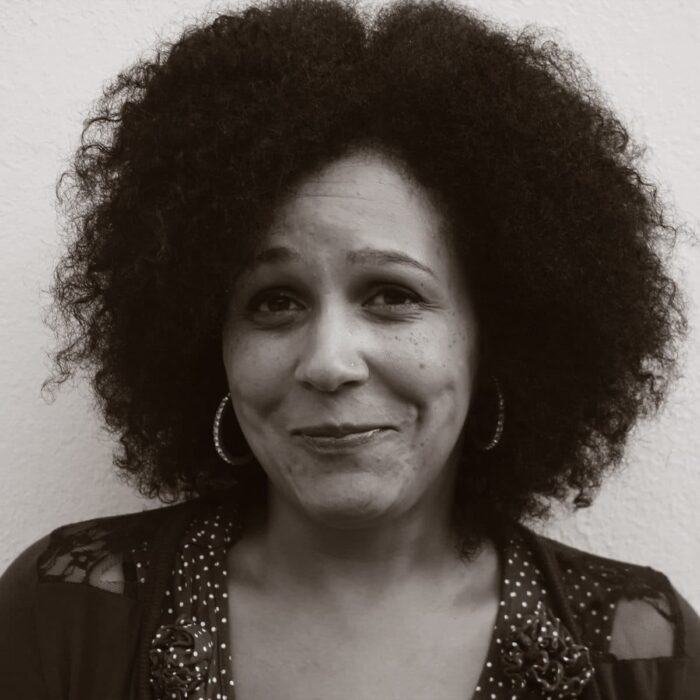
Louisa Adjoa Parker
Louisa Adjoa Parker is a writer and poet of Ghanaian and English heritage who lives in south-west England.
Race in the time of childhood

Race in the time of childhood
Sharmilla Beezmohun


Salad cream sandwiches
Selina Nwulu

Buried
Maame Blue


If it isn’t me
Bobby Nayyar

Me and Mowgli
Sarwat Chadda

Comics and literature
Sarwat Chadda & Fergal Harte
WritersMosaic monthly
Get new episodes by email
One email monthly, unsubscribe anytime

Illuminating, in-depth conversations between writers.
Listen to all episodes
SpotifyApple Podcasts
Amazon Music
YouTube
Other apps

The series that tells the true-life stories of migration to the UK.
Listen to all episodes
SpotifyApple Podcasts
Amazon Music
YouTube
Other apps
WritersMosaic interrogates the notion of ‘staying in your lane’ by asking writers how they attempt to think beyond the parameters of their cultural identity.
Listen to all episodes
SpotifyApple Podcasts
YouTube

Marlon James: a Jamaican reckoning
'A return to a home I barely knew'
The name of this wallpaper is ‘Childhood’
A luminescent bubble of memory
What’s in a feminist? Holding on to Gloria Steinem
Is Gloria Steinem's feminism still relevant today?
Pressure
What's missing from the latest 'untold story behind D-Day'?

A Trial
An examination of theatre’s complicity in post-truth politics