Race in the time of childhood
Five blows to the head (Cinco golpes en la cabeza)
The bedraggled sheep tired of jumping the Welsh fence – I took pity, deciding to let them rest and instead wake myself up after all; maybe I had things to do. I lifted my eyelids. Mobile, pink lips greeted me, agile tiddlers swimming in a leafy face that blew lambs’ breath at me. Presently, the lips and breaths aligned and I made out a word.
‘Amnesia.’
‘A bowl full?’
‘No, that’s ambrosia, the pudding. You have amnesia. The memory loss.’
‘Who are you?’
‘A nurse. You’re in hospital. You’ve had a bang on the head. Don’t worry, you’re safe. The police are outside.’
‘Why?’
‘You were hit on the head. Do you know who you are?’
‘No. Do you?’
‘We found this photograph in your wallet. Is this you when you were small?’
A beaten-up, white-bordered Polaroid waggled before me.
‘I think so.’
‘Probably your mother took it?’
‘No. My father. I’m smiling.’
‘OK. You smiled only for your father? Your father made you happy?’
‘No.’
Everybody’s a psychologist nowadays. Explaining is hard. It’s easier to sleep. I enter the photo. My mum is a whizz with a Kodak. Hair puddling on the pavement, she’s bending down, seeking the best angle. We are lined up by the garden wall: the Leamington Avenue Summer of ‘69 Football Team. ‘Don’t smile,’ she calls out to us, ‘I want to take your portrait, not a picture for a dentist’s advert. No smiling. Ah! Excellent. OK, hold that.’ Dad had a different way with a camera. So long as you had a smile on your face, all was fine. ‘Smile.’ Click. ‘Fine.’ He read us like one of those road signs when you cross the Pennines – the signs that have five elements to their basic weather system: cloud. sun. rain. frost. snow. Which for us was: Happy. Sad. Tired. Needs Feeding. Bored. ‘You’re looking cloudy today, son. You lost your robot?’ ‘You look bored. Find something to do.’ Etc. Dad takes a photo. ‘Smile. Great. You can go play now.’ Mum takes a photo. ‘Stop smiling. Look serious.’ Years later, a Hay Festival photographer told me: ‘I’m here to take your photo. Look serious.’ No problem, I thought, thanks Mum. Mum: ‘Look serious.’ Dad: ‘Smile.’ Mum: ‘I want a portrait, I want to capture something that speaks of your soul.’ Dad: ‘Smile. Great.’ Mum: ‘Look at me, actually look at me. Be here, in this moment. We’re all here, right now, in this moment.’ ‘Mum. Press the button. We want to go back to playing football.’
‘Wake up, you’ve been sleeping.’
I stirred. Thick silver lips looking at me, smooth as the bumper of a Zephyr Mk 3, its perky wing mirrors out there on the bonnet, dangling like two glistening pork chops.
‘Look at this. This is a mirror.’
‘Why is my head all bandaged up?’
‘You’ve been hit on the head.’
‘Who are you?’
‘A nurse. You’re in hospital. You’ve had a bang on the head. Don’t worry, you’re safe. The police are outside.’
‘Why?’
‘You were hit on the head. Do you know who you are?’
‘No. Do you?’
‘We found this photograph in your wallet. Is this you, when you were younger? Who are you with here, slouching together on the wall? Are those flares you two are wearing? You’re so cute together. Who is that with you?’
That is Christine. Me and Christine. God gave us these feet. We are stars of disco at New Century Hall. On the sprung dancefloor, a circle gathers around us. Yeah! That spin! Me: Midnight blue brushed cotton Ben Sherman jacket, flared lapels, Italian label silk shirt, imported, two-tone, green-blue flares. Christine: Three huge white stars, white and red jumper, houndstooth, wide-loom cream skirt, suspendered nylons, strawberry lipstick. The Friday Century Hall queue a squealing mass of bodies, and me and Christine crushed up, loving the crush. Christine is my first girlfriend. At New Century, we dance, tumble outside, chase tongues, then every time I think, finally we are going to go further, her dad skids up in his car and whisks her off. Christine. So beautiful no girl ever looked good beside her. We have all the moves to Silvester’s anthems. We’re Mighty Real. End of one crisp night in November, finally, as her dad hovers, Christine palms me her phone number. She skips off. I spend unknown hours wandering the city streets. What do I do? First step is easy. Dial the number. But on pickup, do I say, ‘Hello, is that Christine?’ or ‘Hi, babes’? And what if her dad answers?
Then it happens. I float around a corner spinning this phone call thoughtstream through and they’re bang in front of me, puddled in the fluorescent backlight of an Army & Navy store. There are maybe eight, nine of them, in drainpipes, skull cuts and monkey boots. They look up, surprised. I’ve strayed into Lower Tib Street. Home to the National Front’s Manchester headquarters. Rumour has it they carry German flick knives, London knuckle-dusters and take no prisoners.
They close in on me. There is only one sane thing to do in this situation, so I do that. I hold a hand high. ‘One second.’ I take off my brushed midnight blue cotton Ben Sherman jacket, fold it, place it on the ground. I drop into a Saturday Night Fever karate stance. They hesitate. Then I notice some of them have bricks in their hands. They smirk. Those bricks. I back away, pick up my jacket, turn and run. Run, run, run, laughing into the night.
‘Wake up, you’ve been sleeping.’
‘What is this plaster cast on my arm?’
‘You broke your arm when you fell. After you were hit on the head.’
‘Who are you?’ ‘A nurse. You’re in hospital. You’ve had a bang on the head. Don’t worry, you’re safe. The police are outside.’
‘Why?’
‘You were hit on the head. Your old friends from the circus came. They wrote on your cast. People from a circus troupe. They heard about you in the news. You were in a circus?’
‘No.’
‘They were a sight, cheered the ward up, all of us. They left photos. Longsight Circus. This one is you, they say. There.’
A backlit figure on a tightrope. The tightrope was my love. Fights at circus are never with the clowns. There is no dignity in fighting a clown, in or out of costume. And nobody picks on the trapeze artists. Their upper body strength is legendary. It’s the jugglers who everyone tries to strangle. Simple acts tricked up with Oriental nonsense: Aladdin costumes, flying carpets, turbans. Exotic courtesan assistants discovered, they’ll say, in the remote East but who are actually the girls next door. How many times have I howled inwardly in pain at the jugglers’ nonsense?
The fight? They are always bullying the ring-mistress into putting me (‘the mere tightrope walker,’ they call me) on early as a warm-up act, and then trying to slip themselves into the programme as late as possible — as close as possible to the trapeze-swing climax of the show. I risk my life up there on that wire. They stay glued to the ground, and butter-finger and shimsham their phoney acts. The day I had a small wobble and was caught by the safety net, they suggested I join the clowns. A fist fight followed. I let them know who I am. I am the African Blondini. I carry generations of African Blondini spirits with me. I have crossed Welsh skies, skitted across valleys on ropes as thin as spider’s threads with some grinning local boy lashed to my back, while down below are Lilliputian houses, little people and white dots, tiny dots of sheep, that join the human faces in gazing up; the humans in admiration, the sheep in confusion: is that man or goat? It is as the African Blondini that I glide along the rope, the giddy heights, the Big Top peak’s warm, sweaty, slippery air; I balance the pole dead centre, my forearms bristling, soles aligned, chin up, focus. One step from death without the net – though tonight, with the net, something worse: indignity, shame. The cackling jugglers. Focus. The cries and calls of the crowd. Focus. Yellow and green blobs of the clowns’ wigs. Focus. The circus mistress’s glittering face paint. Focus. Flambini, the trapeze artist’s yawn. Focus. I do not fight the rope, I am at one with the rope. Focus. I am the rope. The wire. The wire is over-oiled. They warned me about maintenance day. Yet I inspected every coil afterwards and it hadn’t oozed like this. Crude engine oil too. Sabotage. Focus. I must not fall. Never give them that satisfaction.
The fall. The wilderness years. Busking in Manchester streets with three clubs and a begging hat. Praying for harmony in the city – if a black face makes the news headlines for the wrong reasons, my busker’s takings plummet. Cold days throwing tricks. Random youths running off with the hat. Drunks trying to swipe the clubs, mid-air. I gave chase once and the runner turned, threw the club back. I missed the catch and it banged me on the head. The indignity. Everything I detested – that everything being juggling – I’d become. Better to sleep a thousand years than live that life again.
‘Wake up, you’ve been sleeping.’
‘Who are you?’
‘A nurse. You’re in hospital. You’ve had a bang on the head. Don’t worry, you’re safe. The police are outside.’
‘Why?’
‘You were found lying on the pavement with a large number of bruises to your head. Who would do that to you?’
Christine’s dad wants to kill me. We did the dirty in her parents’ bed one afternoon, did it there deliberately, in revenge. And it worked out fine. The best. He came back early, caught us, chased me out of the house, threw bricks as I ran, said he’d hunt me down, ‘Over my dead body will you fuck my daughter, you little black piece of shit.’ Me and Christine. It was worth the concussion.
‘But you’re not sixteen anymore. You’re much, much older.’
‘No. You’re gaslighting me.’
‘Yes. Look.’
She took the bandages off, held up the mirror.
‘Is that my face? Dang. As soon as I find out who I am, I’m going to kill whoever did this.’
‘Wake up, you’ve been sleeping.’
‘Why?’
‘I’m a nurse. You’re in hospital. You’ve had a bang on the head. Don’t worry, you’re safe. The police are outside.’
‘Who would do that to me?’
‘Society.’
‘Could you be more specific? Any particular people?’
‘This is the bill for your hospital stay. We have to assume you’re an immigrant.’
‘This is fiction.’
‘I can give you a receipt.’
‘Get me out of here. I’m in danger. Get these bandages off my face.’
The injection was pleasant.
‘Wake up, you’ve been sleeping.’
‘Who are you?’
‘A police officer. You’re in hospital. You’ve had a bang on the head. Don’t worry, you’re safe. The nurse is outside.’
‘Why?’
‘We found the brick that was in collision with your head. There was blood on it which was not yours. We ran the blood through our database and we got a hit. The suspect was in a HMP on other offences and voluntarily deposed that he did the deed but that he was not sure who you were as he threw three bricks that day: one at a postal worker delivering ballots which missed and hit a passer-by; the second outside a mosque at someone who had an overlong beard which was successful, this relating to the brick and not the beard. And a third, at a wandering clown – as he did not like clowns, wandering or stationary, a sentiment which I reciprocated.’
‘Why?’
‘Childhood trauma. On further questioning, he confessed the brick in collision with your head was an act of revenge was a cry for help was a cross on a ballot paper was a call for race war was a return to the past was a brand new future was the jest of the gods was a full public inquiry was a meaningless act was one of many that week, that month, that year. If you could sign here please to accept your brick back.’
The injection was pleasant.
© Peter Kalu
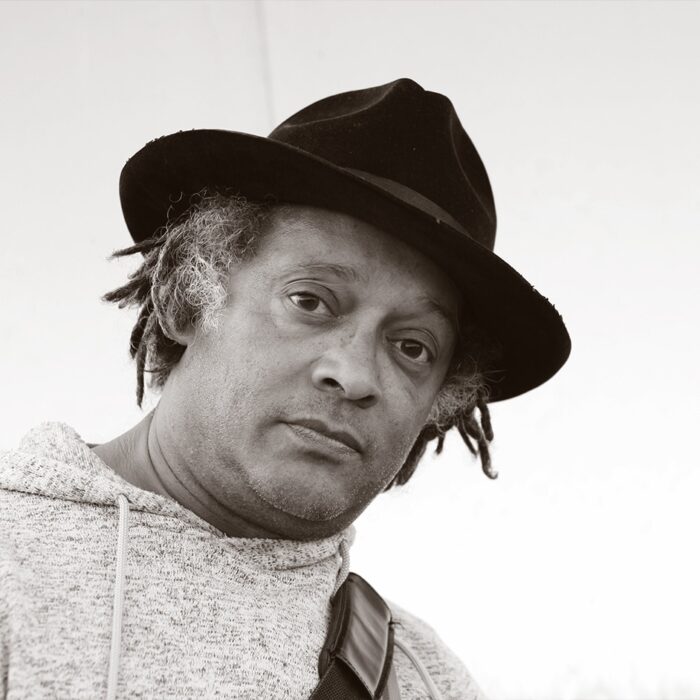
Peter Kalu
Peter Kalu is a Manchester-based short story writer, novelist, storyteller, playwright and poet.
Race in the time of childhood

Race in the time of childhood
Sharmilla Beezmohun


Mixed race, mixed up Britain
Louisa Adjoa Parker

Salad cream sandwiches
Selina Nwulu

Buried
Maame Blue

If it isn’t me
Bobby Nayyar

Me and Mowgli
Sarwat Chadda

Comics and literature
Sarwat Chadda & Fergal Harte
WritersMosaic monthly
Get new episodes by email
One email monthly, unsubscribe anytime

Illuminating, in-depth conversations between writers.
Listen to all episodes
SpotifyApple Podcasts
Amazon Music
YouTube
Other apps

The series that tells the true-life stories of migration to the UK.
Listen to all episodes
SpotifyApple Podcasts
Amazon Music
YouTube
Other apps
WritersMosaic interrogates the notion of ‘staying in your lane’ by asking writers how they attempt to think beyond the parameters of their cultural identity.
Listen to all episodes
SpotifyApple Podcasts
YouTube


Marlon James: a Jamaican reckoning
'A return to a home I barely knew'
The name of this wallpaper is ‘Childhood’
A luminescent bubble of memory
What’s in a feminist? Holding on to Gloria Steinem
Is Gloria Steinem's feminism still relevant today?

Pressure
What's missing from the latest 'untold story behind D-Day'?
A Trial
An examination of theatre’s complicity in post-truth politics