Everyone has an elsewhere
King Herod in Florida
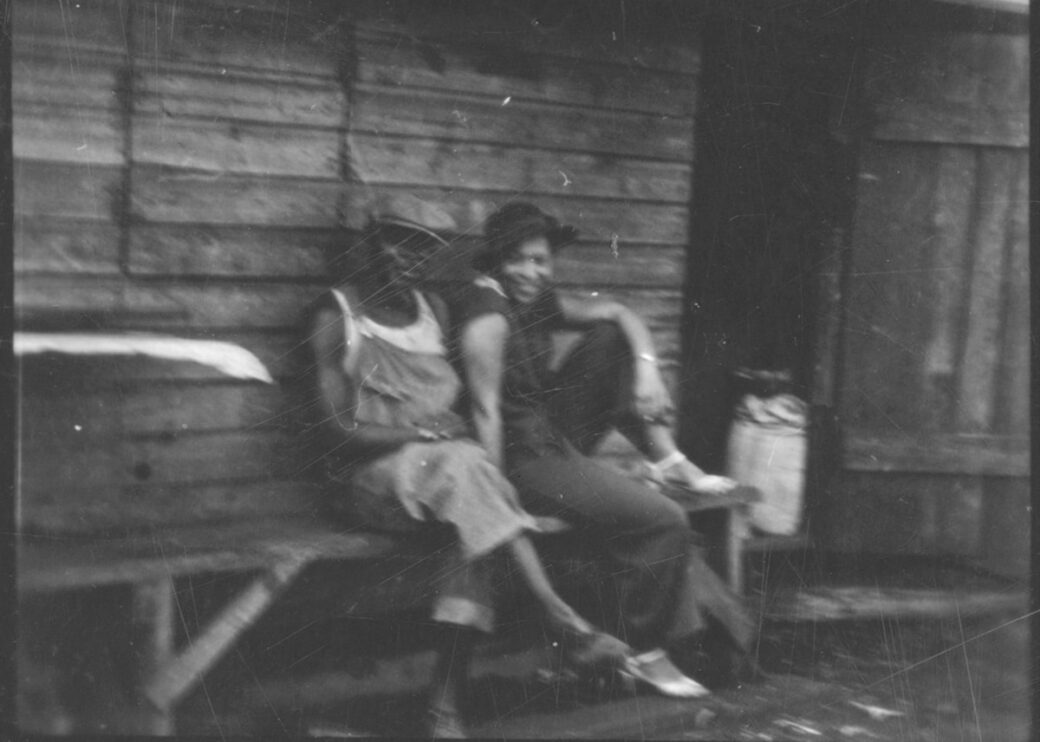
As usual on my visits to Miami, I was sitting on my parents’ balcony, drinking Bustelo coffee and eating Haitian patties while my family discussed ‘the situation’ in Haiti. The second inauguration of Donald Trump was imminent and we were apprehensive. Perhaps this is why I thought of Tell My Horse, Zora Neale Hurston’s account of her travels in Jamaica and Haiti in the 1930s. Unlike European commentators of her day who’d travel to Haiti seeking reasons to defend colonialism, Hurston’s portrait of the Black republic is compassionate and full of wonder. Yet in her book she mentions the seeds that have grown into the tangled roots that are strangling Haiti today.
Here was another American, a Black woman born in Alabama barely a generation from slavery who understood enough about politics and morality to see beyond the success of the Haitian Revolution. The next day I decided to make a trip to the Zora Neale Hurston National Museum of Fine Arts in Eatonville, 250 miles away. I wanted to see Hurston’s Florida before the change in Washington.
US Route 27 cuts through the Panhandle, through the Everglades and sugar cane country towards Orlando. Miami with its turnpikes and exiles was behind me and I switched on the audiobook of Hurston’s last novel, The Life of Herod The Great.
‘Silence has many personalities. This profound absence of sound was filled with the hysteria of hope.’
The humid air and flat, monotonous Florida landscape jarred with the fragrant hills of ancient Galilee. I relaxed into the drive, listening to Blair Underwood’s rich American voice. Hurston died in poverty in Fort Pierce, an hour’s drive from Eatonville, in 1960, at the age of 69. The Life of Herod the Great was consigned to a pile of rubbish outside her cinder block house and the cleaning crew set it alight. The deputy sheriff of Fort Pierce, a friend of Hurston’s, saw the smoke and, with a garden hose, saved the manuscript.
I stopped at a gas station with a cafe. Mark Antony and Cleopatra have just entered Herod’s life. I paid at the pump and went towards the cafe and the bathroom. A sign asking patrons not to openly carry firearms or shoot them was next to a black flag with a Southern Cross printed in the background and the word TRUMP in front. I rushed into the unmarked bathroom and fumbled as I slid the metal lock across the edge of the door and into the wall.
Minutes later, I was driving deeper into middle Florida. A river sometimes appeared at a bend, presaged by bald cypress trees, their roots stretching into the water. Herod rejects Cleopatra’s advances; he loves his wife Marianme. The sun stopped beating down. It became playful; its rays filtered through leaves and the soft hills slowed the trucks. It should be easy to live here.
I drove into an agglomeration. There were auto repair shops, fast-food restaurants and, finally, people: human beings walking on pavements. They were all Black. A sign in cursive print welcomed me to the City of Belle Glade. Later, I was told it is one of the most violent places in Florida, replete with migrants and bosses and machetes and shotguns. I pulled into a drugstore to buy a phone charger. It was clinically lit and stocked with products, all under lock and key. ‘Hello?’ I shouted into the aisles.
A sentence from the audiobook crept into my mind. It’s a description of Marianme on her way to the gallows for treason, ‘But now that loneliness that surrounds every human at the point of death was upon her.’
Eventually, an employee arrived jangling keys. She didn’t say a word. I pointed at the charger I wanted, then rushed to add a bag of crisps at the till.
I threw my plastic bag on the passenger seat and reversed out of the parking lot. A man shouted at me as I turned back onto the road. It took another two hours to get there. An arch had ‘Eatonville’ written over it. ‘The Town that Freedom Built’ was printed below. I’d made it. This is where Zora Neale Hurston learned to be somebody. Her father had been both mayor and pastor in the oldest African American settlement in the United States.
‘The Hurston’ museum shares a building with a barbershop next to the Baptist Church. A volunteer with expensive-looking nails invited me to sign a visitor’s log. One corner of the museum is a gift shop, selling Hurston’s books as well as T-shirts, posters and tote bags. There’s a picture of Hurston with a brief biography on the wall.
‘She looks like Queen Latifa, doesn’t she?’ the volunteer beamed.
The rest of the one-room museum is a dedicated art space. There is no permanent collection, no things that belonged to ZNH. Yet her spirit emerges. Hurston in the Harlem Renaissance promoted the art of the African diaspora. Since 1990, ‘The Hurston’ has continued to do this. From its annual Zora! festival to the ‘Gathering & Gabbing Book Club’, this museum funded by donations not only preserves Hur ston’s legacy but offers hope and recognition to contemporary Black artists, writers and performers. For a community used to loss, but also for the Florida I had seen, ‘The Hurston’ provides a different and important narrative. It could be easy to live here.
The Life of Herod The Great unravelled by the end of the audiobook. The manuscript was not only partly burnt, it was never finished. The Israelites were a vulnerable community plagued by ignorance and fear, not dissimilar to the African Americans moving to Eatonville in the days of Jim Crow. In her Foreword, Hurston says she aimed to rehabilitate the reputation of the New Testament’s ‘villain of the obscurite’. What I discovered was a tale of the psychological legacies of slavery. Intimacy is impossible. Acts of love and generosity provoke fear. Herod draws hatred from those closest to him. Their trust in their own humanity is too low, their view of destiny too bleak to see Herod’s rise as anything other than an abomination.
© Isabelle Dupuy
Everyone has an elsewhere
Editorial
Colin Grant
Searching for Nelsa Lowe
Hannah Lowe
Sketches from the edges
Naneh Hovhannisyan
Think pathology?
Colin Grant
Forests where past and present meet
Maria Jastrzębska
My father’s places
Mirza Waheed
Luc and Peggy
Suzanne Harrington
Anna Freud at the Freud Museum
Andy Bay

Devotion
Sarah Issever
WritersMosaic monthly
Get new episodes by email
One email monthly, unsubscribe anytime

Illuminating, in-depth conversations between writers.
Listen to all episodes
SpotifyApple Podcasts
Amazon Music
YouTube
Other apps

The series that tells the true-life stories of migration to the UK.
Listen to all episodes
SpotifyApple Podcasts
Amazon Music
YouTube
Other apps
WritersMosaic interrogates the notion of ‘staying in your lane’ by asking writers how they attempt to think beyond the parameters of their cultural identity.
Listen to all episodes
SpotifyApple Podcasts
YouTube

Complex antihero: an interview with Arthur Hughes
Unravelling Authur Hughes' Richard III
Marlon James: a Jamaican reckoning
'A return to a home I barely knew'
The name of this wallpaper is ‘Childhood’
A luminescent bubble of memory
The Disappearers
A sprawling visceral experience that drops you in head first
The Lady Imam
Is the world ready to catch up with amina wadud?