Everyone has an elsewhere
My father’s places
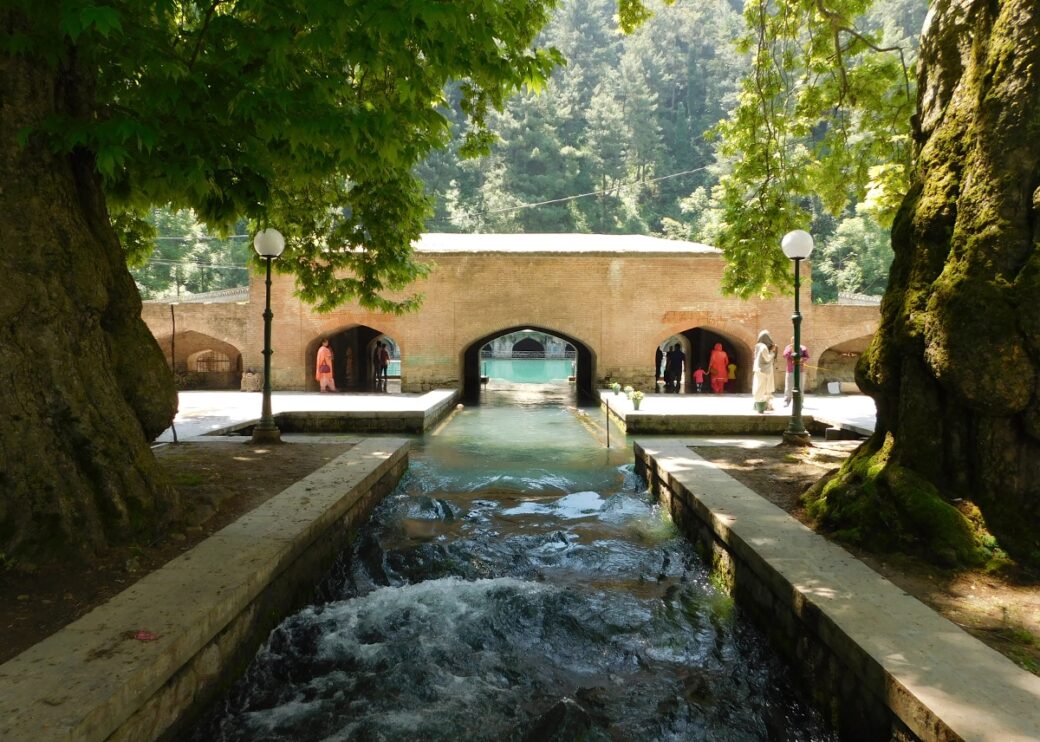

We’re in Kashmir in a large, rectangular garden with at least three tall chinar trees presiding over the scene. A thin stream runs along the border of the garden. Cobblestones mark the stream where the grassy ground ends.
The Tudor-style guesthouse (called the Dak Bungalow even though it has nothing to do with the dak, or postal service, and is considerably larger than a bungalow) sits elegantly near the chinars, just escaping their all-encompassing shade. The entrance to the compound is past the maple tree cluster, a path marked by a slatted walkway from the metalled road that goes to the gates of Verinag, the deep spring that is the source of the river Jhelum, whose waters come to fill the stream in the garden. If you walked upstream, you saw its waters branching off from the river that gushes out from the heart of the spring.
Behind this tourist guesthouse, at an oblique angle from the office – the last room in a row of rooms on the ground floor – is the kitchen and pantry set-up. There are some staff rooms here too – two painted wooden rooms at most. All of this is green: the rock plinth is green, the wood beams are green. Asgar Ali, the caretaker, lives here, his room so spartan and frighteningly clean that you fear your presence might despoil something.
My father is a staff member; he’s posted here, an away posting – my mother and my siblings, three sisters and a brother, have all come along with him to this small mountainside resort far from the city. He often wears crisply ironed pastel safari suits. He oils his hair. It’s the early 1980s, a long, pleasant summer in the memory, as vivid and fresh as that winter’s high snow.
In that summer, or the summers of 1981, ‘82 and ‘83, we cavorted in the long garden, rolled on the grass, dipped our feet in the stone-cold spring water, touched cheek to flower, while tourists from Kashmir’s main city Srinagar, or from India, visited or stayed in the rooms of the ‘bungalow’. Presiding over it all, the guesthouse with its own garden that would become ours for brief periods and the Pir Panjal mountain – tall, conical, and dense as a forest should be, I thought then. It gave me my first taste of mystery and terror.
Kadir, the chowkidar, took it upon himself to guard and protect Mehdi Saeb (my father’s honorific), his family, and every cousin, aunt or uncle who came to visit us. Kadir, he who escorted father home one night, a glistening axe on his shoulder, when Papa was accosted by the ‘flip-footed’ female spirit – a Raantas, Kadir said, at the gates of the spring. It was said the spirit lured men with a hypnotic call and plunged them into the freezing water. Many years later, at college in Delhi, I would be reminded of her as I read about Homer’s Sirens in The Odyssey.
Asgar Ali, the immaculately dressed, super-tidy, forever clean-shaven caretaker, loved us, fed us, and deeply cared for my mother. Then there was the ‘orderly’ Rashid, who walked with me like a shadow sometimes and bowled endless overs so I could bat for long, unbeaten sessions. I went to his house one day and fell in love with the kitchen garden – it looked like it had been painted and then planted into the soil. And of course, there was the tall dandy Parvaiz, who almost always carried a cassette player around his neck, playing popular melodies from old Bombay films. He wore flared bell-bottoms and ultra-fashionable striped shirts. I wanted to be like him when I grew up. Twenty-five years later, he somehow found his way into my debut novel as a forest-dwelling troubadour who walks the high pastures along with his sheep.
There was, of course, a class dynamic at play in the office, especially when the boss was present, but I do not recall an occasion when my father acted superior. It was, in fact, later said that he had the opposite problem: that he was too friendly, too equal with the staff.
Father attended to the visitors, asking Abdul Salam, the main chef, Ghulam Nabi, the melancholic housekeeper, Asgar Ali, Rashid, or someone else to do this and that, to make life comfortable for the guests. That was his thing, I know now, to make other lives comfortable. Sometimes I worry that my father ran himself into the ground trying to make the lives of others, starting with his children, more comfortable.
In that summer, he must’ve been a happy man; he’d secured the most comfortable accommodation for his family. The boss had agreed to let us live in the family suite. Relatives who visited from the city marvelled at our plush rooms. Perhaps it gave us all a sense of pride that they were in some kind of awe: Papa could do stuff for them, for everybody. One day, Aunt F swung with wild abandon atop a sofa in our room, dancing to a disco tune. We laughed and tried to mimic her. She, and other aunts and cousins, would stroll in the manicured garden below as though they were on a film set, or perhaps they actually felt like film stars.
I have remained in that glorious garden ever since, going back to it forever in my memory. As a friend said, ‘everyone has an elsewhere, somewhere, that lives and breathes with them in their lives here’. But it’s my father’s place, or it’s one of my father’s places, where, I believe, more than ever, he was the happiest because he felt satisfied, adequate to the tasks of his life. He came into his own and didn’t feel cut down, as he sometimes did in the city.
I’m playing with the daughter of a visitor family; she’s fascinated by the many nodding flower stalks next to her. Priya, or Piya, is different, she’s from the outside; she brings with her my first sense of the wider world. Papa’s colleagues hover in the background somewhere, not unhappily, as they know generous tips could come their way soon. These are Father’s men, people he tries to help from time to time: getting Ghulam Nabi a permanent job at last and thus removing the source of his lifelong melancholy, arranging for Kadir and Asgar Ali to be paid a winter allowance, sorting out someone’s overdue arrears and, most of all, somehow organising rent-free staff quarters for the men. ‘They have families too,’ Father says, then and forever afterwards, every time he wants to help those in need.
As my father lay on his deathbed in Kashmir, his previously alert body and mind ravaged by Covid and its attendant furies, and then as we buried him, as we prayed for him later at home, I thought of the Verinag years again. A few years ago, I went to Verinag again after nearly 35 years and found that both the guesthouse and the glorious garden around it had turned into rubble: a scene of utter desolation, painful reminders of the long war in Kashmir.
The tourists leave the garden, the sunlight slowly gives way to shadows from the large-limbed chinar trees, to the larger shade of the Pir Panjal mountain an arm’s length away in the photos. My father says his goodbyes to his guests, having shaken hands with them, having treated them well, gone above and beyond as a host, and there he stands by the wicker chairs in the cool evening light.
© Mirza Waheed
Everyone has an elsewhere
Editorial
Colin Grant
Searching for Nelsa Lowe
Hannah Lowe
Sketches from the edges
Naneh Hovhannisyan
Think pathology?
Colin Grant
Forests where past and present meet
Maria Jastrzębska

Luc and Peggy
Suzanne Harrington
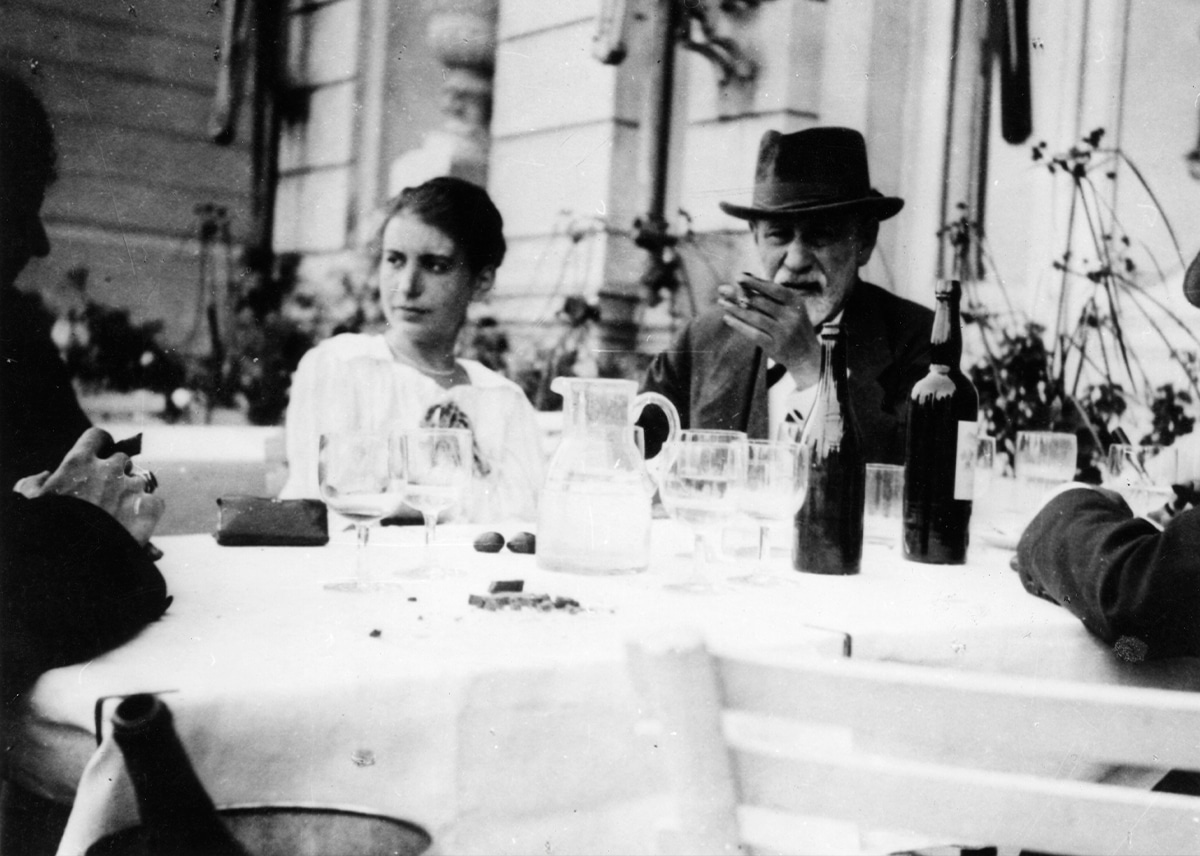
Anna Freud at the Freud Museum
Andy Bay
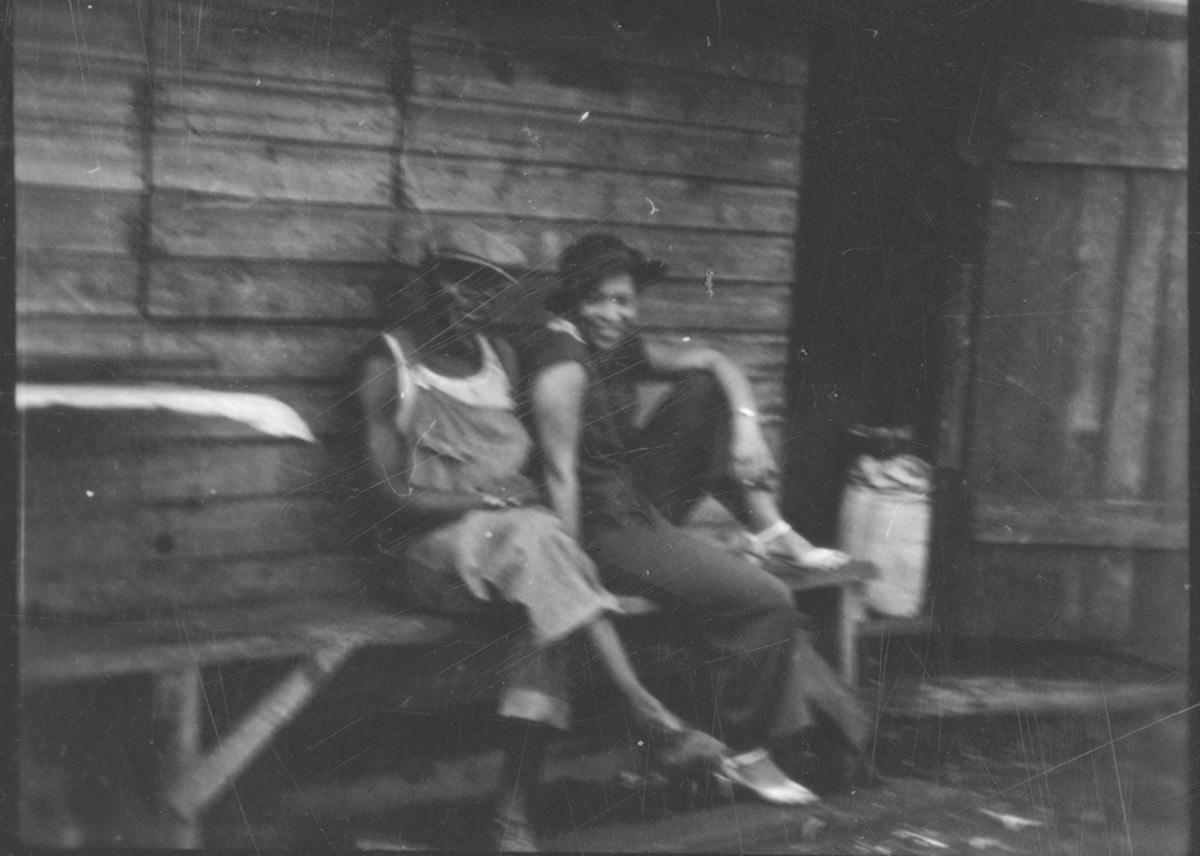
King Herod in Florida
Isabelle Dupuy

Devotion
Sarah Issever
WritersMosaic monthly
Get new episodes by email
One email monthly, unsubscribe anytime

Illuminating, in-depth conversations between writers.
Listen to all episodes
SpotifyApple Podcasts
Amazon Music
YouTube
Other apps

The series that tells the true-life stories of migration to the UK.
Listen to all episodes
SpotifyApple Podcasts
Amazon Music
YouTube
Other apps
WritersMosaic interrogates the notion of ‘staying in your lane’ by asking writers how they attempt to think beyond the parameters of their cultural identity.
Listen to all episodes
SpotifyApple Podcasts
YouTube
In the first series of poems commissioned by Hannah Lowe, six poets explore how ritual gives meaning to our lives.
Listen to all episodes
SpotifyApple Podcasts
YouTube

Free Will
Will Harris reads his poem, 'Free Will'. Directed by Matthew Thompson and commissioned by the Adrian Brinkerhoff Poetry Foundation.

Half Written Love Letter
Selina Nwulu reads her poem, 'Half Written Love Letter'. Directed by Matthew Thompson and commissioned by the Adrian Brinkerhoff Poetry Foundation.

Coats
The unexpected cost of acquiring two Italian leather coats in Rome
A tribute to Bonnie Greer
Founding editor of WritersMosaic Gabriel Gbadamosi pays tribute to Bonnie Greer, the extraordinary writer, public intellectual and much admired contributor to WritersMosaic who died on 15 September, 2026.
Triage
A response to the endless spiral of worldwide conflict and tragedy

The Complex
The unraveling of a dynasty

Disappearing Images
A festival of ephemeral art and the impermanence of our current world