Race in the time of childhood
Race in the time of childhood
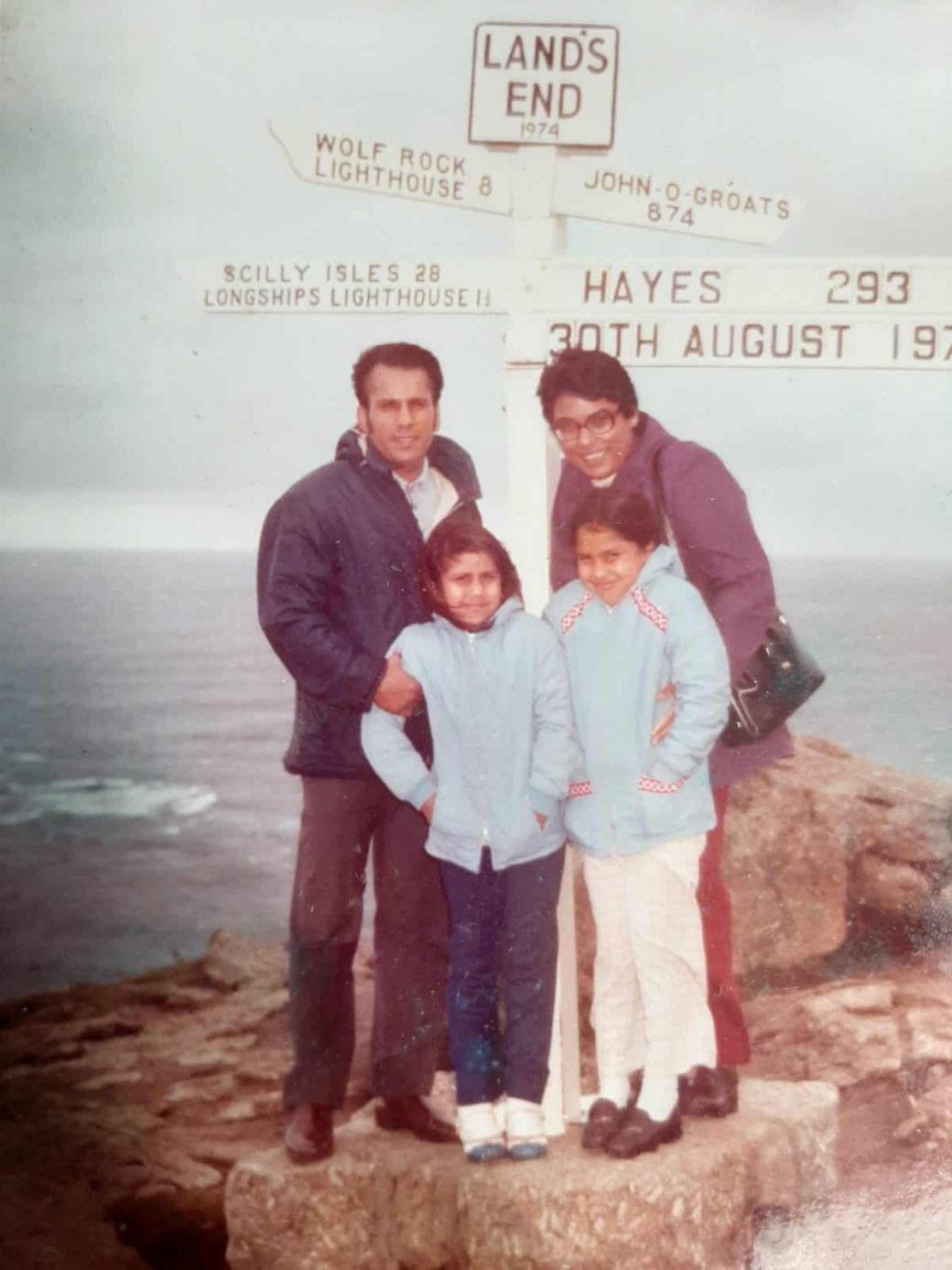
Shanti began to crunch the papery brown leaves on the pavement with her heels, getting more bored and colder by the second as she waited. Both sisters were used to this; their next-door neighbours had a habit of joining in impromptu after-school football matches in the playground and the boys’ mother Sandy was always having to drag them away from the excitement. Shanti just hoped that they wouldn’t be long. She had a new library book in her bag that she couldn’t wait to start. The cover itself looked amazing, bright pinks and greens swirled around each other in a hypnotic pattern. Shanti hadn’t even thought what the story might be about; those colours alone had drawn her in, touched a distant chord in her being. She wanted to be home right this minute so that she could start the book! Almost sub-consciously, Shanti began to open her bag to see if she could just see those colours again.
Idly watching the smaller girl root around her bag, Amba too became lost in reverie. She pushed her mittened hands deep into her pockets for extra warmth and began thinking about the clothes she wanted to make for her doll, her imagination running wild as she remembered that her mother had promised her scraps from the sewing basket. What a rainbow assortment of fabrics she would have to make amazing costumes! Silk-like fragments from some of the sari blouses Mummy had made herself not too long ago, in brash, bright, confident pinks and blues; soft cotton with its unassuming pattern of flowers palely imprinted; slinky pieces of white satin. Amba barely felt the cold as anticipation flooded her brain. She loved making things, already patterns were forming in her mind.
‘Shan, what do you think of—’ she began.
Then suddenly they were all around the girls. A group of older children from the nearby secondary school. Mostly boys, shouting and laughing. Tall, loud and alien. Their dark blue blazers making their white school shirts starkly bright, blinding in the twilight. Shanti felt herself being pushed and shoved by a couple of them as Amba screamed for them to get off her sister. They grabbed Shanti’s open schoolbag, emptying the contents onto the damp pavement. Round and round they went, white shirts moving faster and faster, their taunts echoing like a mantra in the girls’ heads. A huddle of white faces whirling round, rough hands and feet, the occasional boot on the shin, teeth bared in laughter, mockery filling the air. Round and round and never-ending. Time stopped as violence took over and caught the two small girls in its vicious grip. Shanti was a petrified rabbit, still and unmoving, Amba a whirling dervish waving her arms to fend off the blows.
‘Pakis!’
‘Pakis!’
‘Stink of curry!’
‘Why don’t you get back where you came from?’
‘Wogs!’
‘Stinking Pakis!’
Over and over and over again. White shirts spinning round in the near-darkness.
*
This is an imagined event based on my own childhood, growing up in northwest London in the 1970s. Although this particular incident didn’t actually happen, there were plenty similar to it that did; almost subconsciously, we learned to have a radar for racism, keeping our heads down, crossing the road, sticking together to avoid trouble. Sometimes even that didn’t work. I remember walking home from school when I was about twelve or thirteen and daring to answer back a teenage boy who’d hurled some racist insult at me, and who then hit me for having the temerity to do so. My mother called the police when my sister and I got home. Not surprisingly, no action was taken – although I seem to remember that the police officer was actually quite kind. Nonetheless, people of my generation gained a new skill which was so honed that, even some forty years later, we can still sniff out the merest hint of racist intent. Back in 2007, when Indian actress Shilpa Shetty took part in Channel 4’s Celebrity Big Brother, the series was embroiled in controversy after allegedly racist comments by three of the programme’s British stars, TV personality Jade Goody, glamour model Danielle Lloyd and singer Jo O’Meara. Whilst many defended the home-grown celebrities, stating that they were only joking or ‘didn’t mean anything by it’, I was having totally different conversations with my peers in which we all agreed that, if it felt like racism, tasted like racism and smelled like racism, then it was racism. We could all reel off an anecdote or two about when people around us would be discussing someone of colour and disparaging them, only to be told, ‘But I don’t mean you’, if we complained.
Despite all of this, it was only a few years ago that I voiced something to my sister which was an intrinsic part of my younger self but which I had never shared before. I told her that, from the late 1970s when I became aware of the wider world, all through my teens, there wasn’t a day that I hadn’t been afraid of being racially attacked or abused in some way. I remember vividly hearing the news about the New Cross fire in 1981, when fourteen black teenagers died in an arson attack on a birthday party in south-east London. There were also tales about fire-bombs regularly being put through the letter boxes of Asian family homes.
People of colour were a minority in my secondary school in Hillingdon – at a time when the National Front was very active in the local area, and we knew people who were attacked by them. So, as a child and teenager, I tried to make myself as invisible as possible. I’d always enjoyed studying and this became a perfect way to hide. It’s amazing how a stereotypical nerdy Asian teenage girl with plaits and glasses in a school full of white kids can fade into the background. To the extent that, when I attended a school reunion a few years ago, nobody knew who I was or seemed to even remember me. Even then, I heaved a sigh of relief that my disguise from all those years ago still seemed to be working.
Interestingly, when I told my sister about this continual fear of being picked on because of my colour, she said that she’d never felt like that. That may be down to a combination of factors: she doesn’t seem to have as many memories of those horrific news items as I do, she was popular at school and not perceived as a nerdy kid like me, and she seemed to simply have more confidence. However, what we do have in common is that sixth sense radar for any tiny bit of racism in the air. In this present climate of Brexit and Trump and the rise of the populist far right worldwide – plus the lack of action on the Windrush scandal – I’ve found my childhood fear resurfacing and, for the first time since my teens, have found myself again questioning where I belong. And so too has my sister. Now a mother to two teenagers herself, she finds herself wondering where her children fit and feel at home; how they will cope in a time when attitudes seem to be going backwards. However, both of us also feel more than ever that there’s no hiding any more; instead, we’re determined to speak out. Because this issue isn’t just a British problem, it’s a global one, which needs a united and concerted opposition to stop the racism and xenophobia from rising to the very top of government and poisoning the heart of every society.
This is what my guest-edited issue of WritersMosaic is all about – what it means to grow up as a child of colour in the UK, at different times and in different locations. When I was commissioning authors I explained my position, but also made it clear that I realised not everyone might have had the same experiences that I’d had. I wanted explorations through essay, fiction, memoir, poetry and interview of each writer’s own reality. It’s an indictment of British society that there are clearly linked echoes of racist encounters across generations and ethnicities – black, Asian, mixed race – no matter where people were brought up. But there are also moments of humour and hope along the way, as well as visions of a different kind of future.
This issue starts with Jay Bernard’s compelling poem ‘Poor Luggage’, which replicates the style of that most English of writers, William Shakespeare, to lay bare the sheer extent and continuity of xenophobia and racism in contemporary British society and beyond. Louisa Adjoa Parker’s astute essay on growing up as a ‘mixed race’ child in rural south-west England combines touching memoir with a clear documenting of the issues to be faced then and now, and looks, in Brexit Britain, to the future with some positivity. A generation and a half after her childhood, two young black women from the north and the south of England – Selina Nwulu and Maame Blue – share in understated and moving fiction and memoir their own stories, with clear echoes of Louisa’s experience. Moving to Manchester, Peter Kalu’s surreal psychological tale is at once dark and humorous; the act of writing nonetheless renders some power to the browbeaten brain of the narrator — or does it? We are left wondering. Bobby Nayyar’s flash fiction also has elements of the comi-tragic in the awkward, fleeting encounter it artfully evokes. Exploring his own childhood with disarming candour, Sarwat Chadda examines what led him into the world of writing fantasy fiction and why that has become a practice of freedom, which he then discusses further in an interview with aspiring author Fergal Harte. This final In Conversation piece looks at how we might change the future for writers of colour, by making visible history in all its true diversity — correcting those who think ‘the past was completely white. No, it never was’.
For me, the wonderful authors in this issue of WritersMosaic capture a depth and breadth of experience which is as broad as the theme I set out to interrogate. Similarities are not the same, there are movements and waves and ebbs and flows of currents which carry us back and forward … hopefully, ultimately, forward. From the scared child to the woman determined to make a stand, the pieces echo my own journey of seeking to understand the lessons of the past in order to create a better tomorrow — one where racial equality and social justice are paramount, and where writers of colour are able to write many, many different stories about their childhoods.
© Sharmilla Beezmohun
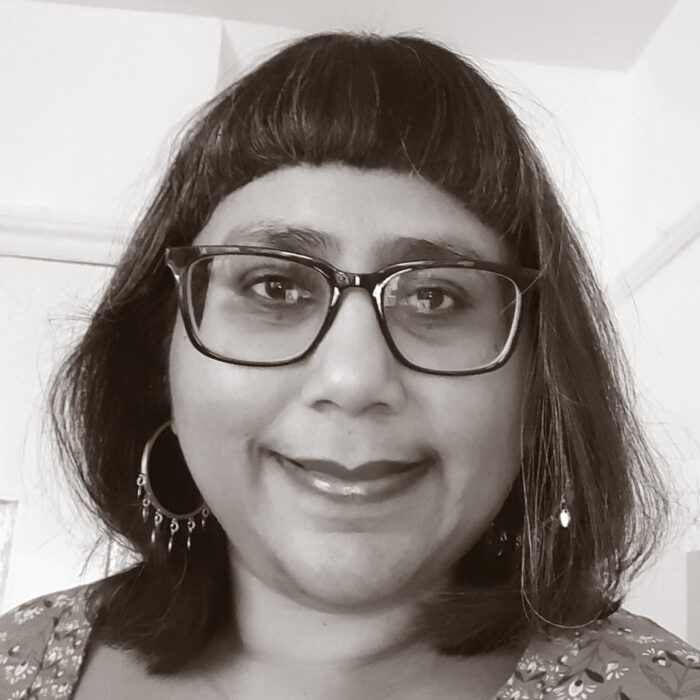
Sharmilla Beezmohun
Sharmilla is a co-founder of Speaking Volumes Live Literature Productions which showcases writers of colour in the UK and abroad.
Race in the time of childhood


Mixed race, mixed up Britain
Louisa Adjoa Parker

Salad cream sandwiches
Selina Nwulu

Buried
Maame Blue


If it isn’t me
Bobby Nayyar

Me and Mowgli
Sarwat Chadda

Comics and literature
Sarwat Chadda & Fergal Harte
WritersMosaic monthly
Get new episodes by email
One email monthly, unsubscribe anytime

Illuminating, in-depth conversations between writers.
Listen to all episodes
SpotifyApple Podcasts
Amazon Music
YouTube
Other apps

The series that tells the true-life stories of migration to the UK.
Listen to all episodes
SpotifyApple Podcasts
Amazon Music
YouTube
Other apps
WritersMosaic interrogates the notion of ‘staying in your lane’ by asking writers how they attempt to think beyond the parameters of their cultural identity.
Listen to all episodes
SpotifyApple Podcasts
YouTube
In the first series of poems commissioned by Hannah Lowe, six poets explore how ritual gives meaning to our lives.
Listen to all episodes
SpotifyApple Podcasts
YouTube

Free Will
Will Harris reads his poem, 'Free Will'. Directed by Matthew Thompson and commissioned by the Adrian Brinkerhoff Poetry Foundation.

Half Written Love Letter
Selina Nwulu reads her poem, 'Half Written Love Letter'. Directed by Matthew Thompson and commissioned by the Adrian Brinkerhoff Poetry Foundation.
Triage
A response to the endless spiral of worldwide conflict and tragedy
My tomorrow is today
'I clasped my hands together, not in prayer but to stop them from shaking'
Ballet Black at 25
Cassa Pancho: 'It’s a miracle that we are still here in some way'
Ever Land
A layered and haunting view of daily life in occupied Palestine
Mahsa Salali’s Naqqāli
'Salali positions the female body... as an active agent'