Race in the time of childhood
Me and Mowgli
I think I was eight or nine and it was 1976 and I was coming back from the dentist with my dad. This was a big deal. He must have had the day off since mostly all the domestic duties were taken care of by my mum. Today was already special.
‘No point rushing back to school,’ he said. ‘How about going to the cinema?’
Now what could be sweeter? Not much. ‘What are we seeing?’
‘The Jungle Book. It’s Disney.’
Missing an afternoon of school, watching a Disney movie with my dad? That’s what childhood memories are built of, the small unexpected things.
Now cinemas in the 1970s were, on the whole, flea-pits. If you wanted to smoke you sat on the left of the cinema (no such thing as seat numbers or pre-booking) and as a kid I’d watch the spiralling eddies of the cigarette smoke within the projector light, all part of the anticipation of the movie. There would be a short, the Pearl & Dean adverts and then the main event.
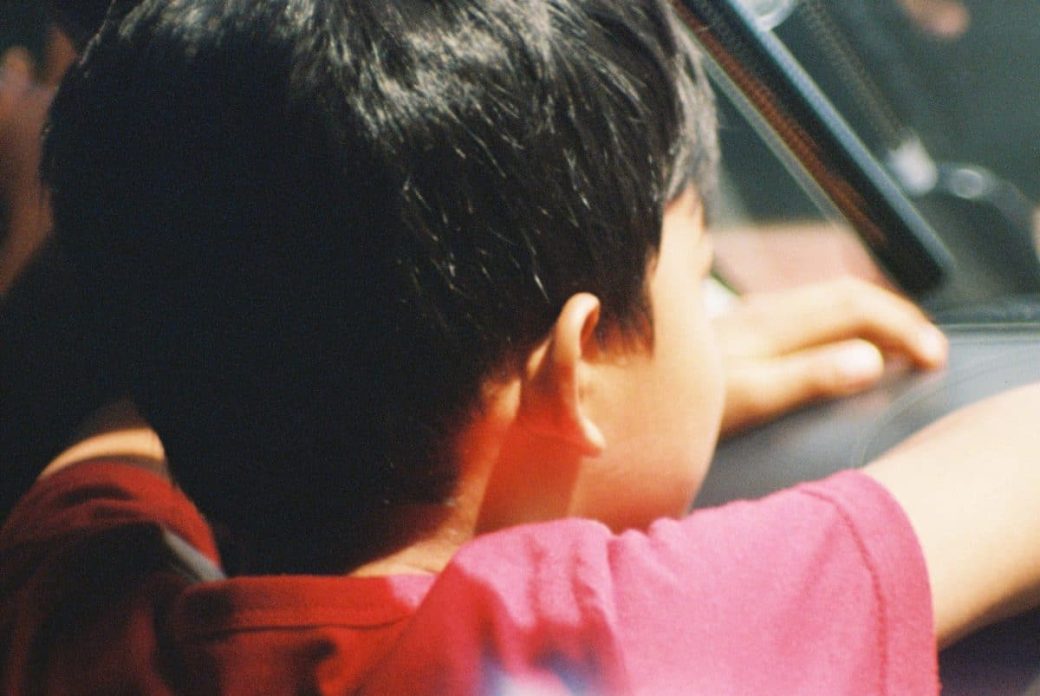
The Jungle Book changed my life. It filled a gap in my soul that I hadn’t even known I’d had. I met Mowgli. A brown hero.
I marvelled at every aspect of him. The thick, unruly hair, the skinny build, the gawkiness and the yearning to have the very best of adventures with the very best of friends. Each aspect swelled my heart, he was just like me! Just like me.
Now you have to remember what the 1970s were like. TV shows like Mind Your Language, Love Thy Neighbour and The Black and White Minstrel Show, all prime time. The age of National Front marches and running the regular gauntlet of being called ‘Paki’ at school. We were made to feel inferior, second-best, dirty in our skins, habits, food. It didn’t help that I was one of those nerdy, bookish kids. Easy pickings.
My parents took us to the cinema in Southall. It was splendid, gaudy, packed and overflowing with emotion. The Bollywood melodramas had me crying by the second act when the evil landlord had booted the poor family out onto the street and one or both parents had starved to death and one of the kids had been crushed to death working in the factory. Sure, there were heroes with wild eyes and big moustaches and meaty fists, but they weren’t me. They lived somewhere too alien to recognise, they spoke another, barely understood tongue, their heroics weren’t the ones I aspired to. They weren’t my heroes. Like plenty of my generation I was in a strange limbo, not part of the world my parents had come from, not part of the world I inhabited.
I needed heroes to blaze a trail. I needed good guys – dusky, wheatish, just plain brown – to fight the good fight. My fight.
I searched for them high and low. Remember 1977 and a little film called Star Wars? Well, I wanted to see Sinbad and the Eye of the Tiger! I was so desperate that I didn’t care if the actor was white; he was playing an Arab, and Muslim at that. That would have to do. And if the role was actually played by a south Asian? I was in heaven! Sabu of the 1940 film The Thief of Baghdad remained a big part of my childhood search for heroes. My dad had actually met him when he lived in the USA in the late 1950s. The fact he was a real-life hero, serving as a tail-gunner during World War Two, only made him more glorious. It seemed unbelievable that there’d once been an Indian Hollywood star. In fact, who has there been since then?
Unable to find heroes out there in the world, I decided to create my own. And this, being the early 1980s, meant Dungeons and Dragons. Yeah, that game out of Stranger Things. For those who don’t know, it’s a role-playing game where you and your friends create characters and collectively narrate a story in which your characters are the stars. There are rules to keep things on an even keel. While D&D is the most famous, there are games for most any genre and for practically all the popular franchises, such as Star Wars and even My Little Pony.
Our group was diverse! Three white Brits, one Italian, three south Asian kids!
But all our alter-egos were white. We created knights, sorcerers, thieves and barbarian heroes galore, yet all were inspired by the northern European clichés of fantasy. Our knock-off Galahads, Conans and Aragorns were cast in pale plaster. We couldn’t see ourselves in fantasy; we weren’t just invisible, we did not exist.
It is difficult to miss a thing if it doesn’t even exist.
There were glorious moments though! Nothing (even now) consumes me more than a solid gaming session. It is the purest storytelling, not that far removed from gathering around a campfire in the long ago, telling extraordinary tales. People say if Dickens were alive today, he’d be writing soaps. Well, if Homer were alive, he’d be a gamer.
The first time I created a non-white hero in Dungeons and Dragons was after Robin of Sherwood hit the Saturday night TV slot. Sure, Ray Winston made it big, but the coolest, by far, was Nasir. The deadly dual-sword-wielding Arab assassin. Again, a white actor, but I’d forgive casting for that. What mattered was that he was, without a doubt, equal to Robin, a better swordsman and with plenty of storylines of his own. This wasn’t a token gesture, a passing fancy by the writers, this was true love.
I wonder if the majority population feel this kinship as strongly? Are they so used to seeing heroes of their own heritage that they no longer get that electric buzz when one appears on the screen? Or is there a dark side? The resentment when a hero appears who is something other than the norm? The shock of seeing a hero of a different shade or accent take centre stage, albeit often only briefly?
The next session I rolled out a new character. An Arabian-type ranger who fought with two scimitars. I didn’t care if the stats for longswords were better; this was my guy.
And that was the catalyst to my writing career. If I couldn’t find the heroes I wanted, I’d better make them myself.
Fast forward a few dozen years…
Why put pen to paper? Simply put, you have something to say. It can be heavy-handed and blatant, or it can be discreet and well hidden. It might hit square and true or it could fly over the target’s head or between their legs. Even bad writers can have an impact where it hurts.
You write what matters to you, at that time and place.
It had been a looong time in coming but I wanted to do the Anti-Indiana Jones and the Temple of Doom. Putting aside the thrills and spills and chanting of ‘Kali Maa!’, it really is a very racist film. You completely understand why the Indian government refused to have it filmed in India. Dastardly darkies, the illicit desire of white women, child abuse, the White Saviour trope, the heroic last-minute intervention of the goodly British Empire, it really was a tour de force (even then) of outdated racial prejudice. But it ignited a passion for the Thuggee Cult. Kali Maa indeed!
Sure, we had south Asian kids in stories. Token sidekicks or troubled teens getting involved in terrorism or forced marriages or … basically that was it. Over and over again. Worthy books. Meaningful books. Dare I say it – important books.
Screw that. I wanted blood and guts and howling demons and white-knuckle, hair-raising adventure and blood-chilling horror, but with a brown kid. You know, getting up to all the cool stuff his white peers did on every bookshelf. Over and over again.
Why? Why the same old stuff consumed ad infinitum? For the same reason people like McDonalds. We are creatures of habit; it makes us feel safe. We crave the familiar, especially when the day has been hard and there are only more clouds on the horizon. McDonalds is an easy win. You’ve had it a thousand times before, it does the job and requires no effort. Most people want that from books. They don’t want to spend an evening working out strange-sounding words or being taken to places they feel lost in. They want a sense of adventure without the adventure, escapism without risk.
I’ve read all the Sharpe novels. That’s my literary McDonalds. I know I should challenge my palate with something big and hearty like Mantel’s latest but, sometimes, more often than not, I just feel weary at the prospect, physically and mentally. I’ve fallen into bad dietary habits.
That said, we have to remember that something exotic can eventually become a national dish. Where would Britain be without chicken tikka masala?
One of the cool things about writing for kids is having another look at the world. Learning what’s changed and what’s the same. It can mess with your middle-aged head. Are they more savvy, or naive in new ways? Are they growing up too fast or have you just become old? The answer to all these questions is ‘yes’. Writing is my way to try and make sense of it all.
And dealing the nonsense. Things like being told that a bookseller won’t stock my Ash Mistry series because, hey, they have no Indians living in their village. I bet they don’t have many hobbits either, but they probably shift a few copies of Lord of The Rings.
Sigh.
While I see the same lack of BAME (black, Asian and minority ethnic, a term I feel would be so much better if it had an exclamation mark — imagine, BAME!) representation being reported over and over again (and I’ve now entered my second decade in this business), and while I share such stories with my BAME! colleagues, there is a new … boldness. Numbers remain small, tokenistic, but our influence grows across all genres. What, for example, is fantastical about yet another story with elves, dwarves and dragons? Bring forth the djinn, the rakshasas and the lammasus! Ironically, the fantasy genre has been slow to evolve, still trapped as it were in Middle Earth. But it’s started, the borders are open, and we see new, mesmerising realms beyond.
Time is on our side.
Yet therein lies a perverse dilemma. When everything is diverse, nothing is, and everything is up for grabs. I’m British, south Asian and Muslim. Am I all three or none of the above? Does my Muslim heritage preclude touching on any of the native (and predominantly Hindu) south Asian tales, such as the Ramayana? (Spoiler: Too late. I’ve done it.) For some, I will never be authentic enough to write what I write, but I knew that with my first book, when I was constantly asked why, as a bloke, I was writing a female point of view. The answer was simple. Because only writing within your own gender is not a thing. Sadly, the righteous struggle (jihad, if you will) to reclaim our stories from the default ‘white’ setting has become a snake eating its own tail. We meanly guard our heritage and attack anyone who we deem too ‘inauthentic’ to share our cultural treasures; they demean our separate specialness.
Through all this, I gain strength and perspective from my BAME! fellow writers. When the struggle gets wearisome, they wipe me down and push me back in the ring. I like to think I do the same for them. Some are my mentors, others my peers, some newcomers, but we are all in this together. Our success is cumulative, though it may be difficult to see that at times. We threaten the status quo and there will always be an opposing reaction, ’tis the law of universe.
And, hey, it all started with that smoky cinema trip and the flickering image of a scrawny brown kid singing along with a great, big, huggable bear…
© Sarwat Chadda
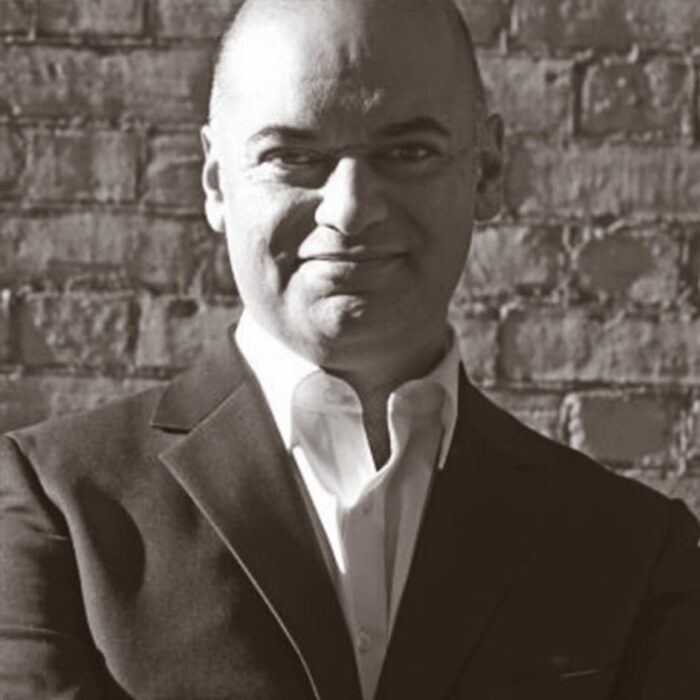
Sarwat Chadda
Sarwat Chadda is a Londoner whose writing for young adults depicts the world from both East and West.
Race in the time of childhood

Race in the time of childhood
Sharmilla Beezmohun


Mixed race, mixed up Britain
Louisa Adjoa Parker

Salad cream sandwiches
Selina Nwulu

Buried
Maame Blue


If it isn’t me
Bobby Nayyar

Comics and literature
Sarwat Chadda & Fergal Harte
WritersMosaic monthly
Get new episodes by email
One email monthly, unsubscribe anytime

Illuminating, in-depth conversations between writers.
Listen to all episodes
SpotifyApple Podcasts
Amazon Music
YouTube
Other apps

The series that tells the true-life stories of migration to the UK.
Listen to all episodes
SpotifyApple Podcasts
Amazon Music
YouTube
Other apps
WritersMosaic interrogates the notion of ‘staying in your lane’ by asking writers how they attempt to think beyond the parameters of their cultural identity.
Listen to all episodes
SpotifyApple Podcasts
YouTube
In the first series of poems commissioned by Hannah Lowe, six poets explore how ritual gives meaning to our lives.
Listen to all episodes
SpotifyApple Podcasts
YouTube

Free Will
Will Harris reads his poem, 'Free Will'. Directed by Matthew Thompson and commissioned by the Adrian Brinkerhoff Poetry Foundation.

Half Written Love Letter
Selina Nwulu reads her poem, 'Half Written Love Letter'. Directed by Matthew Thompson and commissioned by the Adrian Brinkerhoff Poetry Foundation.
Triage
A response to the endless spiral of worldwide conflict and tragedy
My tomorrow is today
'I clasped my hands together, not in prayer but to stop them from shaking'
Ballet Black at 25
Cassa Pancho: 'It’s a miracle that we are still here in some way'
Ever Land
A layered and haunting view of daily life in occupied Palestine
Mahsa Salali’s Naqqāli
'Salali positions the female body... as an active agent'