Talismans of migration
Month One: the source and the poem
Month One: the source
When I came to England from Trinidad in the late eighties, the cold arrived before anything else. It felt like stepping into a freezer, a cold so deep it seemed to dig past skin and fat and blood, all the way to the bone. The light was blue-grey; everything appeared less defined: the streets, the buildings, the horizon, the clouds.
Everything confused me. I couldn’t understand the accents, the money, the food (oh Lord, the food had no taste). But most of all, I had no community. I lived with my disabled grandmother, whose angry countenance did not feel welcoming, even though I knew she meant well.
The sadness did not crash over me; it seeped in, settling during bus journeys, in the slow walk back to a cold room that smelled of fumes from a portable gas heater.
I began to notice the small adaptations in my body: the chalky dryness of my skin, the way my breath made clouds outside, the itchy redness of my eyes, the way the cold burned the tops of my ears. Each day felt like the making of time, not quite living, just counting days toward no particular event.
So I learned to steady myself with things. Objects and images took on weight and meaning beyond their use or vision. A loaned coat, a phone call home, a photograph, the glaze of frost on the windowpane, the glare of snow, the ghost of mist in the morning. Each small thing became a way of holding my place in the world, a way to remain present while everything around me insisted I was elsewhere.
I remember the taste of pepper then, not only the high it gave me, but the sudden rush of nostalgia it brought on for Trinidad. I couldn’t find Caribbean pepper sauce in those days, but between Walthamstow Market and Sunday park football I could find Scotch bonnet peppers. So I bought some and rang my Aunty Monica, who had a very specific recipe for pepper sauce. Some of her instructions seemed to have very little to do with food, like she insisted on me leaving the peppers in a bottle and putting it out in the sun for a full day. Luckily, it was a warm summer. In the end, I produced a pretty good facsimile of her pepper sauce; enough to give me that feeling of home.
The story of the second-hand leather jacket in the poem was that I’d arrived in England thinking I could get by with the jacket I’d borrowed from an aunt who had worn it when she was a student in England, but it barely buttoned on me, and the last thing I needed in winter was freezing air on my chest. That led to another problem. For reasons I still don’t understand, coats in the winter of 1986 were prohibitively expensive, and I had very little money. So I bought a second-hand 1970s leather coat: think Shaft and you’ll have the right idea. It was so cold that style was the least of my concerns. The coat was warm, and it cost ten pounds. I was still surprised when I put it down in the West End club Hippodrome and, turning back, found it gone. Waiting for the bus that night in a cotton T-shirt, I began to reassess what I was doing here.
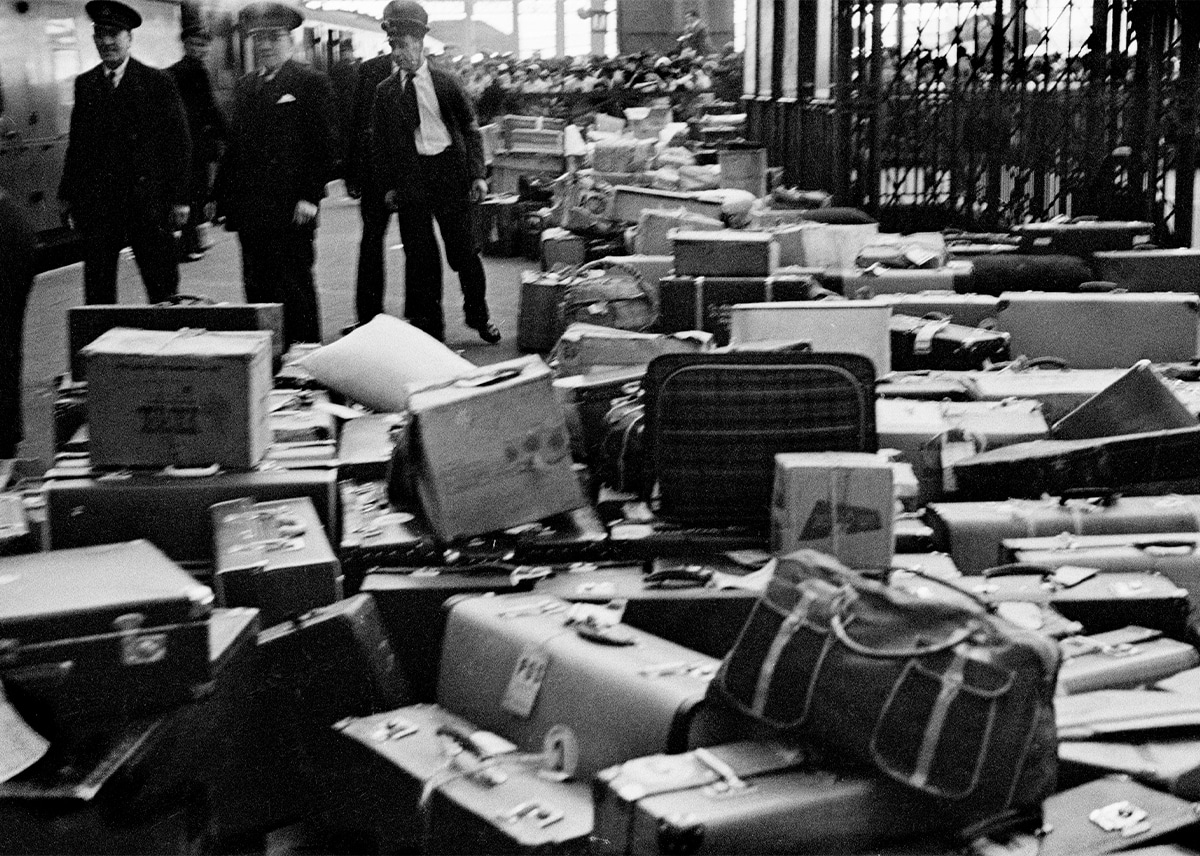
The suitcase I had carried to England was my father’s, from when he’d studied in England. Virtually indestructible, it was made of leather and canvas, with zips and buckles to hold it closed. Gigantic by modern standards, it had no wheels. The handle was like a briefcase handle, meaning you had to lug the damned thing everywhere. It was made heavier by the cricket jumpers my father had packed; he’d played county cricket in England and wanted to be sure I stayed warm. I told him not to worry, that I’d never wear them. He said when the cold hits you, you’ll be glad they’re there. He was right. Some days were so cold I left the house dressed like the opening batsman for Essex County and I could smell traces of my father’s wood and whisky perfume for months before I finally washed them.
*
Month One: the poem
He bought chilli peppers from the market and set his tongue aflame. He spent his last remaining coins on telephone calls home and listened to static. He kept his heater at the glowing-coal setting. His clothing was never right for the weather. Outside he’d breathe the shape of his lungs in mist. His sweat felt like pins and needles. He bought a second-hand leather winter coat that smelled of mothballs and had nothing to do with style. He went to a club with laser lights in the West End. Someone stole his winter coat. He met a woman in the club. She invited him for dinner the next day. She made him a baked potato with grated, melting cheese and baked beans. He’d never had a baked potato before. He waited to see how she ate it. He took a sepia Polaroid of himself next to a red Porsche. He wrote letters back home of pure calligraphic fantasy. He wrote his dreams in the present tense. He kept his suitcase full of clothes in the cupboard to stop it from flying back by itself. He never actually unpacked. He slowed down his speech to be better understood. He was never better understood. He joined a church. He tried to get them to speed up the hymns. They never sped up the hymns. He fell asleep during the sermon. He dreamed about his grandmother and her hair like an Afro cloud. He forgot the name of the streets he lived on. The wind in the trees at night sounded like the sea at Maracas Bay. He got a job in a laundry. He felt the warmth of home in the industrial dryers. The windows of washing machines reminded him of planes. Everyone who worked there was from somewhere else. No one talked of home.
© Roger Robinson
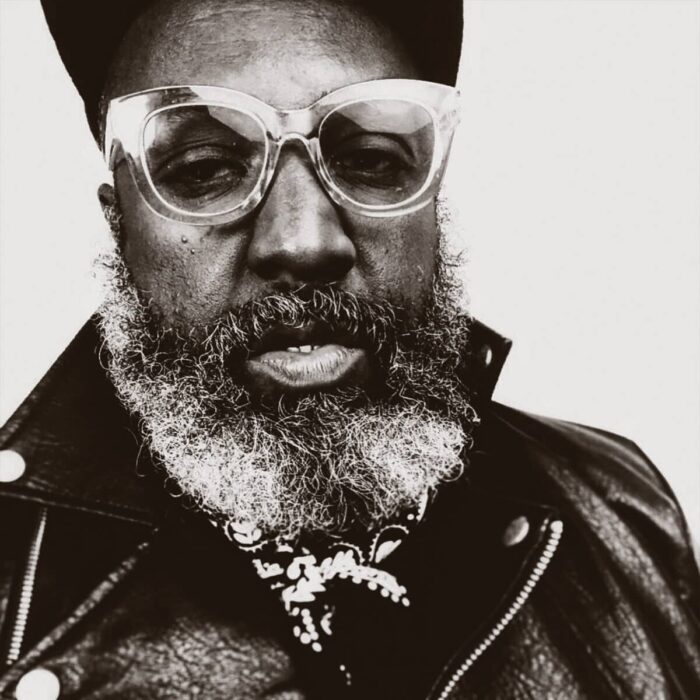
Roger Robinson
Roger Robinson is an award-winning writer and performer from Trinidad now living in Britain.
Talismans of migration
Editorial
Colin Grant
The List
Snežana Ċurčić
The last ritual
Eric Ngalle Charles
The most wonderful object in the world
Maria Jastrzębska
A sick note
Suzanne Harrington
Haunting melodies
Maggie Harris
Kafan
Ishy Din
Rolling luggage
Amanda Vilanova
Summer Wear
Colin Grant
WritersMosaic monthly
Get new episodes by email
One email monthly, unsubscribe anytime

Illuminating, in-depth conversations between writers.
Listen to all episodes
SpotifyApple Podcasts
Amazon Music
YouTube
Other apps

The series that tells the true-life stories of migration to the UK.
Listen to all episodes
SpotifyApple Podcasts
Amazon Music
YouTube
Other apps
WritersMosaic interrogates the notion of ‘staying in your lane’ by asking writers how they attempt to think beyond the parameters of their cultural identity.
Listen to all episodes
SpotifyApple Podcasts
YouTube
In the first series of poems commissioned by Hannah Lowe, six poets explore how ritual gives meaning to our lives.
Listen to all episodes
SpotifyApple Podcasts
YouTube

Free Will
Will Harris reads his poem, 'Free Will'. Directed by Matthew Thompson and commissioned by the Adrian Brinkerhoff Poetry Foundation.

Half Written Love Letter
Selina Nwulu reads her poem, 'Half Written Love Letter'. Directed by Matthew Thompson and commissioned by the Adrian Brinkerhoff Poetry Foundation.
The name of this wallpaper is ‘Childhood’
A luminescent bubble of memory
What’s in a feminist? Holding on to Gloria Steinem
Is Gloria Steinem's feminism still relevant today?
Coats
The unexpected cost of acquiring two Italian leather coats in Rome

A Trial
An examination of theatre’s complicity in post-truth politics
The Complex
The unraveling of a dynasty