Talismans of migration
Kafan
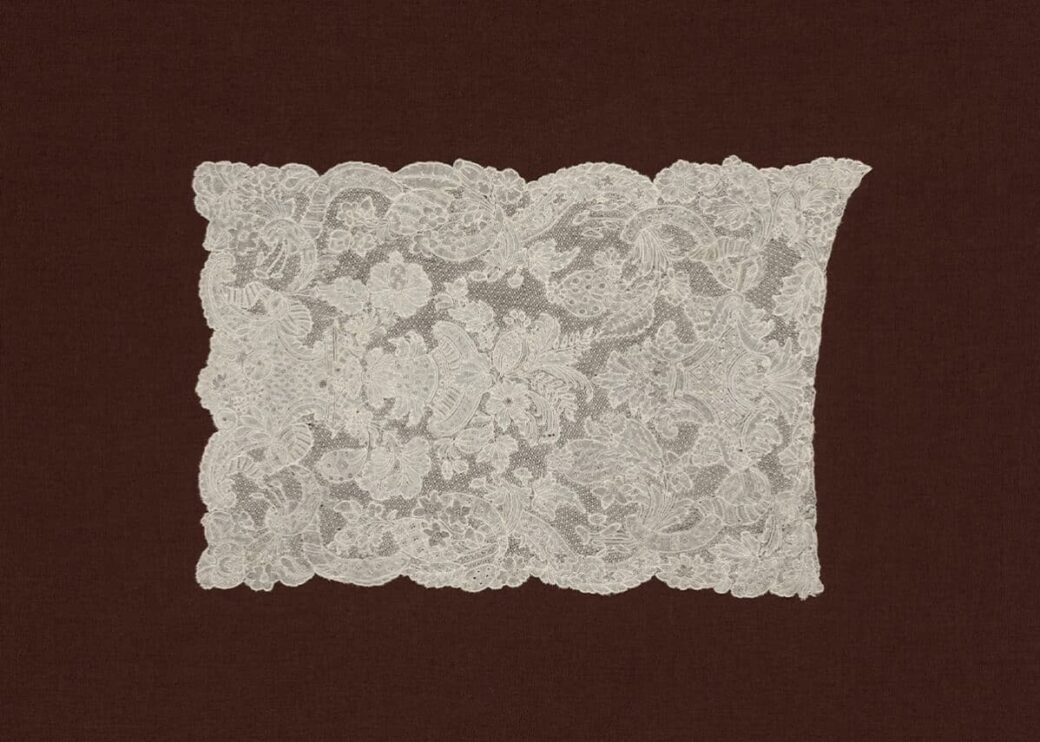
One of my father’s last wishes was to be buried in Pakistan, the country of his birth. He had spent over 50 years in England, and yet he always considered Pakistan his home.
My mother, on the other hand, had a very different view of matters.
She was married at a young age, in an arranged marriage. Her own mother died when she was a child, eight or nine. Her father was a stringent character. A religious man, he had performed the Hajj pilgrimage at a time when it was unheard of in what was then rural India. He taught the Qur’an and led prayers at the village mosque. He could read and write when vast swathes of the population were illiterate, and he taught his children to do the same.
There is a saying in that part of the world: ‘daughters are guests in your house’. One day they will marry and leave.
My mother was married young to a widower with a child, my half-brother. Her husband, my father, was illiterate. It was a tough life. She lost her firstborn. There was acute poverty, and a woman’s lot was not a good one.
But things were about to change. Mangla Dam was under construction, and when it came time to flood the valley, displaced villagers were offered visas to come to England to help rebuild the country. My father took up the offer and arrived in the UK in 1962.
My mother and my elder siblings arrived in 1968. I was born in 1969.
Life was generally uneventful. In the late 1970s, my parents decided to go on Hajj. It was still a huge thing then, and we excitedly helped them pack. I was dispatched, alongside my older brother, to fetch my mother’s old suitcase that sat on top of a wardrobe.
When she opened it, the only item inside was what I would describe as a white sheet. She treated this sheet with deference. She gently took it out and put it to one side, packed her other items, and then returned the sheet to the suitcase. It was going to Mecca and Medina with her.
But why?
I asked and was told, “You’re too young to understand.”
Many years passed. The white sheet was exiled to the deepest recesses of my memory.
My father passed away. We buried him in Pakistan. Upon our return to England, my mother asked me to bring down her old suitcase from the loft. Miraculously, it had survived – almost certainly because it hadn’t been used for decades.
When she opened it, there was the white sheet. The memory came flooding back. This time, I wasn’t too young to understand.
I asked what it was.
‘It’s my kafan,’ she replied. Her burial shroud.
I was fascinated. Why had this woman kept such a visceral reminder of her own mortality for so long?
I found out that not long after she was married, she had a raging argument with my father and went back to her paternal village, children in tow. She was met with a frosty reception. ‘Your life, and your children’s lives, are not here now,’ she was told. ‘They are back where you came from.’ A stark reminder that her life had moved on.
It was a different time, a different culture. Divorce was unheard of.
She returned to my father’s village with the realisation that in this hard, hard world one needs to be self-sufficient, prepared, aware.
When she came to England, she brought her burial shroud with her.
She had taken the kafan with her on Hajj in order to wash it in zamzam – sacred water drawn from a well in Mecca, revered by Muslims for its purity, healing properties and spiritual significance.
Her religious learning had taught her that Muslim tradition dictates that, ideally, one should be buried where one dies. Speed is more important than location.
I get the sense that she had determined her journey was only forwards now. Forward from the village of her birthplace to my father’s village. Forward from Pakistan to England. Forward from this life to the next.
My father hankered for the past: the country he left, the village he left, the people he left. My mother, on the other hand, invested in the future.
And one of the ways she did this was to have her kafan, washed in zamzam, sitting in an old suitcase, on top of an old wardrobe, ready for her final journey.
© Ishy Din
Talismans of migration
Editorial
Colin Grant
The List
Snežana Ċurčić
The last ritual
Eric Ngalle Charles
The most wonderful object in the world
Maria Jastrzębska
A sick note
Suzanne Harrington
Month One: the source and the poem
Roger Robinson
Haunting melodies
Maggie Harris
Rolling luggage
Amanda Vilanova
Summer Wear
Colin Grant
WritersMosaic monthly
Get new episodes by email
One email monthly, unsubscribe anytime

Illuminating, in-depth conversations between writers.
Listen to all episodes
SpotifyApple Podcasts
Amazon Music
YouTube
Other apps

The series that tells the true-life stories of migration to the UK.
Listen to all episodes
SpotifyApple Podcasts
Amazon Music
YouTube
Other apps
WritersMosaic interrogates the notion of ‘staying in your lane’ by asking writers how they attempt to think beyond the parameters of their cultural identity.
Listen to all episodes
SpotifyApple Podcasts
YouTube
In the first series of poems commissioned by Hannah Lowe, six poets explore how ritual gives meaning to our lives.
Listen to all episodes
SpotifyApple Podcasts
YouTube

Free Will
Will Harris reads his poem, 'Free Will'. Directed by Matthew Thompson and commissioned by the Adrian Brinkerhoff Poetry Foundation.

Half Written Love Letter
Selina Nwulu reads her poem, 'Half Written Love Letter'. Directed by Matthew Thompson and commissioned by the Adrian Brinkerhoff Poetry Foundation.
The name of this wallpaper is ‘Childhood’
A luminescent bubble of memory
What’s in a feminist? Holding on to Gloria Steinem
Is Gloria Steinem's feminism still relevant today?
Coats
The unexpected cost of acquiring two Italian leather coats in Rome
A Trial
An examination of theatre’s complicity in post-truth politics
The Complex
The unraveling of a dynasty